
Many graduates from the School of Medicine Greenville’s trailblazing 2016 class chose to stay in South Carolina or return after residency training. Today, they carry into every exam room, emergency department and patient conversation the knowledge, compassion and collaborative spirit they developed as medical students.
As physicians, they are building a legacy of leadership and service by delivering exceptional, innovative care that strengthens the health and well-being of the communities they call home. As faculty members, they are extending that legacy even further — mentoring and training the next generation of physicians who will one day care for patients in South Carolina and beyond.
Together, these hometown heroes embody the founding vision of the School of Medicine Greenville — not only by caring for patients across the Upstate, but by mentoring the physicians who will care for South Carolina’s communities for generations to come.
Dr. Madison Merritt paves the way
Collaboration was woven into Dr. Madison Merritt’s experience nearly every day as a student in Greenville’s charter class.
There were no upper-level students to offer advice or pass down study strategies. The curriculum was new, and Merritt and her classmates quickly realized they weren’t just preparing for careers in medicine — they were helping build a medical school. Together, they helped pave the way for future students who would one day walk the same hallways and study in the same plaza.
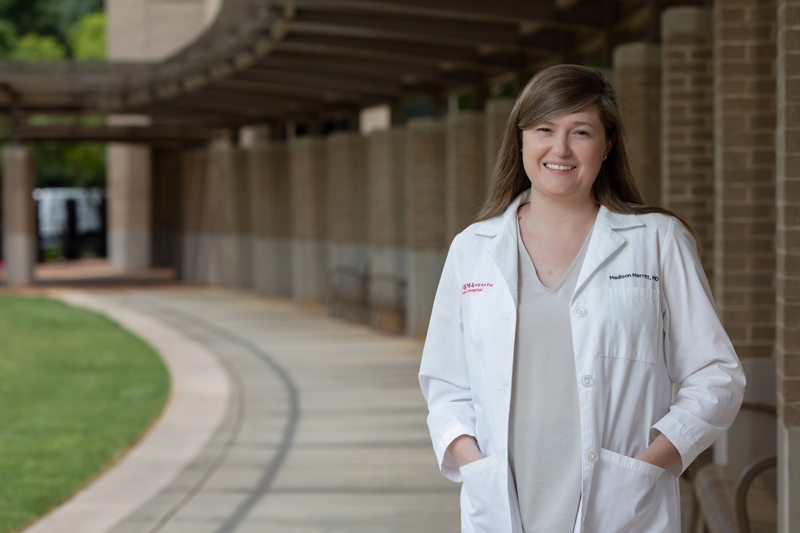
“For some people, in some fields, competition is a big thing. But for us, I think we realized we had to get through this together,” Merritt says. “There was a lot of camaraderie. It was just us. We had no one to tell us, ‘You should study this or read this book.’ It was an interesting experience, but I think we were better for it.”
That same collaborative spirit resurfaced when the COVID-19 pandemic began in early 2020. Fresh out of her pediatric residency at Greenville Health System, Merritt had just started practicing in Travelers Rest.
“It was quite an interesting start to things,” she says. “I love my office. The staff and my partners are amazing, and during this stressful time, I learned to lean on them and not be afraid to ask questions.”
A few years later, she found herself treating patients during a measles outbreak — a disease she had expected to encounter only in textbooks and board exams. Working closely with colleagues in her practice and across Prisma Health, Merritt again saw the value of collaboration in navigating rapidly changing situations. Just as importantly, she saw how those moments strengthened the relationships she had built with families over time.
“I have some patients who were newborns when I started here, and they’re in grade school now,” she says. “Families get to know you and trust you. They know we have their kids' best interests at heart.”
In addition to building strong patient relationships, Merritt is also helping build a strong foundation for the next generation of physicians. As a clinical faculty member, she mentors medical students on rotation and pediatric residents exploring private practice.
“Seeing students who are following in my class’ footsteps, going on to choose primary care and help fill the need, especially here in South Carolina, is amazing,” she says.
Looking back, Merritt sees a full-circle moment: Once among the first students helping shape a new medical school, she now helps shape the physicians who will carry that mission forward.
“I was there, one of the first students sitting in those classrooms, listening to the dean and faculty talk about one of the dreams of this school,” she says. “It’s awesome to see it coming full circle.”
Dr. Shea Ray opens doors
Greenville native Dr. Shea Ray returned in 2023 to serve patients as an orthopedic surgeon at joint appointments at Prisma Health Upstate and Shriners Children’s Greenville.
While she treats patients of all ages, from infants to adults, her mission is simple: to help them maximize their functional potential.
Many of Ray’s youngest patients are those born with congenital hand differences, which can range from having extra or missing fingers to abnormally webbed and fused fingers, to conditions such as cerebral palsy and arthrogryposis. Children are excellent at adjusting, but in many cases, surgery is needed to improve the function and/or appearance of their hand and arm.
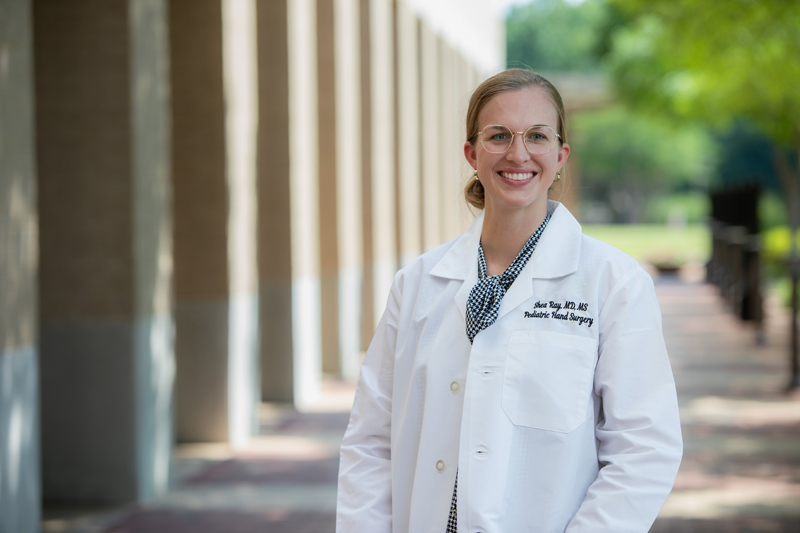
“The thing I love about treating kids is that they are incredibly resilient and very adaptable,” Ray says. “Even with the kids I see that are born with severe limitations in the use of their arms and hands, with the help of surgery or therapy or both, they can adapt and overcome.”
She recalls one of her patients at Shriners Children's Greenville: a young girl born with severe nerve damage in her arm. After surgery, the girl regained enough function to return to one of her favorite pastimes, baking.
“She can use her arm to hold a mixing bowl to bake cookies and play piano,” Ray says. “It is really fun to talk with someone after surgery and hear how they got back to what they love.”
Helping patients reclaim the activities that bring them joy is one of the most rewarding parts of Ray's work. It’s also what inspires her role as a clinical faculty member, working closely with fourth-year medical students during their clinical rotations. Just as she helps patients reach their fullest potential, she is passionate about helping future physicians discover theirs.
For Ray, instructing women interested in orthopedic surgery is especially meaningful. Women make up fewer than 8 percent of practicing orthopedic surgeons in the United States, and she hopes her example encourages more to pursue the specialty.
“I love the opportunity to mentor them and show them that orthopedic surgery is a fun and rewarding career, and that it’s possible to have a balanced work and personal life,” she says. “I’ve loved seeing several female medical students from Greenville enter the field, and I look forward to encouraging even more women who are interested in orthopedics.”
Dr. Robert Bonanno passes it on
Dr. Robert “Robby” Bonanno’s elementary and middle school soccer coach inspired him to become a better player and a primary care physician.
“He just gave so much to his community,” Bonanno says. “Because I did not have any family members in medicine, he was my first real window into what it could look like to become a physician.”
That coach was Dr. Michael Ambrose, who coached in Bonanno’s youth soccer league after moving to Hartsville, South Carolina, from the Caribbean island of Saint Vincent and the Grenadines. Ambrose helped the team improve, and Bonanno recalls him as the best coach he ever had.
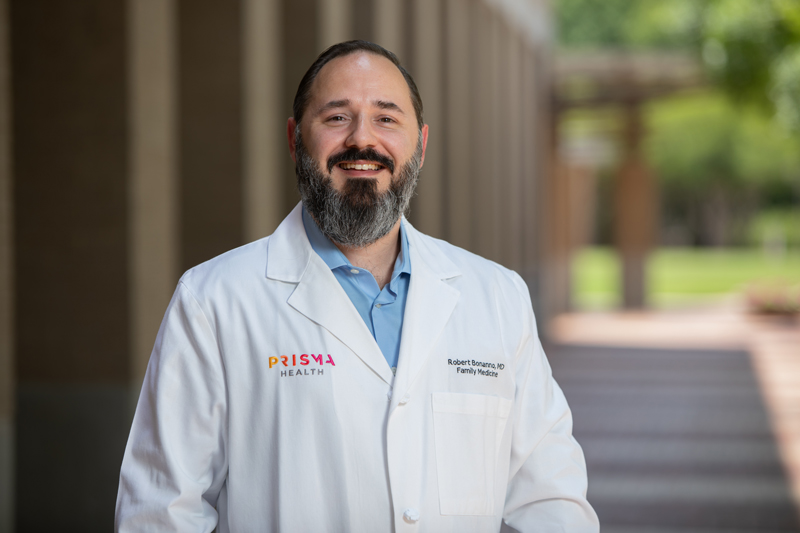
“I later had the chance to shadow him in his clinical practice, and I began to see that many of the qualities that made him such an impactful soccer coach carried directly into the exam room,” Bonanno recalls.
“He built trust, formed genuine relationships, held people to high standards with compassion and accountability, met them where they were and helped them understand their challenges while drawing on their strengths to reach shared goals.”
That connection between coaching and medicine shaped the way Bonanno thinks about mentorship, patient care and the kind of physician he strives to be.
Bonanno earned his medical degree in 2016 and completed his family medicine residency at Greenville Health System. Inspired by Ambrose’s example, his commitment to caring for patients of all ages and backgrounds naturally evolved into a passion for mentoring the next generation of physicians.
Bonanno spends about half his time in the clinic as a primary care physician treating patients and the other half as a faculty leader teaching the next generation of medical students and family medicine residents.
“I believe the best coaches do more than teach skills; they help people recognize their potential, hold them to high standards, encourage them through uncertainty and remind them who they are becoming when the work is difficult,” Bonanno says. “I see medical education the same way.”
As a clinical assistant professor at the medical school, he teaches a weekly Integrated Practice of Medicine course in which students learn essential and foundational skills. Additionally, as core faculty for Prisma Health’s Family Medicine Residency Program, he leads initiatives in curriculum development, learner assessment and home-based primary care while practicing both inpatient and outpatient medicine.
“What students learn in medical school and residency will follow them into every exam room, emergency department, operating room and patient conversation.”
For Bonanno — who, in addition to soccer, played football as a kicker in high school — that’s where the lessons he learned from Ambrose early in life come back around.
“As educators, we help shape not only what they know, but how they listen, reason, respond under pressure and care for the person in front of them,” he says. “In that sense, I see myself as a coach and mentor, helping them navigate this journey to becoming the physicians they are called to be.”