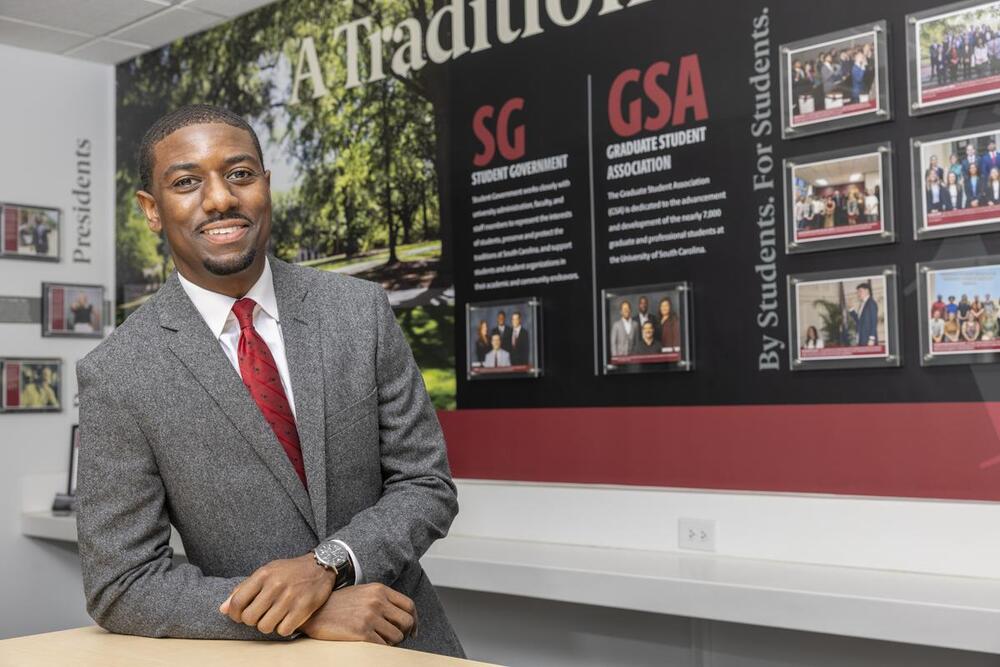
A few months before his graduation in 2019, then University of South Carolina student body president Taylor Wright called his year leading campus government the highlight of his college career. It was an experience he will always cherish.
“The University of South Carolina has given me so much,” he says, “and I can’t wait to give back in the next chapter of my life, as an alum.”
This summer, the South Carolina Honors College graduate took a big step in fulfilling that goal when he was appointed to a three-year term on the USC Alumni Association Board of Governors.
“I feel honored to be a part of the Alumni Association leadership, and I am impressed by the work they're doing and their receptiveness for ideas and feedback,” he says. “I’m excited to get to work engaging our nearly 300,000 living alumni, supporting student scholarships and giving back to the place that helped shape me.”
As the youngest member on the board, he aims to increase engagement among young alumni.

“Members of Gen Z need to see a clear value before we spend our money and our time,” Wright says. “I've been talking a lot with staff and leadership at the association about how to market that value in a way that folks understand and care about – whether it’s tangible value such as giveaways or discounts or emotional connections, such as offering opportunities for alumni to reminisce about their time at USC and to help current students have a great experience on campus.”
Wright knows a thing or two about getting the most out of his college experience. The public health major from Goose Creek, South Carolina, held a variety of leadership positions, including student body president. He also served as a university and presidential ambassador and a Pillars of Carolina mentor. In addition, he assisted in coordinating voter registration efforts and created Carolina Health Outreach, a public health student organization.
His student government journey began in his freshman year when he was selected to serve on the Freshman Council, inspiring him to get more involved in the Carolina community. When he ran for student body president, his mission was to make every student feel at home at the university, regardless of their background.
“When I joined Freshman Council, I was the only African American on the 30- to 40-member council,” Wright says. “When I looked at student government as a whole, there were very few folks who looked like me. One of my prouder moments of being student body president is that I felt I made space for everyone to feel welcome and feel like they had a part.”
Being in the Honors College taught Wright valuable lessons about the importance of a support system when things don’t go as planned. Wright graduated magna cum laude, but it was not without challenges.
“One of my earlier lessons in the Honors College was the impact of not being prepared and not taking things as seriously as I needed to,” he says. “I got a reality check when I failed honors organic chemistry.”
Wright had always been a good student, so he was shocked and overwhelmed about how it might affect his college career.
“I just went to my car and called Dr. (Kara) Montgomery. I told her I don't know what I'm going to do; everything's over,” he says. “I went to her office, and she talked me off the ledge and helped guide me to a solution.”
He took a summer class and got back on track academically.
“I learned a good lesson not only about resiliency but also how important it is to have a good support system. I had that my entire time in the Honors College,” Wright says.
Since graduating, Wright has worked in local government as assistant to former Columbia, South Carolina Mayor Steve Benjamin as well as holding positions with the Small Business Administration, the U.S. Department of Transportation and the Executive Office of the President in the Biden Administration. He then transitioned into the private sector with the Macquarie Group in New York City, where he helped manage local, state and federal government affairs and policy strategy for the world’s largest infrastructure asset manager.
This fall, Wright traveled full circle in his career journey when he joined The Benjamin Firm. In his role as managing director at the consulting agency run by his mentor Steve Benjamin, Wright will consult with clients on policy, government communications and public engagement.
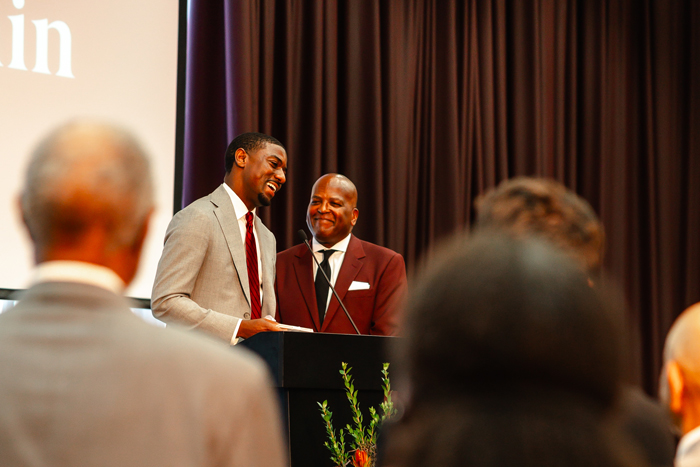
“He has been a great mentor for me, and so we stayed in touch. As he was looking to build out his firm, we had some conversations, and this opportunity came about,” Wright said. “I'm excited for a new challenge, and it's an additional touchpoint back in South Carolina, which makes me very happy.”
He adds that his career success has been supported by connections made in his home state and through the University of South Carolina: “A lot of folks told me that college would be the best four years of my life, and I don't think I completely understood that, but now I do. Everybody in that environment and even the alumni outside campus want to help you succeed. You have to maximize that moment.”
And that’s the advice he has for current students: Get involved, take advantage of campus resources and network with alumni who want them to succeed. For Honors College students specifically, he encourages them not to overlook opportunities such as study abroad programs or prestigious fellowships – things he wishes he had pursued.
“You might be tired or busy in the moment, but you really only have these few years to take advantage of these opportunities,” Wright says. “Consider the advice of faculty and staff, and take the time to reflect about the future.”
He also encourages students to recognize their collective power as a large student body when advocating for policy changes or social impact.
“The University of South Carolina is the flagship university for the state with a system of campuses across statewide,” Wright says. “In a state that's not that big, nearly 60,000 student voices is a powerful block that can be harnessed.”