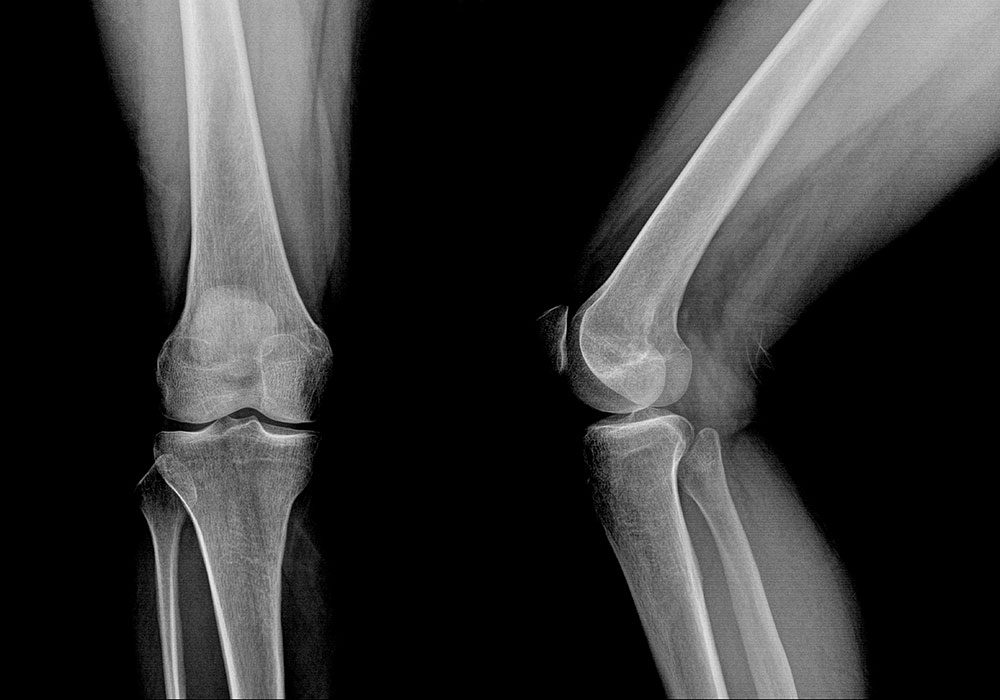
Marching in formation, rucking with 40-pound packs, daily jogs for weeks on end. Basic training for U.S. military recruits means moving on your feet — a lot — which often translates into musculoskeletal injuries such as shin splints, ankle sprains and stress fractures.
The problem isn’t new — stress fractures, often called “march fractures,” were first described in 1855. But the bane of boot camp continues to have extraordinary implications for the modern American military.
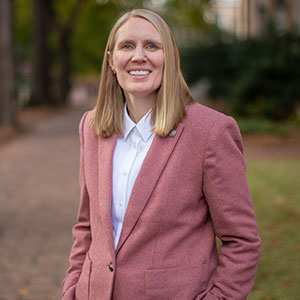
“Bone stress injuries have been identified by the Army as the biggest reason recruits get medically discharged,” says Julie Hughes, Lunceford Moore Endowed Professor of Orthopaedic Research in the University of South Carolina Floyd School of Medicine. “Healthy recruits show up at Fort Jackson and other facilities, and, unfortunately, their initial training often causes musculoskeletal injuries. We’re losing some really motivated trainees who otherwise are quite fit.”
Hughes is acutely aware of the military’s bone health problem. For 13 years the Ph.D.-trained scientist worked at the U.S. Army Research Institute of Environmental Medicine in Boston, heading a bone health research laboratory. She and her team analyzed musculoskeletal outcomes in multiple investigations, including a major study that examined thousands of recruits at Fort Jackson with collaboration from USC researchers in the Department of Exercise Science and the Floyd School of Medicine.
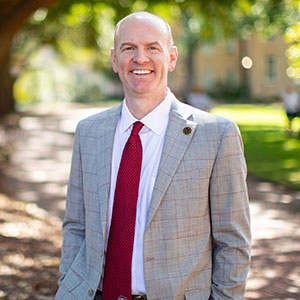
“Dr. Hughes’ content expertise, USC’s deep and broad network of collaborators and the nation’s largest Army basic training installation right in our backyard at Fort Jackson create a unique environment to tackle this problem,” says Dr. J. Benjamin Jackson III, vice chair of research in USC’s Department of Orthopaedic Surgery.
“It’s an opportunity for ‘Victory Over Injury’ to start here in South Carolina,” he added, linking Hughes’ expertise to Fort Jackson’s “Victory Starts Here” motto.
A $500,000 seed grant from the state legislature helped launch the Warfighter Musculoskeletal Strength and Injury Prevention initiative, a partnership between Fort Jackson and USC. Jackson recruited Hughes to the faculty of the School of Medicine in 2026 to spearhead the ambitious university initiative that builds on her previous Army-sponsored research.
“We’re going to look at the different factors that lead to musculoskeletal injury; who is at risk and what can be done to mitigate that risk during basic training,” Hughes says. “How do we identify the right amount of physical activity and build it into initial training in a way that doesn’t lower the military’s physical standards but also doesn’t break roughly a third to one-half of our soldiers?
“The Army is forward thinking and ready to go. They want our data, and they want to turn it into new policies that will reduce injuries.”
Play ball!
Much of the research on bone stress injuries has traditionally focused on how and why bones break down under repeated physical loading. Hughes’ team began asking the other side of the question: Can military training actually stimulate bones to build new tissue and become stronger?
To find out, Hughes and her collaborators examined the lower legs of more than 4,400 Army trainees, primarily at Fort Jackson, before and after basic training using high-resolution peripheral quantitative computed tomography.
“It’s like a CT scanner at the doctor’s office but focused just on your peripheral skeleton,” Hughes says, “so we looked at the lower leg, specifically the shinbone towards the ankle, which is a common site for bone stress injuries.”
The high-resolution scans allowed researchers to see tiny changes in the three-dimensional structure of bone that conventional bone density measurements can miss. Hughes and her colleagues found measurable changes in the shinbone’s microarchitecture and increases in estimated bone strength during basic training.
“We’ve spent a lot of time asking why bones break. Now we’re asking how we can help them become strong enough to withstand what we ask them to do, not just during basic training, but throughout a soldier’s career.”
“What was exciting was that we could see the skeleton adapting in only eight weeks,” Hughes says. “Female trainees showed particularly pronounced relative gains in some measures of the internal, lattice-like structure of bone.”
The researchers also examined whether that adaptive ability diminished with age. Although most recruits were young adults, trainees age 30 and older showed substantial skeletal adaptation during training, much like their younger counterparts.
“For a long time, there was this idea that once you reached adulthood, the skeleton wasn’t nearly as responsive to physical activity as it was while you were growing,” Hughes says. “Our work helps challenge that idea. The mature skeleton retains a remarkable capacity to adapt. We’ve spent a lot of time asking why bones break. Now we’re asking how we can help them become strong enough to withstand what we ask them to do, not just during basic training, but throughout a soldier’s career.”
Timely deposits
Physical training can make the skeleton stronger, but the same activity that stimulates adaptation can also produce microscopic damage if loading accumulates faster than the body can repair and adapt. The key is finding the right balance between training and recovery.
Think of repetitive loading injuries during basic training this way: Driving over a bridge for years can gradually diminish the bridge’s structural integrity. New bone tissue and the mineralization process are the repairs that make the bridge stronger.
“As you stimulate the skeleton through novel exercise and activity, bone will both repair and deposit new tissues, but any new bone formed has to mineralize,” Hughes says.
While her research has shown measurable changes in bone over weeks, the new tissue continues to mineralize and mature over a much longer period.
“That’s the paradox,” Hughes says. “The physical loading that stimulates the skeleton to get stronger can also contribute to injury if we ask too much of the tissue before it has had enough opportunity to fully adapt.”
Understanding how to encourage that adaptation without allowing damage to outpace repair is one of the problems Hughes hopes the new lab can help solve.
“The next step is figuring out how to promote bone formation and anabolism across the entire musculoskeletal system,” Hughes says. “That will require a multidisciplinary research portfolio looking at how physical activity, sleep, nutrition, mental resilience and other factors can work together to help soldiers adapt, perform and stay healthy. Our goal isn’t to take the challenge out of military training. It’s to help soldiers’ bodies become better prepared to meet that challenge. We want injury prevention and improved performance to go hand in hand.”
Victory Starts Here
Perhaps more than anyone, Hughes understands what’s on the line for recruits, whose lives could be upended by health issues beyond their control.
In 2019 during a research study at Fort Jackson, she went for a jog and suddenly felt a pins-and-needles sensation on one side of her body. Her initial fear was soon confirmed: multiple sclerosis, an auto-immune disease of the central nervous system. It was an aggressive form of MS, with multiple lesions that soon affected all four limbs and even her core strength.
“I was like, ‘Oh my gosh, this is involving my entire body.’ This is not going down a good path,” she says.
Admitted alongside a trial study at the Cleveland Clinic, she underwent a high-dose chemotherapy regimen followed by a stem cell transplant. After surviving several life-threatening complications, Hughes languished in the hospital for weeks.
“For about six months I was slowly trying to put my life back together. But I’m healthy now. I’ve had no progression of the disease, and I’m in complete remission,” Hughes says. “I still have all the lesions and all the damage that was done, so I live with it but without the fear of it getting worse over time.”
Hughes couldn’t help but think about Fort Jackson’s motto when she returned four years ago to run a victory lap on the same track where her MS symptoms first occurred.
“I held my hands so high in the air and thought of every single one of you,” she posted on her CaringBridge page to friends and supporters. “I carried you around the track as you had all carried me — to Victory!”
Now, in her role at USC’s Floyd School of Medicine, Hughes hopes the wins continue.
“The research we’re doing not only benefits the Army but also the general public,” she says. “We've already learned a lot about how bones can get strong and stay strong, even in the mature skeleton. That has implications for preventing osteoporosis in the older population. Our findings could help prevent musculoskeletal problems across the age spectrum.”