Learn: Fellows complete CIEL’s six-workshop Integrative and Experiential Learning Certificate
series through the Center for Teaching Excellence, developing classroom strategies for incorporating experiential learning and reflection
into their teaching.
Mentor: In the spring, Fellows serve as ePortfolio mentors for undergraduates completing
Graduation with Leadership Distinction (GLD), a CIEL program that recognizes learning within and beyond the classroom. Fellows
gain experience giving feedback and supporting students as they reflect on their goals.
Share: Fellows present what they have learned through a poster at Discover USC or another local, regional or national conference.
“CIEL’s goal has always been to help students connect their academic studies with
meaningful learning beyond the classroom,” says Sarah Williams, CIEL’s faculty executive
director and co-director of the Quality Enhancement Plan. “This program gives graduate
students experiential learning and reflection opportunities, along with practical
experience mentoring undergraduates as they reflect on their own learning. It builds
a culture of integrative learning in which graduate students learn by leading, solving
problems and making decisions.”
“It builds a culture of integrative learning in which graduate students learn by leading,
solving problems and making decisions.” — Sarah Williams, CIEL’s faculty executive
director and co-director of the Quality Enhancement Plan
For 13 years, CIEL has supported students through integrative and experiential learning
programs, including GLD, which has nearly 5,000 alumni. The new program extends that
foundation to graduate students’ professional development.
“I am excited to see The Graduate School and CIEL bring their expertise together through
this new program,” says Lara Lomicka Anderson, vice provost and interim dean of The
Graduate School. “By connecting academic knowledge with real-world experience, this
partnership will help graduate students grow as future educators, researchers and
professionals prepared to serve South Carolina and communities beyond.”
Fellows who complete the program receive the CTE IEL certificate, a digital badge,
recognition at CIEL’s annual cording ceremony and a medallion for hooding or commencement.
Selected fellows also receive a $1,000 stipend paid in installments across the academic
year.
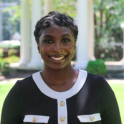
D’Arion Johnston is a doctoral candidate in USC’s Counselor Education, Ph.D. program
in the College of Education and expects to graduate in May 2027. A 2025-26 Graduate
Student Teaching Award recipient, Johnston hopes to use the program to design learning
opportunities that help future counselors practice skills, reflect on their experiences
and connect coursework to real-world practice. She plans to bring that approach to
her future work as a counselor educator and researcher.
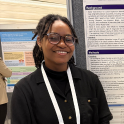
Dalia Marquez
Dalia Marquez is a doctoral student in USC’s Clinical-Community Psychology, Ph.D.
program in the McCausland College of Arts and Sciences and expects to graduate in
2032. New to Columbia, South Carolina, Marquez is eager to learn from local organizations
and explore how community partnerships can enrich psychology education. Through the
program, she hopes to bring community-connected experiences into psychology courses
and strengthen her future work with diverse communities.
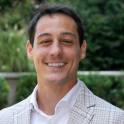
Ty Michalowski
Ty Michalowski is a doctoral student in USC’s Exercise Science, Ph.D. program in the
Arnold School of Public Health and expects to graduate in 2029. A teaching and research
assistant, Michalowski hopes to use the program to develop curricula that connect
classroom learning with experiences beyond the classroom and examine how those approaches
shape student engagement in athletic training education. He also looks forward to
mentoring students as emerging researchers and community leaders.
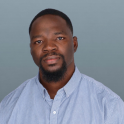
David Owiredu
David Owiredu is a doctoral candidate in USC's Epidemiology, Ph.D. program in the
Arnold School of Public Health and expects to graduate in May 2028. His research in
maternal and child health, public health surveillance, and community-based projects
has shown him how epidemiologic and biostatistical methods can address real public
health challenges. Through the program, he hopes to strengthen his mentoring and teaching
skills while helping students connect classroom learning to practical experience.
He plans to pursue a faculty career in epidemiology, contributing to research that
translates evidence into practice.
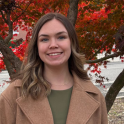
Abby Scott
Abby Scott is a doctoral candidate in USC’s Biomedical Engineering, Ph.D. program
in the Molinaroli College of Engineering and Computing. Through the program, Scott
hopes to develop projects that help students apply core concepts in creative ways
and support undergraduate researchers as they reflect on and communicate their findings
to varied audiences. She plans to carry these approaches into a future career in academic
research and teaching.
CIEL administers the Graduate Experiential Learning Fellows Program in partnership
with The Graduate School. Graduate students with questions about the program can contact
CIEL leadership: Sarah Williams, faculty executive director, at swilliams@mozart.sc.edu, or Lauren Epps, staff director, at eppslg@mailbox.sc.edu.
Challenge the conventional. Create the exceptional. No Limits.