COLUMBIA, S.C. - As artificial intelligence (AI) continues to transform healthcare, the University of South Carolina is expanding opportunities for medical students and researchers to develop skills in emerging technologies.
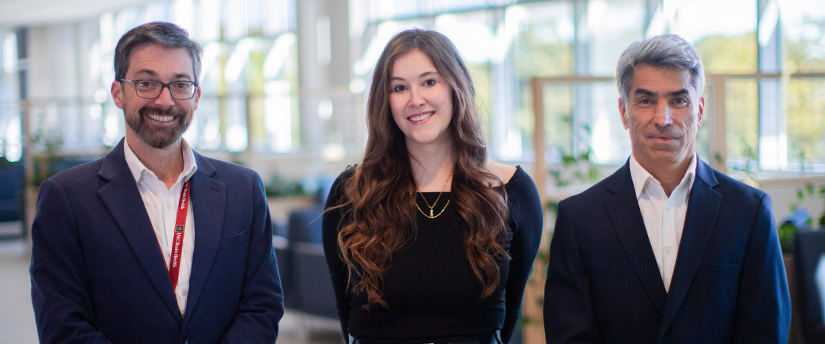
Leonardo Bonilha, M.D., Ph.D., Dorothea Krebs Professor of Neurology and Smart State Chair at the Floyd School of Medicine, and Homayoun Valafar, Ph.D., Bank of America Professor and Chair of Computer Science and Engineering at the Molinaroli College of Engineering and Computing and Director of USC's AI Institute, have received funding as multiple principal investigators for AI Literacy in Medical Education in South Carolina. The project is supported by the National Science Foundation (NSF) through the South Carolina AI-Ready Healthcare Workforce ADAPT in SC initiative.
With support from USC's AI Institute, the grant will expand the Floyd School of Medicine's AI in Medicine Extracurricular Track and introduce specialized AI training for translational researchers.
Building on Existing Success
The AI in Medicine Extracurricular Track, led by Program Director Kasie Roark, MS,
has established a foundation for introducing Floyd School of Medicine medical students
to AI and its applications in healthcare. Roark's work developing and implementing
the track helped lay the groundwork for securing this funding, which will support
the program's continued growth. The expanded program will build on her ongoing efforts
to keep the extracurricular track curriculum responsive to advances in AI while maintaining
a focus on its responsible use.
"Since its launch, the AI in Medicine Extracurricular Track has continued to evolve alongside the rapidly changing landscape of artificial intelligence,” said Roark. “As AI technologies advance, we continuously refine our curriculum to ensure students are equipped with the most current knowledge and an understanding of emerging applications in healthcare. Throughout this evolution, we have maintained a strong emphasis on AI ethics, encouraging students to critically evaluate both the opportunities and challenges associated with these technologies. This new funding will allow us to build on that foundation, expand educational and hands-on learning opportunities, and better prepare future physicians to navigate an increasingly AI-integrated healthcare environment responsibly."
The grant will support a two-phase training initiative. The first phase will expand introductory AI education for medical students in the extracurricular track, while the second will provide researchers across USC with hands-on training in AI applications for brain health imaging, using de-identified neuroimaging data. With Valafar leading USC’s AI Institute and Bonilha leading its Brain Health Center, the project draws on one of USC’s greatest strengths: the opportunity to bring together experts across disciplines to advance medical education and research.
“What excites me most is preparing future physicians and researchers to use AI thoughtfully and confidently—so they can turn advanced imaging and data into better discoveries, more personalized care, and healthier lives for patients across South Carolina,” said Valafar. “I am equally enthusiastic about connecting USC’s AI Institute and Brain Health Center to create a stronger platform for interdisciplinary training, research, and clinical innovation.”
Advancing AI Education and Research
By bringing together expertise from the Floyd School of Medicine and USC's AI Institute,
the project aims to bridge the gap between emerging AI technologies and their applications
in medical research and clinical practice. Bonilha emphasized that a foundation in
AI will help future physicians evaluate how these tools can inform patient care.
“Learning about the foundations of AI will equip future physicians to use these tools effectively and critically assess how they shape medical care. This knowledge will help them identify where AI can strengthen evidence-based medicine and improve outcomes for patients,” said Bonilha.
Over the grant period, the initiative will provide training to at least 40 medical students and researchers, with educational materials and recorded sessions developed for future use. Through these efforts, USC aims to strengthen AI literacy and prepare South Carolina's future healthcare workforce to navigate an increasingly technology-driven medical landscape.