Artificial intelligence, already baked into everyday life with virtual assistants, GPS navigation and autonomous driving, is coming for medicine. And the University of South Carolina’s School of Medicine Columbia has begun preparing its students to understand the technology’s potential — and its shortcomings.
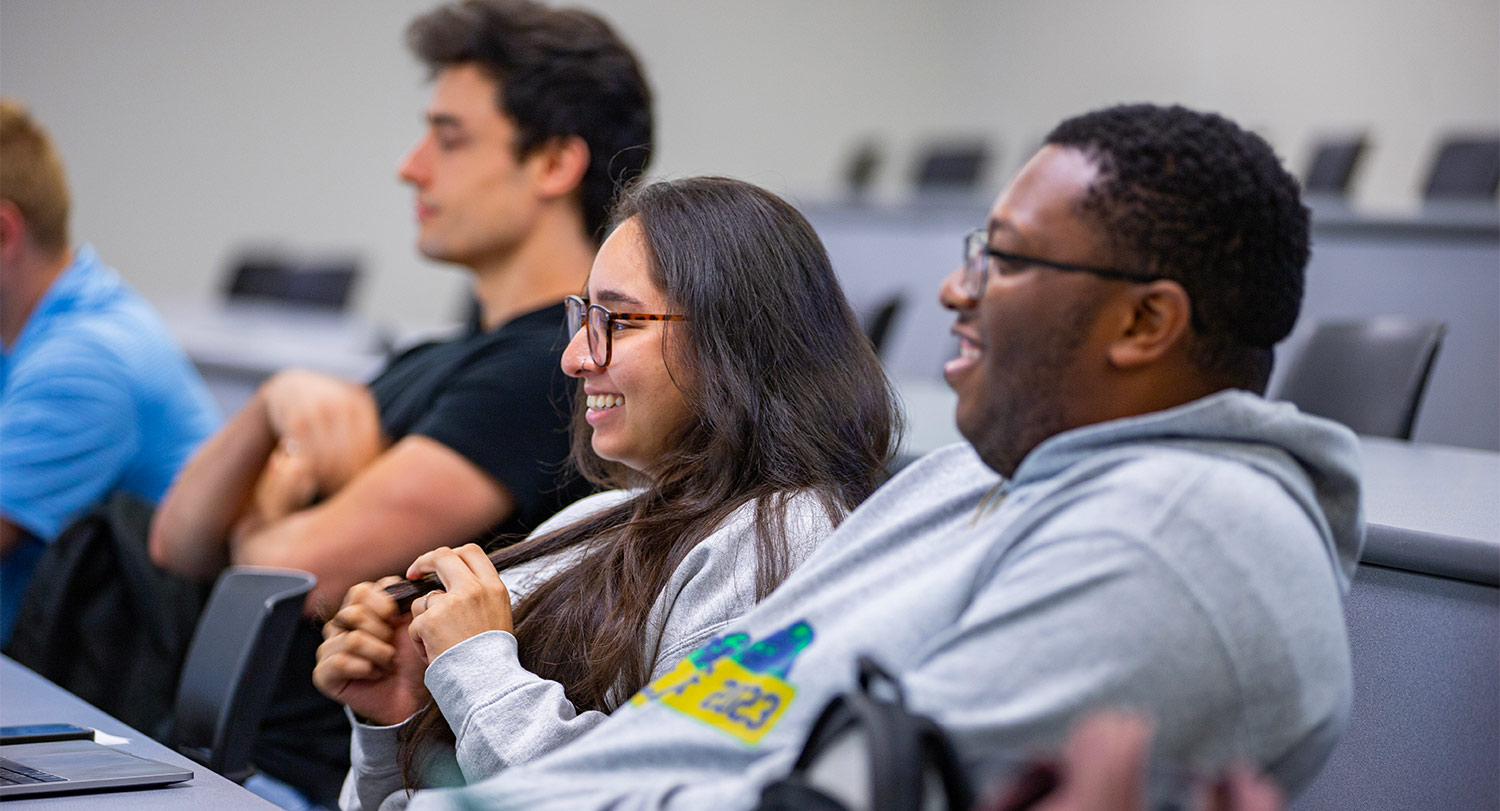
The medical school partnered last year with the Molinaroli College of Engineering and Computing to launch the AI in Medicine Extracurricular Track, an interdisciplinary pilot program with eight lectures — the first of which is required for all medical students — intended to give first- through third-year medical students a better understanding of how AI works and how it can be used in health care. The inaugural cohort of 10 students has completed its first year and a second cohort will be selected this summer.
“There are three pieces to this — technology, which the computer science faculty are teaching; the ethical and legal part, which the law school is assisting us with; and medical knowledge, which we teach,” says P.K. Krajacic, associate dean for undergraduate medical education at the USC School of Medicine Columbia. “Our vision is to train our students so that 10 or 20 years from now, they will understand enough about AI to know which of the latest AI tools are reliable and safe for their patients.”
AI already is being used to summarize digital medical records, assist in medical imaging analysis and to provide predictive analytics for diagnostic and treatment decisions.
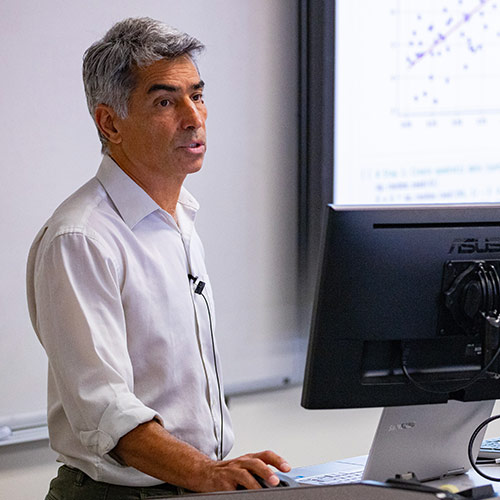
Homayoun Valafar, chair of the computer science and engineering department and director of USC’s AI Institute, is co-directing the AI in Medicine initiative with Leonardo Bonilha, a neurology professor and the medical school’s senior associate dean for research. Valafar likens AI to a device like others used in medicine such as stethoscopes and handheld ultrasound.
"When you don’t know how to use a tool properly, it’s going to get you into trouble,” says Valafar, who teaches the initiative’s introductory lecture. “It’s critical for users of AI technology to know how to use it properly. AI can increase physicians’ productivity, but they have to understand the rules of engagement.”
Forest Agostinelli and Christian O’Reilly, assistant professors of computer science who both collaborate with health care researchers at USC, will teach upcoming lectures focused on biomarkers and deep learning and the fundamentals of neural networks. They say teaching AI to medical students requires a different approach than teaching computer science students, who are accustomed to writing computer code and have a more innate understanding of AI concepts.
“The first level is AI literacy,” Agostinelli says. “I see this track contributing to them being able to understand and evaluate different AI applications, to know if a particular AI tool is something they can trust.”
Ryan Titus, who earned his undergraduate degree from USC, is among the first cohort of students in the AI and Medicine track.
“During my time in the neurology department at Prisma Health Richland, I’ve seen firsthand how AI-driven algorithms can support clinical decision making and improve patient outcomes, serving not as a replacement for physicians but as a valuable tool,” Titus says. “As physicians, we are ultimately accountable to our patients, not the algorithms. That’s why it’s just as critical to study how and why AI can make mistakes.”
Medical student Abigail Chase says the AI in Medicine track is helping her understand AI’s potential for relieving some of the drudgery tasks of medicine such as notetaking, billing and coding that consume significant time.
“This track aims to educate us on how AI works so we can develop trust in its capabilities and understand when to rely on it, and just as importantly, when not to,” she says.
Bonilha hopes it will become part of the curricula of other degree programs on the Columbia campus, including the physician’s assistant program and the nurse anesthesia program.
“All of the first-year medical students take the introductory lecture that Dr. Valafar gives,” Bonilha says, “and we have an AI medicine interest group, a student-led organization that’s a bridge between the students in the extracurricular cohort and the rest of the med school student body. Eventually, we’ll want to look at including this in the curriculum for all medical students.”