An environmental chemistry research lab at USC at the forefront of efforts to find and identify disinfection byproducts in U.S. water treatment systems has discovered a new, highly toxic class of byproducts.
The compounds, known as halo-cyclopentadienes, are like the more than 700 other known disinfection byproducts in that they form in water treatment systems as an unintended reaction of chemicals used for purification. The federal Environmental Protection Agency regulates levels of 11 of the most common disinfection byproducts found across the country.
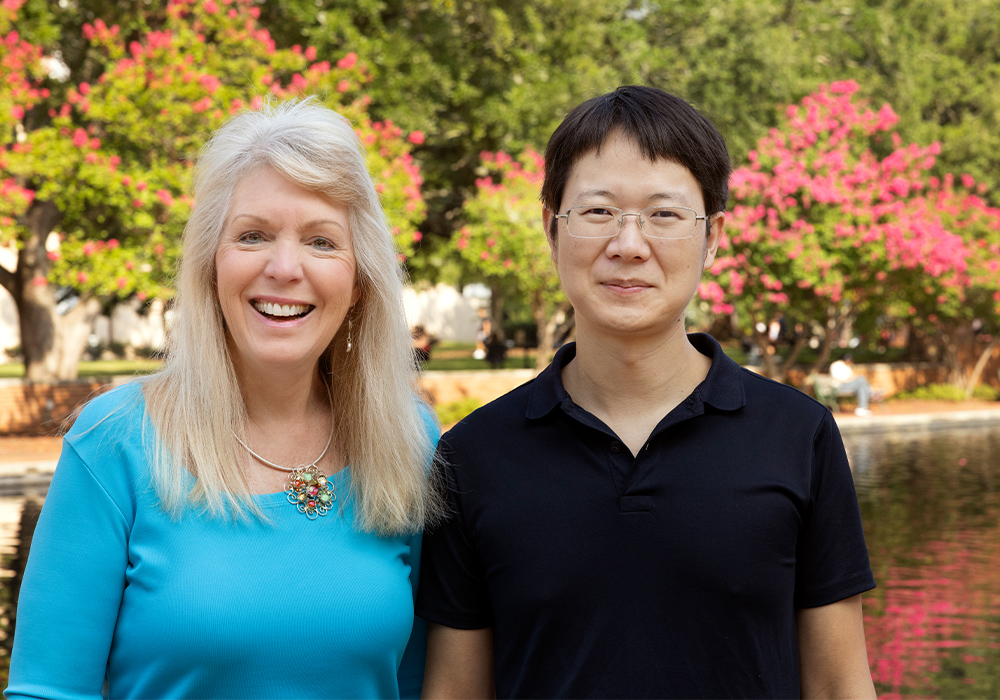
“Just when you think all of the possible classes of disinfection byproducts have been discovered, here comes something completely out of nowhere. This one is concerning because it contains chlorine, bromine and iodine,” says Susan Richardson, a veteran environmental and analytical chemistry professor who had an extensive research career with the EPA before joining USC’s chemistry and biochemistry faculty in 2011.
The discovery in her lab was made by Jiafu Li, who is now a postdoctoral fellow on Richardson’s team. His finding was aided by a highly sensitive mass spectrometer instrument from LECO Corp.
“It’s the most sensitive mass spectrometer I’ve ever had, and it’ll give you the complete mass spectrum of a sample at very low detection limits. That led to this discovery of a new class of disinfection byproducts and an NSF grant to find out how extensive the problem is,” Richardson says.
Ultimately, I want to make water safer. My goal is not to scare people, but you’ve got to know what’s there and how to deal with it and remove it so that we can make the water safer.”
The NSF grant will fund a survey of water systems around the country to better understand how pervasive the new compounds are and what conditions and treatment systems might increase or decrease its presence.
“We’ve done our sampling at water plants just as the finished water leaves the plant, so we want to determine whether this new class of compounds remains stable or degrades over time in water distribution pipes,” Richardson says.
Li is also using the new mass spectrometer to analyze samples Richardson’s lab has collected during previous research projects to look for other new disinfection byproducts. His efforts have uncovered new data, including a discovery that Richardson says will be announced in the coming months and could be more important than the discovery of the new class of disinfection byproducts.
“I think we have safe water, but I think we can do better,” says Richardson, who last year was named a fellow in the National Academy of Engineering. “Ultimately, I want to make water safer. My goal is not to scare people, but you’ve got to know what’s there and how to deal with it and remove it so that we can make the water safer.”