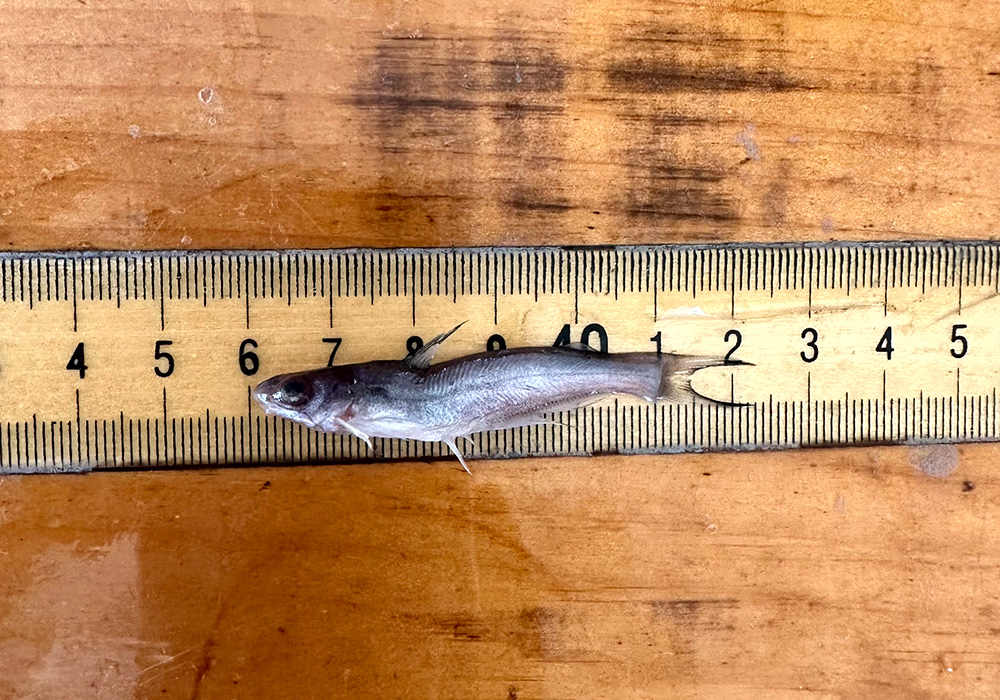
Native denizens of Lowcountry estuaries may be developing a pseudo Goldilocks complex: Who’s eating their porridge?
Scientists at USC’s Baruch Institute for Marine and Coastal Sciences in Georgetown are studying juvenile blue catfish, normally freshwater animals, that have joined the briny buffet along rivers emptying into the Winyah Bay estuary.
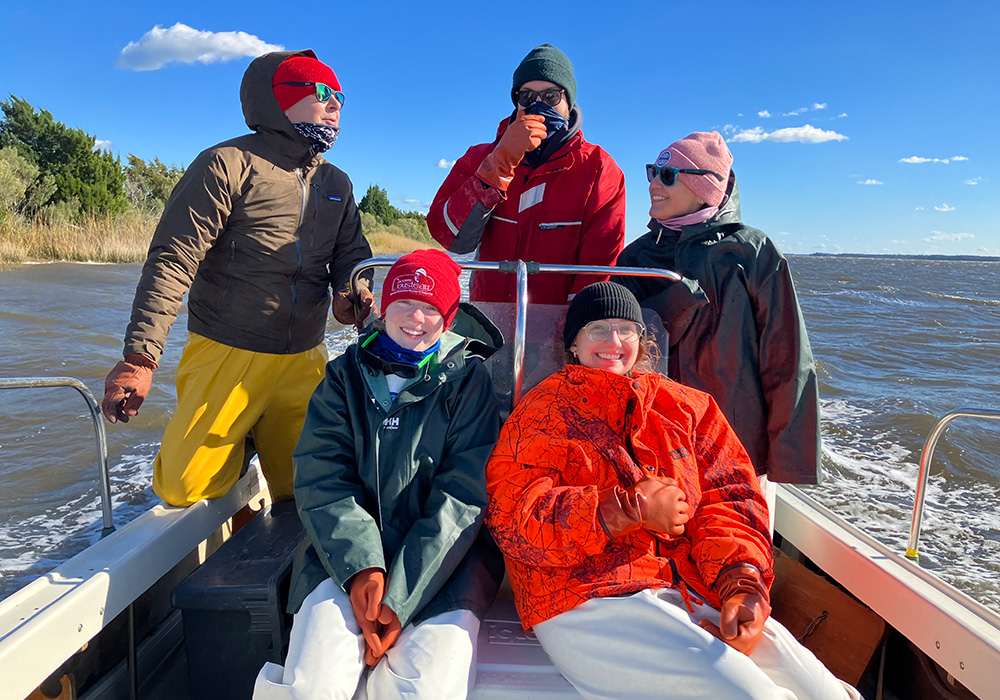
Matt Kimball, assistant director of USC’s Baruch Marine Field Laboratory in Georgetown, in 2023 led a team of researchers who boarded boats and fanned out across four rivers that feed the estuary, as well as Winyah Bay, to trawl for these interlopers and study the contents of their guts.
“The same sites were sampled in 1977-78. We wanted to see how much had changed,” Kimball says. “One thing is that they didn’t see juvenile blue catfish at all in the late 1970s. They are now almost everywhere you look. They can tolerate salty water and have a generalist diet.”
Through efforts to stock southeastern freshwater reservoirs in the 1960s, invasive blue catfish were introduced into the watershed. Because of their salinity tolerance, their populations have spread downriver into SC estuaries and other locations along the Atlantic coast.
They didn’t see juvenile blue catfish at all in the late 1970s. They are now almost everywhere you look. They can tolerate salty water and have a generalist diet.
Kimball says the juveniles eat small crustaceans. Once they reach 6 inches, they start eating larger invertebrates. “We know they overlap in diet with other species. It’s important to know when that overlap occurs.”
Too hot. Too cold. Or just right.
Estuaries serve as nurseries for many important species of fish and invertebrates. The presence of non-native juvenile blue catfish can impact the quality of estuaries as habitats for these species due to competition from the juvenile blue catfish for local food/prey resources.
Scientists have called the juvenile blue catfish “opportunistic generalists” because they have a broad diet, behaving as omnivores when they are small but shifting to a fish-only diet when they mature.
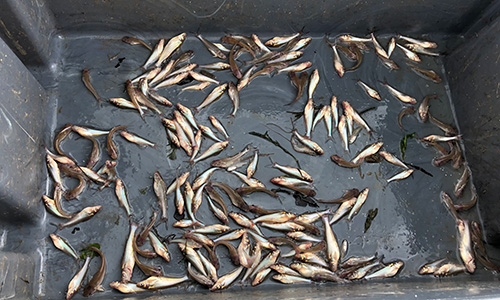
The Baruch researchers examined the gut contents of 406 juvenile blue catfish, finding that their diets varied among rivers and seasons. Amphipods and crustacean parts made up the bulk of their diet across all trawling locations.
Former USC student Rebecca Clyburn participated in this research, co-wrote the scientific research report and authored her Honors College senior thesis on the topic in 2024.
“Working on my thesis with the team at Baruch deepened my understanding not only of blue catfish, but more importantly, it reshaped my perspective on research and the mindset of a scientist,” Clyburn says. “Being a scientist is not only about being skeptical, but also being open to novel ideas, unexpected outcomes and different perspectives. I was surprised to find that the work there was always collaborative and creative. My mentors at Baruch showed me that research is driven by teamwork and passion for the project. I will continue to carry all these lessons into my future endeavors.”
While the researchers found no “discernable pattern” of diet differences among rivers, they remain confident that competition for prey resources with common native fish species in the Winyah Bay estuary is “highly likely.”
“These results represent a critical first step in elucidating potential impacts of juvenile blue catfish on native prey in estuaries,” the team’s report stated.