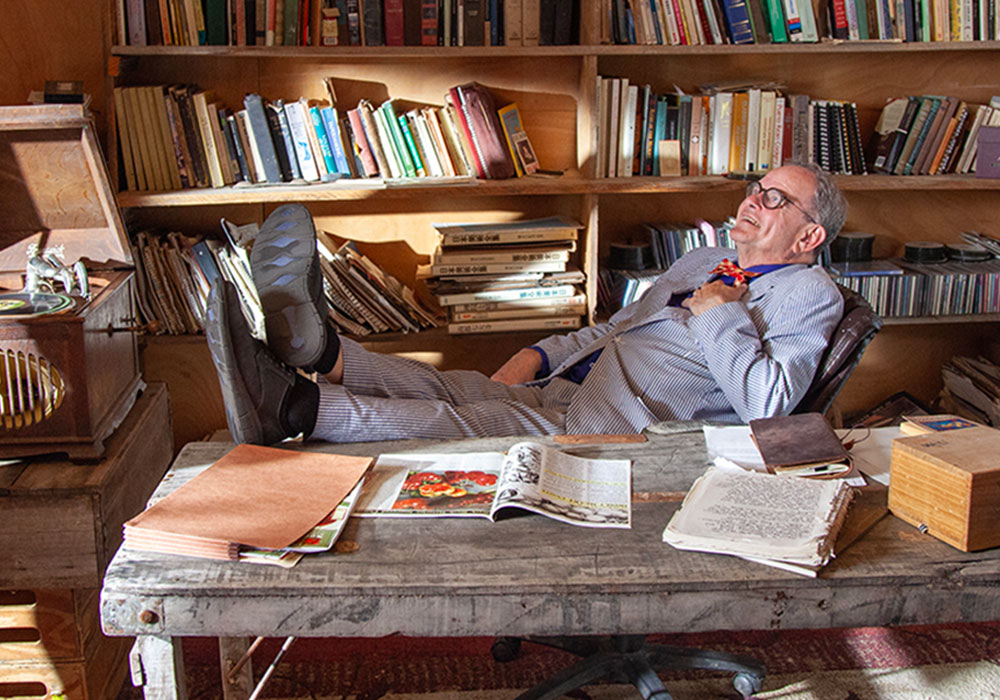
David Shields is no stranger to food history. He’s no stranger to storytelling. And while he officially retired from the University of South Carolina’s Department of English in 2024, he hasn’t lost his taste for research, either.
Long before he turned out the classroom lights, the Carolina Distinguished Professor Emeritus fashioned a parallel career chasing down lost ingredients from our nation’s culinary past, writing about them and bringing them back to the American table. He doesn’t grade papers anymore, but the scholarship continues.
He has authored articles and books on foodways and heirloom produce. He is a frequent speaker on the Slow Food circuit, which promotes clean and nutritious food, sustainable agriculture and local culinary traditions. His efforts have been highlighted in The New Yorker, Garden & Gun and The Guardian. Along the way, he has built a vast network of farmers, seed savers and likeminded enthusiasts across the South.
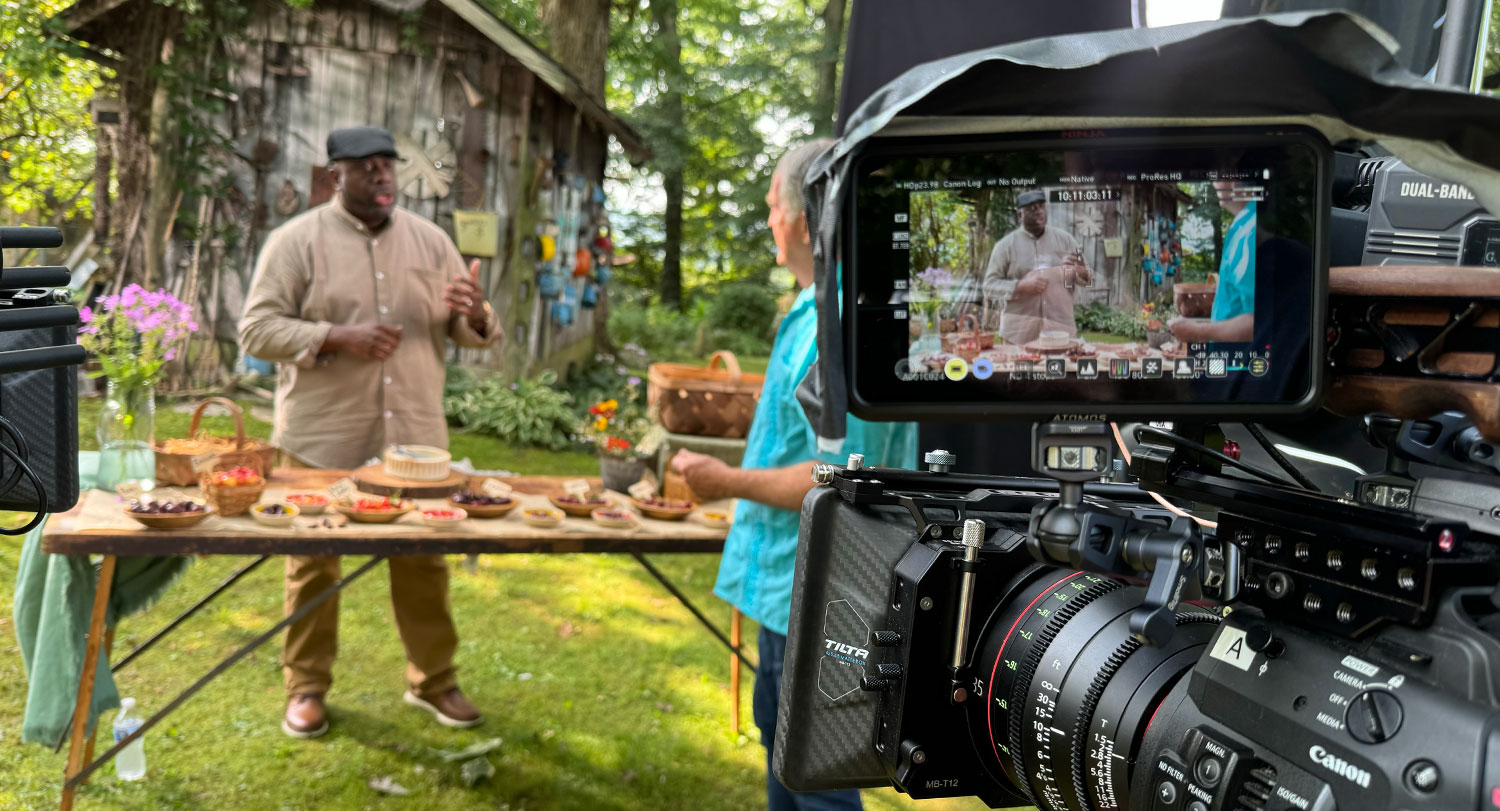
Now, Shields is pouring his research skills and foodways connections into a new SCETV program with chef, educator and cohost Kevin Mitchell. The Savers of Flavor, produced and directed by filmmaker Ginger Cassell, debuted this spring.
Shields and Mitchell bring the on-screen chemistry. The two avowed culinarians have been collaborating since 2015, when they joined forces to stage the Nat Fuller Dinner, a reenactment of a historic 1865 banquet at which white and recently emancipated Black Charlestonians dined at the same restaurant table. Shields did the research for that ambitious project. Mitchell, an instructor in the Culinary Institute of Charleston at Trident Tech, portrayed Chef Fuller.
And that was just the beginning. After the Nat Fuller Dinner, Mitchell earned a master’s in history at the University of Mississippi. Later, Shields invited him to be his coauthor for Taste the State: South Carolina's Signature Foods, Recipes, and Their Stories.
“The University of South Carolina Press had approached me about doing a book on, like, the top ten South Carolina foods. I didn't want to do that,” Shields recalls. “I wanted to do something more involved, and I said, ‘I'll only do it if I have a professional culinarian working with me, and someone who can talk about the African American food experience.’”
The book turned out to be the press’s top seller for two years straight, prompting Shields and Mitchell to consider future collaborations. Educational television may not have been on their radar, but it was a natural next step.
“I think every chef wants to have their own cooking show. I don't know too many chefs who don't,” says Mitchell, who accompanies Shields on his culinary journeys through the American South. “Now, did I imagine I would end up on a show like The Savers of Flavor? No. That's where Ginger comes into our story.”
Cassell, who studied media arts at USC, worked on other food-related programming, including Alton Brown’s Food Network program, Good Eats, before returning to Columbia and a job at SCETV. For years, she had dreamed of producing a show that would explore her own interest in culinary traditions. She met Shields at a Slow Foods dinner hosted by Columbia’s City Roots Organic Farm then pitched a concept that would capitalize on his and Mitchell’s expertise and rapport.
“I was looking at the book they’d done together and I thought, this is a beautiful partnership,” says Cassell. “We've got to get both of them. David has studied the foodways and brings all this knowledge to the table, and then if we go find these ingredients, we’ve got to cook it all up.”
The project was initially greenlighted for four episodes. For one episode — the first to be filmed but the second to air — Cassell’s nine-person crew headed to Kentucky in search of a lost variety of cherry called the Dyehouse cherry, which Shields describes as “sharper and more wonderfully sour” than the Montmorency cherry that has dominated the American market since the mid-20th century. “If you’re making a sour cherry pie, or a cherry jam,” he explains, “this is your cherry.”
The cherry tree also ticked a few other boxes — the flowers are pretty, the fruit is attractive and as Shields explains, cherries hold a special place in the popular imagination and come with their own mythology. The Dyehouse in particular offered a unique allure.
“Cherries require a good number of chill hours, something which you don't have many of in the South,” Shields explains. “But there was this one cherry tree that required less, and it took off because of that. From the 1870s to World War II, it was planted everywhere in the South. By the time we went looking for it, there were almost none.”
The keyword is “almost.” Whether it’s a sour cherry rediscovered in Kentucky or the lost Early Frame Pea found in Little Mountain, South Carolina, or a special variety of okra from Georgia that can be used to make a flavorful seed oil, every episode begins with a solid lead based on Shields’ research.
After that, Cassell conducts pre-interviews with the landowners and any other players in a particular episode and Shields drafts a script. Cassell then makes any necessary revisions to accommodate visual storytelling. Mitchell weighs in with his own expertise and edits.
“I've always believed in the collaborative nature of creative enterprises,” says Shields. “And, you know, I'm entirely aware that my visual sense is not as refined as other people’s and that there are issues about pacing and timing where Ginger is the expert.”
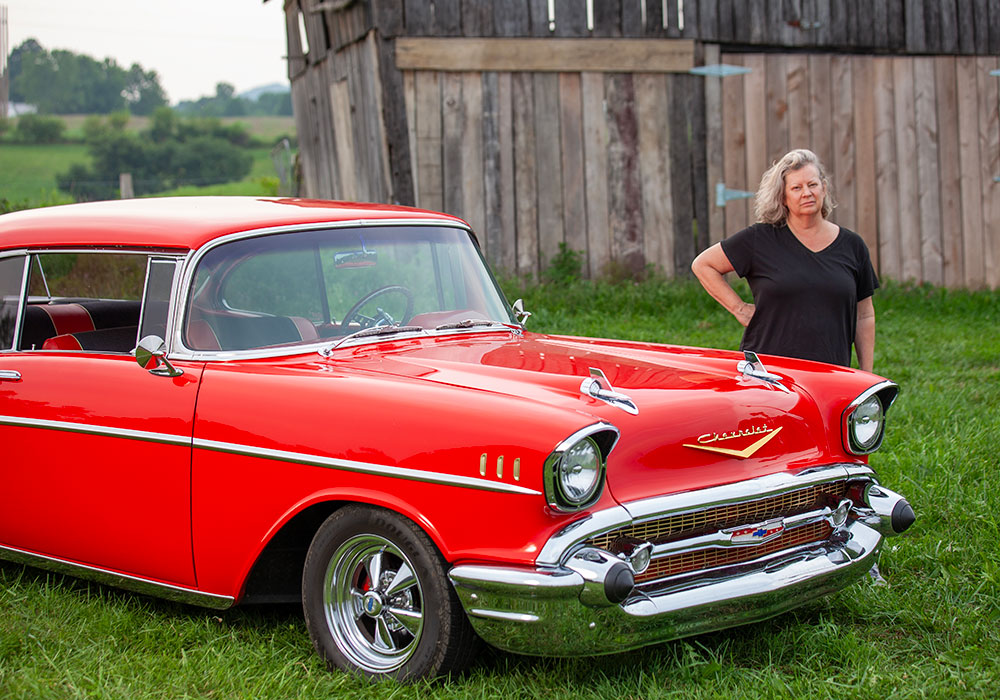
Once pre-production is complete, they hit the back roads in an appropriately styled vintage car and roll film. For the Dyehouse cherry episode, they went with a restored ’57 Chevy. Naturally, it was painted a bright cherry red.
“They do a lot of the history telling on the way,” says Cassell. “We want it to be educational, so as you see the car going through Kentucky, you start to understand where the cherry grows and where it comes from.”
You also start to understand the often unwitting of heroism the people who preserve the ingredients, whether by cultivation or neglect. In the case of the Dyehouse, that hero was Dan Dutton, whose family has lived on the same land since before the Civil War.
Dutton learned that the ancient tree in his family’s garden might be something special after a Kentucky radio station put out a call for anyone who might have a Dyehouse cherry tree on their property. A scientist from the University of Kentucky confirmed the find a few years ago and contacted Shields, who later offered it as a contender for The Savers of Flavor.
The team had already decided the debut episode would focus on the Early Frame Pea, which migrated across the South from Thomas Jefferson’s Monticello and was rediscovered in rural South Carolina, but production logistics dictated a slightly different schedule when it came to filming. The Dyehouse was the right ingredient at the right time.
“We wanted variety of locations. We wanted a variety of seasons. We wanted a variety of ingredients,” says Cassell. “But the cherry was the earliest to come to fruit, and so that was a big part of the story. And then when we got the go ahead, we wanted to go as soon as we could and shoot it.”
And they got what they came for, albeit with a few knotty twists. By the time they arrived, the mother tree featured in the Dyehouse cherry episode lay fallen in the Kentucky grass, a victim of a winter storm two years earlier, but several suckers had sprouted from the tree’s sprawling root system and were mature enough to bear fruit.
The cherry’s survival is a testament to the fragility of the ecosystem as well its natural resilience. It’s also a testament to Dutton’s laissez-faire attitude toward the land where the cherry grows.
“Dan would not have known he had it if it wouldn't have been for that broadcast,” says Cassell. “He easily could have just mowed the tree over, because a bunch of them grow up like shrubs, and a piece of history would have been lost.”
Luckily, that wasn’t the case. Luckily, too, Dutton was able to harvest just enough cherries for a single pie before the birds got to them. With a little help from the Dutton family recipe book, Mitchell prepared the dessert that closed the episode.
“Kevin and Dan baked this cherry pie together,” Cassell adds. “And it was just so wonderful because it was his mother's old recipe.”
For Shields, who views The Savers of Flavor in almost evangelical terms, filming the episode also marked a new chapter. He, Mitchell and Cassell are out to educate and entertain, but there is a larger mission rooted in the storytelling itself.
“I’ve really become impressed by the necessity of what we're doing,” Shields explains. “Because there are people who've got these heirloom ingredients that have superior flavor and are more nutritious, but there's no story that attracts the attention of the populace. You can have the best tasting thing in the world, but if you don't have a way of reaching the public, if you can't connect it to the imagination, it doesn't matter how tasty it is. It doesn't matter.”