
For Magdalena Stawkowski, an associate professor in the University of South Carolina Department of Anthropology, the nuclear afterlife of the Cold War has become the cornerstone of her research. It’s also the inspiration for her book, Atomic Collective: Radioactive Life in Kazakhstan, which was published in 2025 by the University of Toronto Press.
Stawkowski, whose ancestors were part of the World War II-era forced relocation of ethnic Poles from what is now Belarus to Kazakhstan, first visited the Eurasian steppe in 2007 to research the Polish diaspora. She wanted to know why 50,000-plus self-identifying ethnic Poles still lived there half a century on, despite intense cultural pressure to assimilate.
But that’s not where her research ultimately landed. While visiting the former Soviet state, Stawkowski learned of an even more marginalized group — a series of small communities living at Semipalatinsk, a former nuclear test site in a remote part of the Eurasian steppe. Her interest was piqued, both personally and professionally.
The area, which is also known as the Polygon, is an inhospitable place. The winters are brutal. The infrastructure is lacking. Grass fires rage across the steppe. Wolves attack the livestock and sometimes the people. And then there’s the nuclear variable.
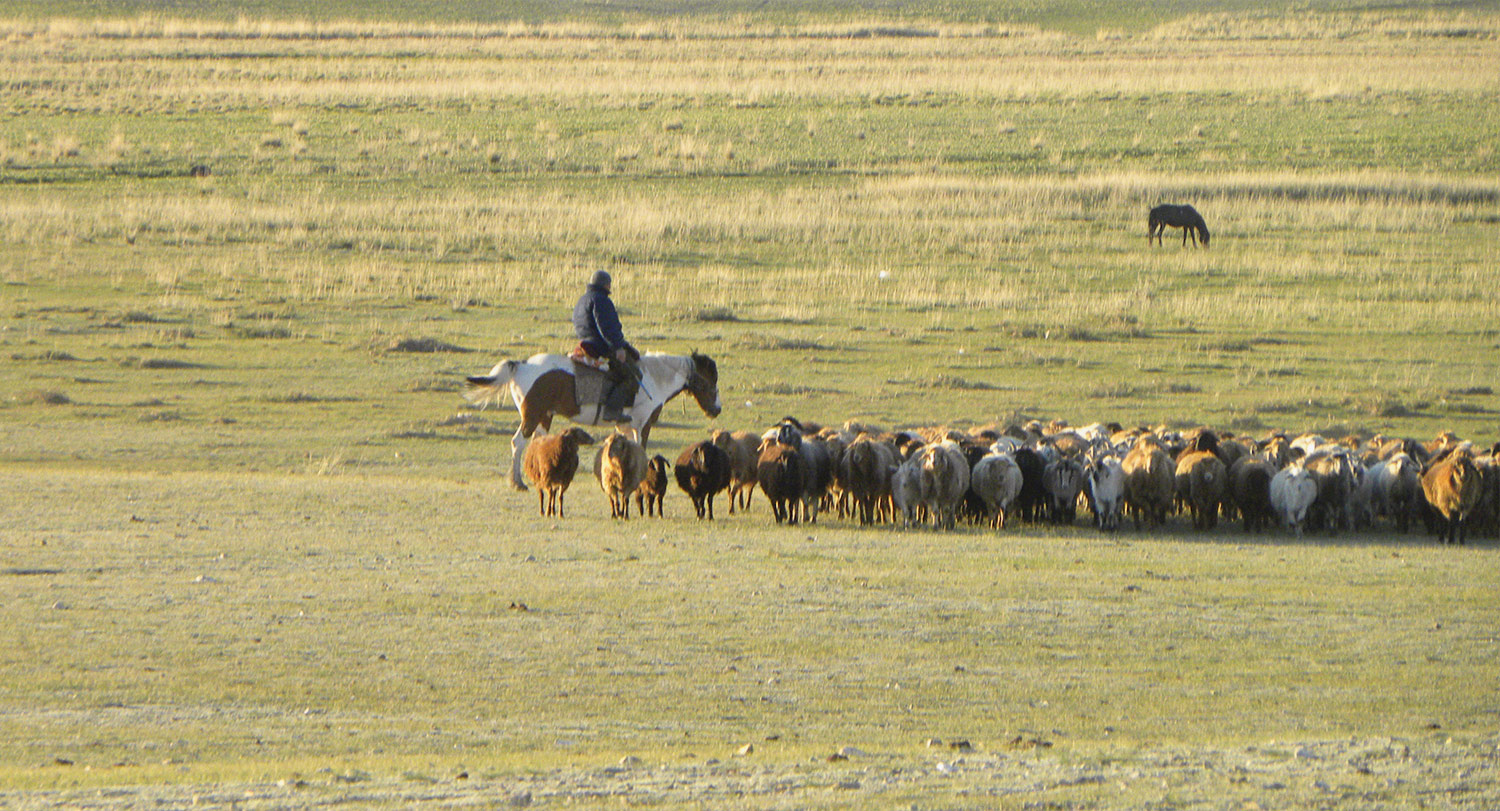
Over a 40-year span beginning in 1949, the Soviet Union conducted more than 450 nuclear tests at the site, both above and below ground. Not surprisingly, the soil and water contain high levels of plutonium, tritium, strontium-90 and other radionuclides. Cancer rates and the incidence of birth defects and other health problems are considerably higher than elsewhere. So are suicide rates.
And yet, there is an unfounded but not-uncommon belief among many of the people living there that their bodies have adapted, and that moving to a less toxic environment would harm or potentially even kill them.
“When I heard that people are literally living on the test site, I just couldn’t let go of this,” says Stawkowski. “And I was shocked. How do we know about Chernobyl, how do we know about Nevada, but we know zero about Semipalatinsk, and people live right there on the site?”
Nearly a decade later, the anthropologist was living near the site herself. She wanted
to know how the people of the Polygon had adapted to the uniquely harsh environment
and how their view of radiation
had evolved over time. So she spent a year working alongside the village’s women —
tending livestock, churning butter, building fires out of dung or coal and preparing
meals — and she returned every summer
for several years, interviewing everyone she could.

She talked to sheep farmers and the men who work in the area’s uranium mines. She talked to the environmental activist working to clean up Kazakhstan’s hazardous waste. She talked to the local physician who diagnoses and treats the villagers’ cancers and other ailments but doesn’t share critical information about the dangers of radiation because it might upend their way of life — and because, in the physician’s own words, “It’s not like they would understand the results of the study.”
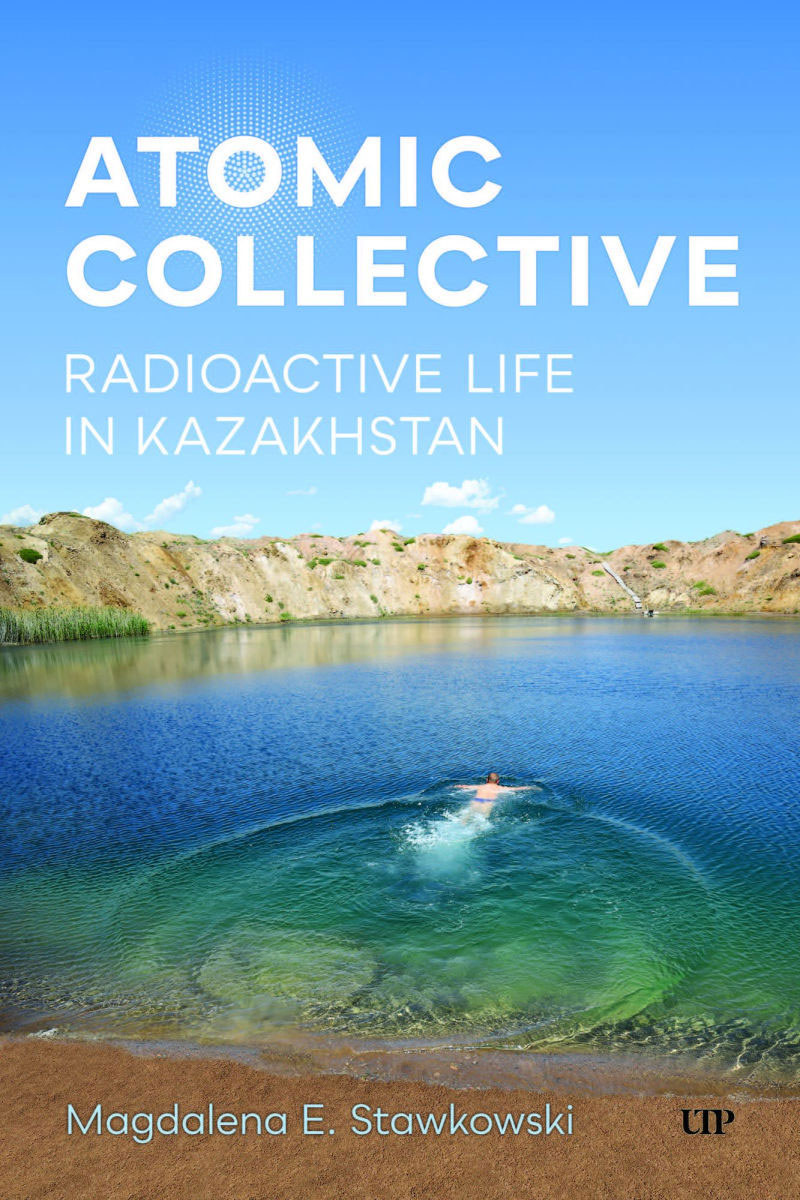
Atomic Collective, by Magdalena Stawkowski, examines life and community at a former nuclear test site in rural Kazakhstan.
“I think the reason I kept going back is because I thought to myself, ‘Nobody wants to talk about the test site. Nobody wants to discuss radiation,’” Stawkowski says. “These people are concerned about everything else but the test site, so it became my own weird obsession.”
On a deeper level, she also wanted to understand how negative perceptions held by people from more developed parts of Kazakhstan, particularly the cities, affect the villagers’ self-image.
These outsiders, as Stawkowski explains, often depict the people of the Polygon as uneducated and backward. And because of the dangers associated with long-term radiation exposure, they frequently stigmatize them, particularly in the media, as mutants.
And yet the people of the Polygon as depicted in Atomic Collective are fiercely proud, resilient, even defiant. They continue to farm toxic land and raise families downwind from one of the worst ecological disaster areas on Earth. They battle grass fires without so much as a mask to protect them from airborne toxins. They swim in lakes that formed in craters made by nuclear explosions, as depicted in the photograph on the cover of the book.
It was a story that needed to be told, Stawkowski says, but it took several years to figure out how. It was important to be honest about the health dangers, but she also wanted to be respectful of the people who have built and sustained a community in that toxic environment through many generations.
“One of my concerns,” she says, “was always, how do you represent a people who are
not irrational,
who are not illogical — it makes sense why they live there — but if you present it
in even slightly the wrong way, it could be taken as, ‘Here’s a bunch of irrational
village people who just need more information to
make the right decisions.’ That wasn’t the case, and I knew it.”