Necessity is the mother of invention — and that’s especially true in the underfunded, stigmatized world of mental health services.
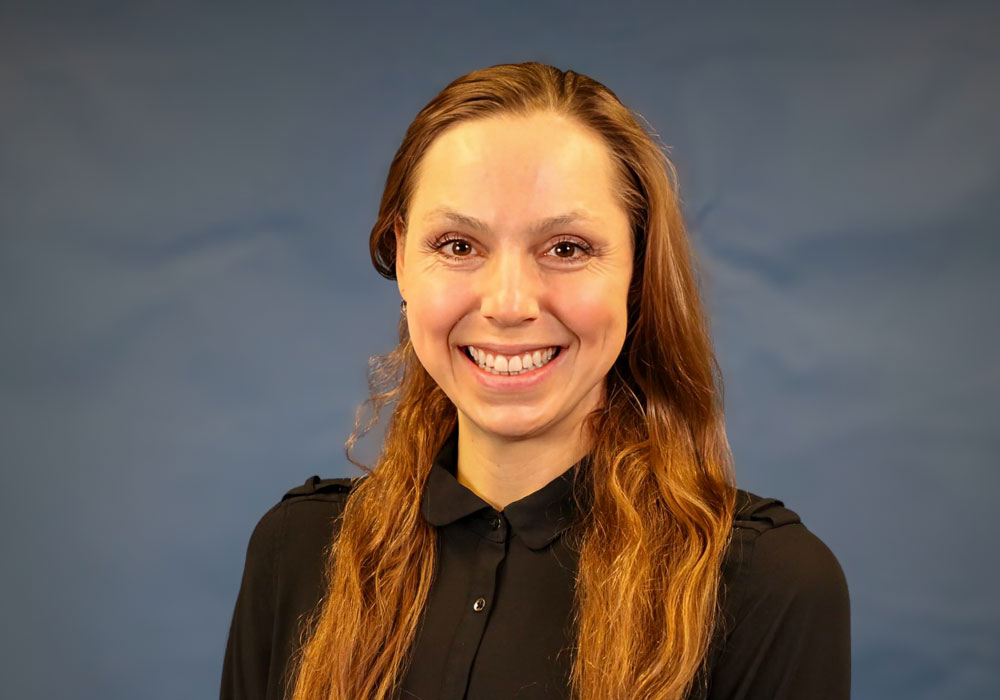
Ask Margaret Janse van Rensburg, an assistant professor who joined the University of South Carolina College of Social Work in 2025. Or ask any of the 24 human service workers Janse van Rensburg interviewed for her dissertation, which explored the barriers they perceive in supporting their autistic clients’ mental health.
The stories she compiled identified a range of challenges — from lack of funding to stigma — but it was the findings that put a human face on the problem.
“One participant spoke about seeing a need for respite for adults on the spectrum, and so the participant hosted a day camp in her back yard,” Janse van Rensburg says. “Her neighbors had a lot of assumptions about what autism is and didn’t like that there were autistic people in their community for day camp. She invited her neighbors over for the camp as a small act of advocacy to try and change their minds. By the end of the day, they were like, ‘OK, maybe this is actually a good initiative.’” The participant lost money hosting the day camp, but she was so glad that she did it.
According to the Centers for Disease Control and Prevention, 3.2 percent of children have received an autism spectrum disorder diagnosis by age 8. While data on autistic adults is limited, researchers estimate the prevalence of autism among adults in Canada to be 1.8 percent. People with autism are more likely than the general population to have ADHD. They are also more likely to experience myriad mental health issues, including anxiety, sleep disorders and depression. Additionally, adults with autism have higher rates of suicidality and report a lower quality of life than their neurotypical counterparts.
While they may find support through school programs or government initiatives as children, fewer resources exist for adults. Complicating the issue is the fact that many autistic adults often navigate a patchwork of limited services with little to no support.
We need to enhance social support for health care workers through either government funded services or through making organizations that can better address the needs like cost and education for practitioners who want to work with autistic people.
For her dissertation at Carlton University in Canada, Janse van Rensburg collaborated with the Ottawa Adult Autism Initiative to better understand how human service workers can help autistic adults overcome barriers to accessing mental health support. The organization had already created a snapshot of Ottawa’s existing supports, services and needs for autistic adults. Mental health, it found, was a recurring theme.
“I wanted to build upon that and understand what professionals, within their networks, were seeing as barriers, but also what they were doing in their practice that might be helping,” she says.
From August 2023 to January 2024, Janse van Rensburg interviewed 24 human service workers about those barriers to mental health services and how these workers responded to them.
The five biggest challenges she identified were funding and cost, knowledge and training, diagnosis, trust, and ableism and stigma. Initially, she thought participants may provide specific therapeutic methods that are supportive of autistic adult mental health, but instead she found that many participants were going beyond the scope of their “work,” stretching themselves thin by offering band-aid solutions to wider societal issues that their patients faced. Examples include taking clients pro-bono, advocating for accessible workplaces and recognizing that cost and wait times can affect access to diagnostic services.
Her findings can inform future research, practice and policy to improve support for human service professionals as they try to meet the needs of their autistic clients.
“In Canada, they’re actually developing what’s called the Canada Autism Strategy, and some of my findings speak directly to that,” she says. “We need to enhance social support for health care workers through either government funded services or through making organizations that can better address the needs like cost and education for practitioners who want to work with autistic people.”
Now, at USC, she is expanding on the research in her dissertation and working toward her goal to enhance outcomes for autistic people and their communities of care using local and community-engaged approaches. One thing she hopes to do is to is build a community of inquiry on autism and neurodivergence research in South Carolina: a structured group where people with lived experience, family members, advocates, professionals and researchers come together to discuss what questions are most important to study.
“Rome wasn't built in a day,” she says. “I think work like this can be intimidating because you’re trying to fill a gap. This research may not move a mountain, but it's pushing that mountain pretty hard, and with the team at the Autism, Family, and Communities Lab and the Carolina Autism and Neurodevelopment Research Center, I can move that mountain a little bit further.”