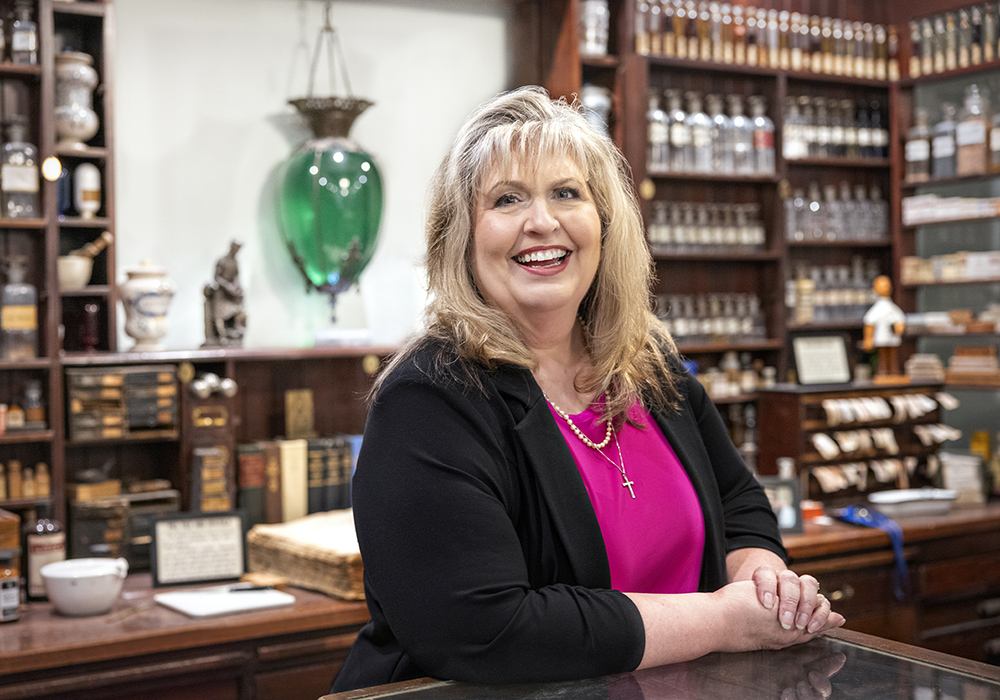
For one day each spring, a laboratory at the University of South Carolina transforms into a bustling pharmacy. Students rush around answering phones and helping customers who walk in with complex requests. Instructor Kathy Quarles Moore calls it “Chaos Lab.”
“It’s a day that seems chaotic, like in a real pharmacy — think the first of the month, when everyone comes in. You’re pulled in so many different directions, but you have to maintain your cool,” says Moore, a clinical associate professor in the College of Pharmacy.
Of course, it’s just a practice session. The “customers” are volunteers Moore coordinates in advance. She developed the award-winning educational experience to give first-year pharmacy students, or P1s, a dose of what it’s like to practice in a real pharmacy.
Moore knows her way around a pharmacy: For more than thirty years, she has worked as a pharmacist at Riley’s Drugs in Lexington, South Carolina. Even after she came on faculty at USC, she kept up her practice. Although it makes for a busy schedule, Moore loves seeing her patients and she loves working in an independent community pharmacy.
“When I was 14, my father got me to run the cash registers one night. Watching him talking with everyone who came in, it hit me that his relationships with patients were paramount to his practice. I remember thinking, ‘I really like that, because I enjoy people.’”
“When students ask me about it, I tell them, ‘If you ever have the chance to work at an independent pharmacy, grab it,’” she says. “Those positions don’t come around very often because people get in independent community practice and enjoy it so much that there’s not much turn around.”
While some community pharmacies are run by major corporations, independent ones are generally owned by individuals and families. Moore says the difference comes down to the level of care and attention she’s able to give patients.
“It’s still busy, but I’m able to come out and talk with people and really get to know them. Especially as a compounding pharmacist, where we’re making personalized medications, it’s important to have those conversations to find out what they actually need,” she says.

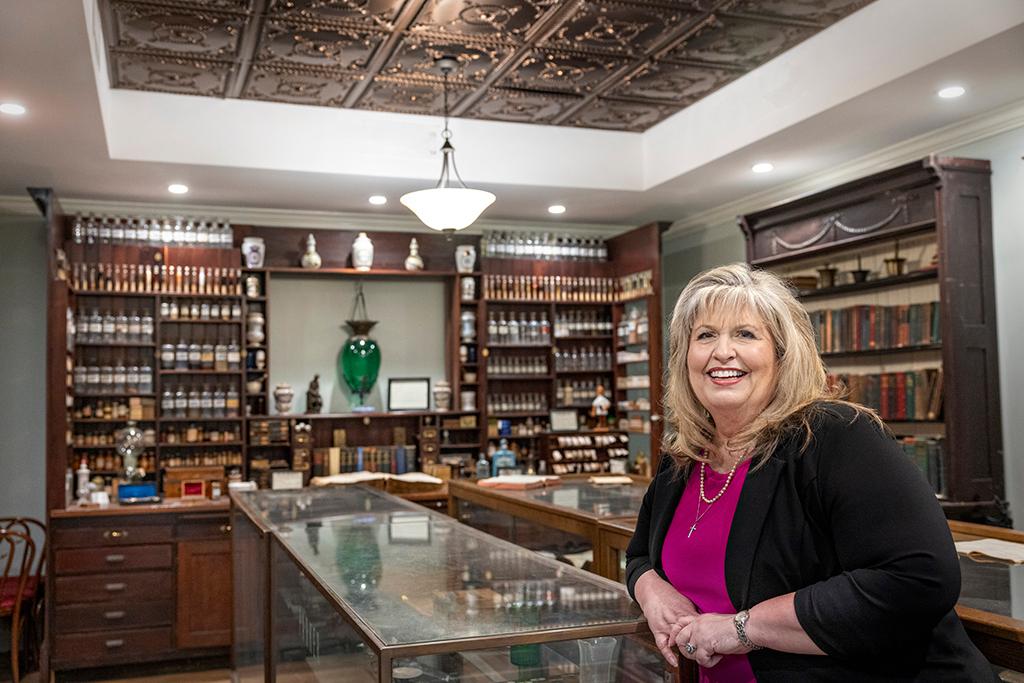
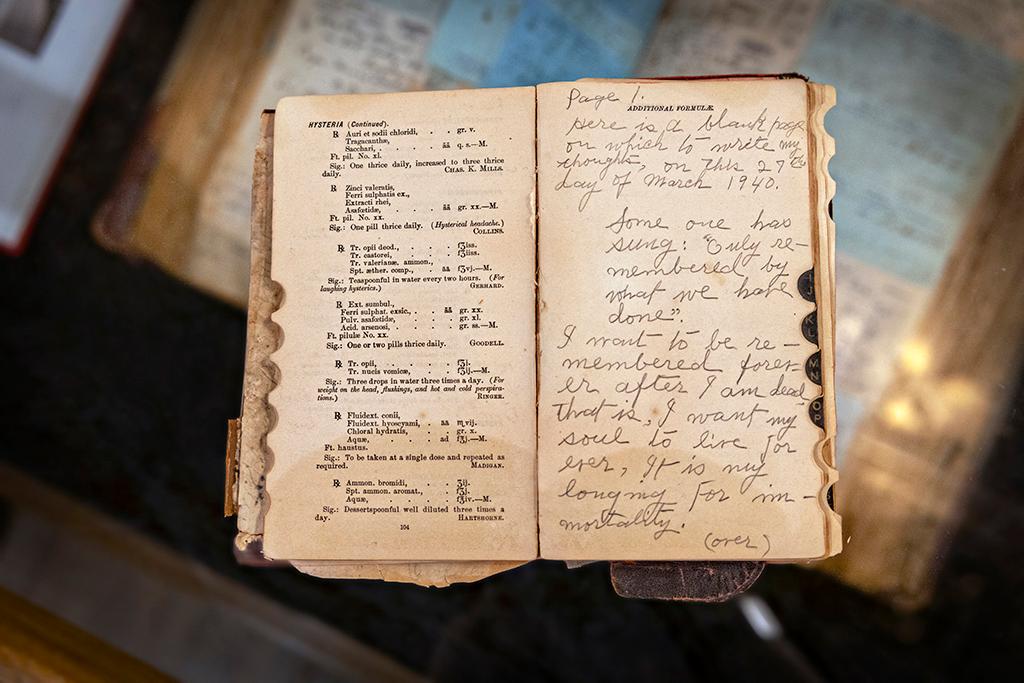
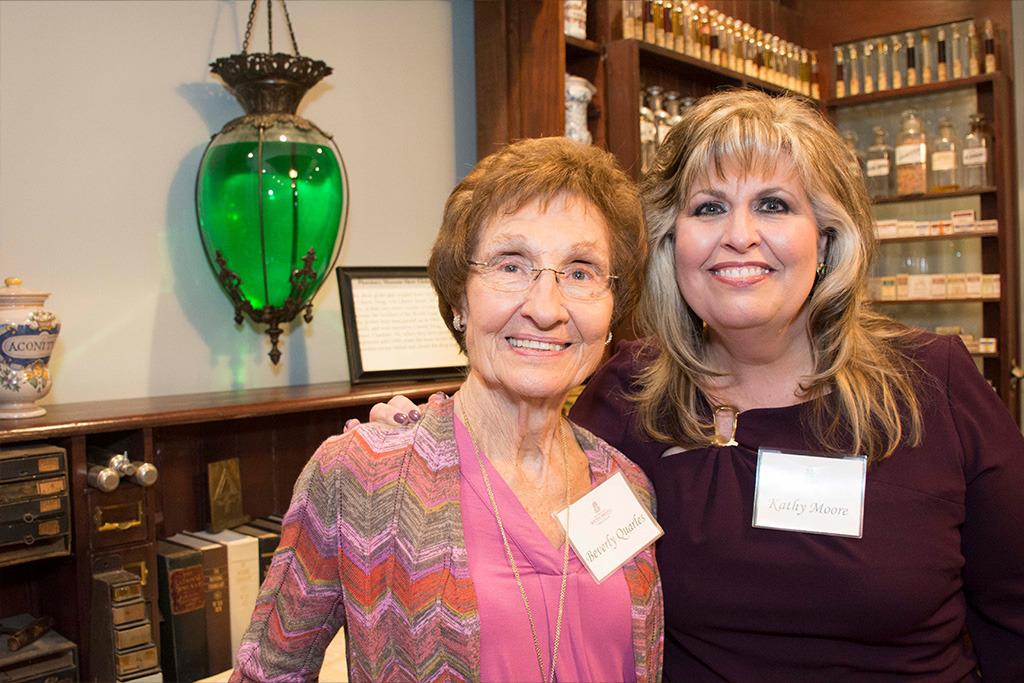
Interacting with patients is what drew Moore to pharmacy in the first place. She grew up watching her father, also a pharmacist and USC alumnus, work at Taylor Street Pharmacy in downtown Columbia.
“When I was 14, my father got me to run the cash registers one night,” she says. “Watching him talking with everyone who came in, it hit me that his relationships with patients were paramount to his practice. I remember thinking, ‘I really like that, because I enjoy people.’”
While Moore had not set out to work in higher education, she often mentored students and interns in her practice. Her mentees encouraged her to consider teaching, which she “took with grain of salt,” but in 2008, she accepted an offer to teach part time at USC.
“I realized it was something I actually wanted to do,” she said. “I thought, you know, I could teach these students and show them why I love community pharmacy so much. If I can share with them what makes it so wonderful to me, then they can grab that same passion and carry it forward.”
As a College of Pharmacy alumna herself, Moore soon got invested and took on more. She started with a single lab class, then took on the compounding labs, and then another class, and so on, until she was on faculty full time. She now directs the college’s community and compounding lab program as well as the Walker Leadership Scholars program.
As an educator, Moore is known for finding new ways to engage her students, from hands-on learning in the lab to her growing collection of video tutorials and lessons to support learning outside of the classroom.
In compounding labs, students practice fine skills like weighing powders and crushing ingredients to pack pills by hand. They progress to making things like lotions and lip balms with natural ingredients. That gave Moore the idea to plant a garden where students grow medicinal plants and flowers to eventually use in the lab.
“I’m thinking, we are in a pharmacy school, and I’m doing compounding. we’re using lavender and mint to scent things. Why can’t we just grow that ourselves?” she says.
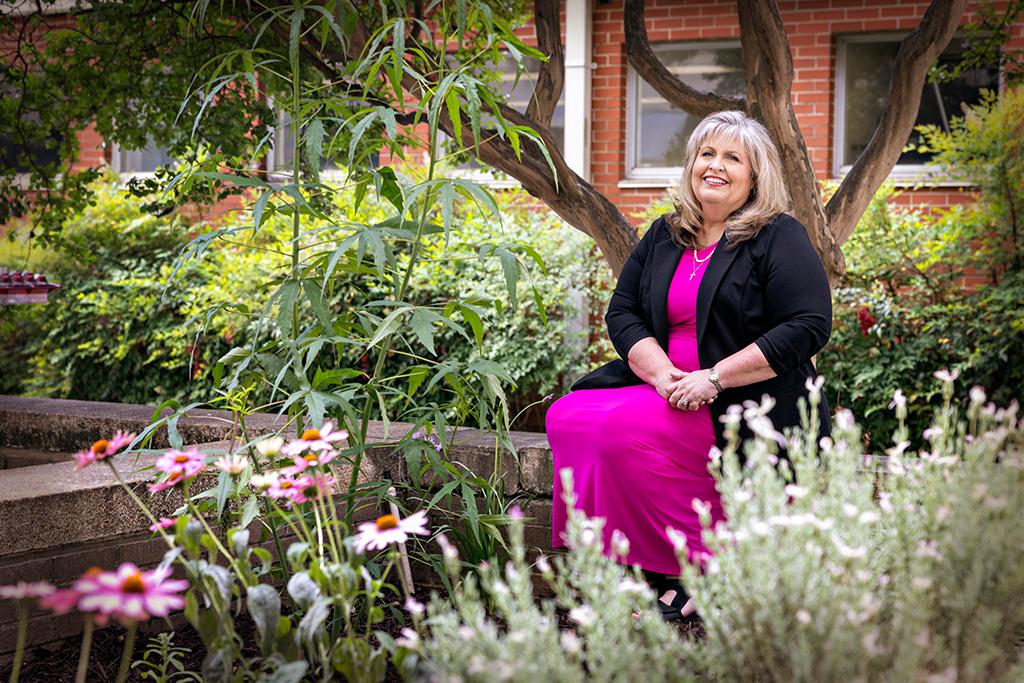
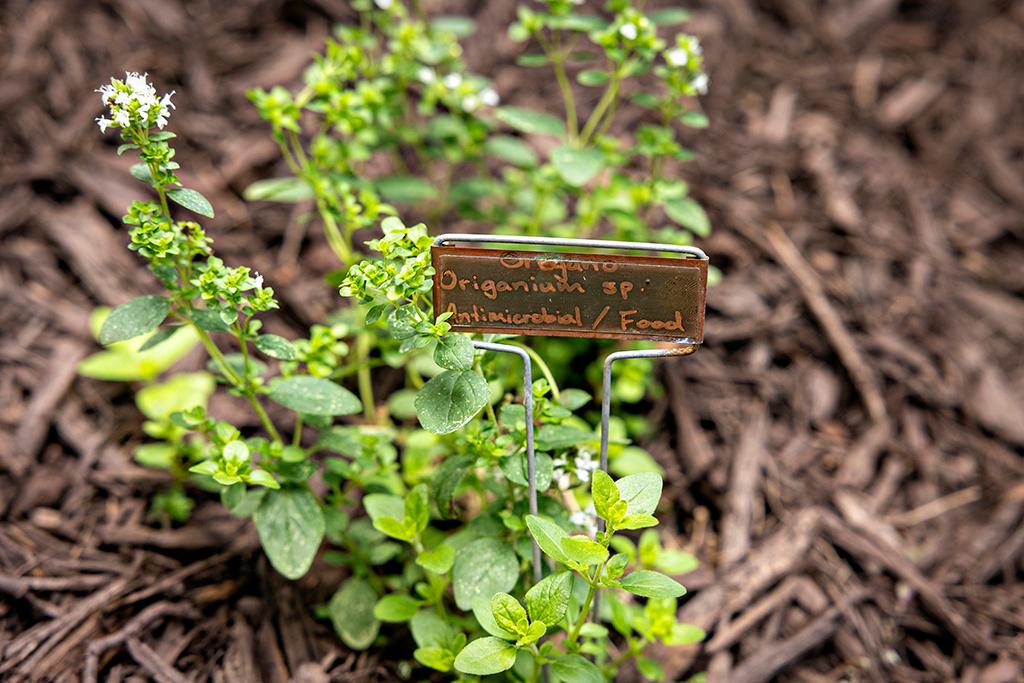
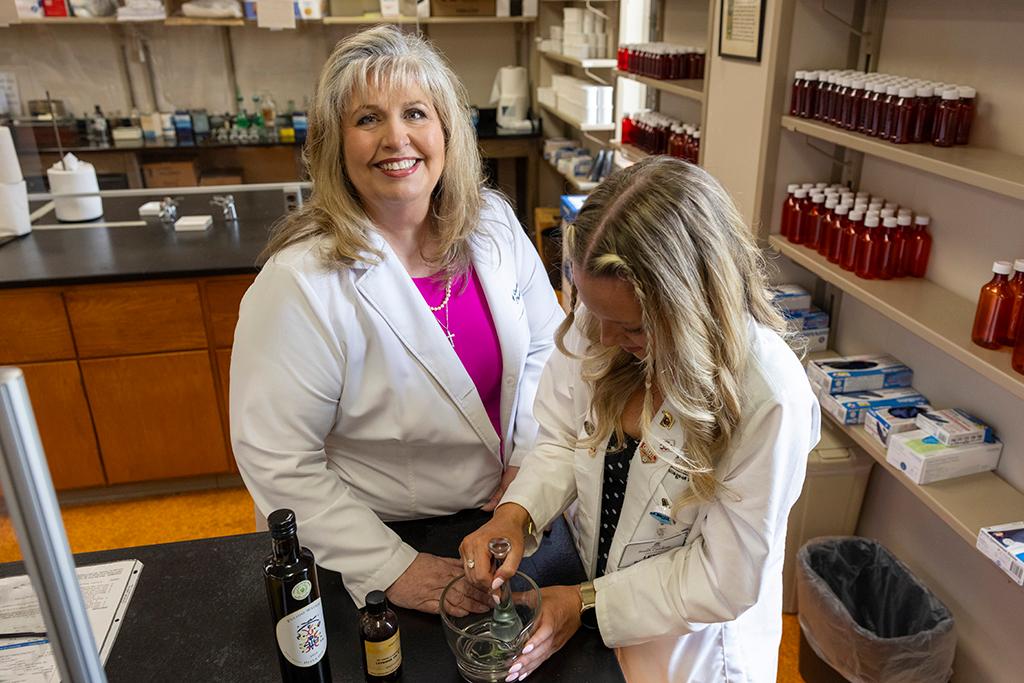
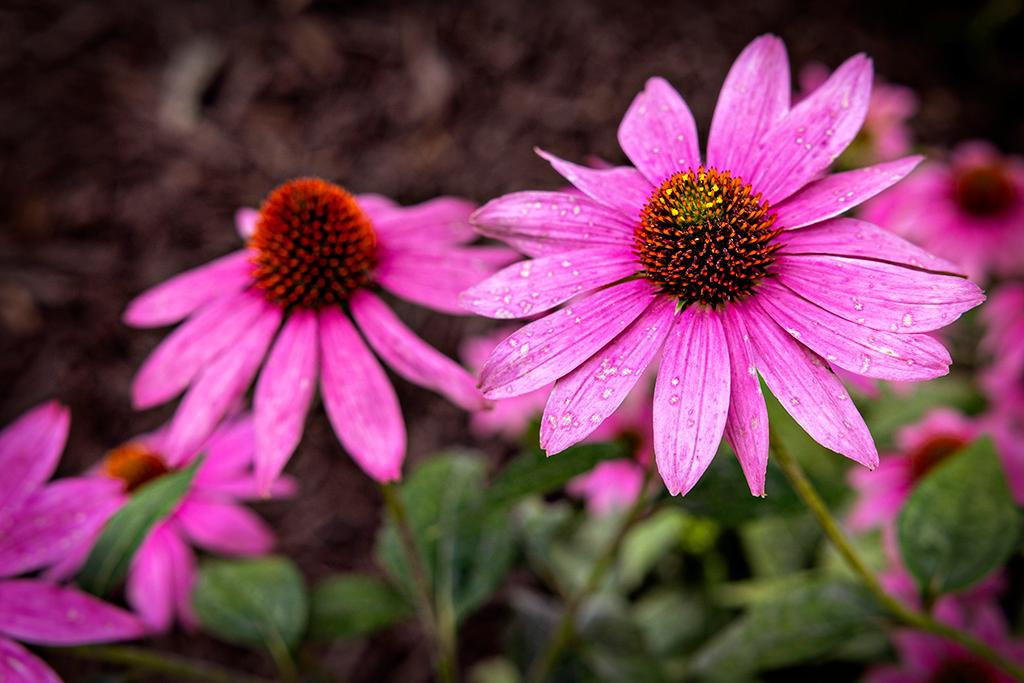
So, Moore recruited students for an independent study on medicinal gardening. Now, two years later, they are extracting essential oils and all the other good stuff from the plants to use in this year’s compounding labs. She is also developing the garden into a green space where students can relax.
From keeping students on their toes in the lab to welcoming them to a peaceful retreat in the courtyard, Moore’s holistic and student-centered approach to teaching has earned her the 2026 Mungo Undergraduate Teaching Award from USC’s Office of the Provost.
“Her development of the college’s medicinal garden and integration of botanical distillation practices into laboratory instruction reflects a level of creativity, sustainability and innovation rarely found in professional education,” wrote department chair S. Scott Sutton in recommending Moore for the award.
Moore has previously received the Clinical Practice Teaching Award from USC and the Bowl of Hygeia Award from the South Carolina Pharmacy Association, among other accolades recognizing her continuous service and excellence as a pharmacist and teacher. She is also an advisor for Christian Pharmacists Fellowship International, which recognized her with the Psalm 41 Award.
“Receiving the Mungo Award reflects something that I really care deeply about, which is that my teaching is impacting students beyond just delivering content,” she says.
One of the most important elements of teaching for Moore is building relationships with students and helping them develop confidence.
“When I first meet students, they’re P1s. I teach them both semesters, and then I have them again the P3 year, and I’m always amazed to see how much they’ve grown,” she says.
“Watching that happen is the coolest part of my job, and this award helps me to realize that my teaching has been impactful.”