
After dark, the University of South Carolina campus may seem quiet, but it is far from still.
For a university serving nearly 40,000 students, the workday does not end when classes do. Overnight and into the early morning, patrol officers and dispatchers help keep campus safe, custodial crews clean buildings, bakers prepare desserts, postal workers sort mail and shuttle drivers ready buses for the day ahead.
From safety and transportation to food and facilities, their work keeps this small city running long after the students, faculty and staff have gone and helps wakes the campus up to welcome all of its Gamecocks every single day.
Meet the people who work while USC sleeps.
6:30 p.m.
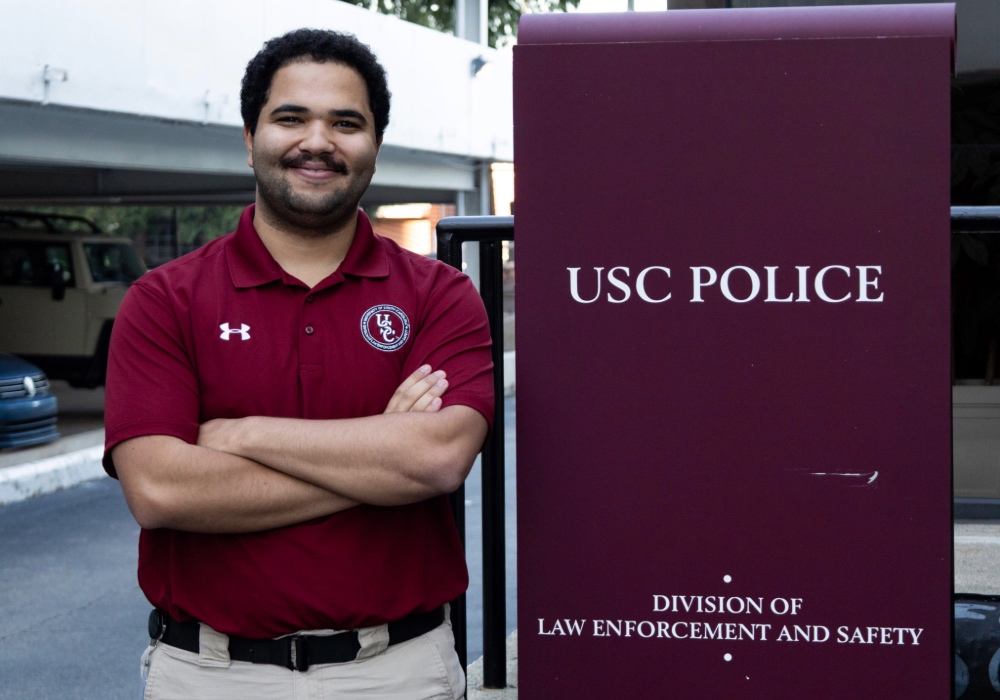
Isaac Russell, security operations center analyst
Isaac Russell begins a 12-hour shift in the USC Police Department’s Security Operations Center at 6:30 p.m., monitoring campus activity and helping connect people with the response they need.
Russell has been with the department for nearly two years. After graduating from USC in 2024 with a degree in criminal justice, he began working in dispatch soon after.
The role is often simply called dispatch, but it involves much more than just answering phones. Throughout the night, Russell monitors radio traffic, computer-aided dispatch systems, security cameras and the Carolina Safe app. He takes calls for service and helps direct police, fire and EMS personnel to those in need.
“Somebody is always watching, listening, waiting for stuff to come in. We’re vigilant and diligent about getting all the information and details,” Russell says.
After dark, the nature of the calls shift. Some are routine, like building lockouts or traffic stops. Others involve medical or mental health concerns. Dispatchers rely on standard questions to gather the details they need, but no two calls unfold the same way.
The calls that stay with Russell long after a shift ends are the welfare checks where someone gets the help they need.
“When we can get officers out to them, locate them, get them the resources and the help that they need — and we have a happy ending with that — that is really impactful,” Russell says.
By sunrise, Russell and his coworkers have spent the night answering calls, coordinating responses and helping people through some of their most difficult moments.
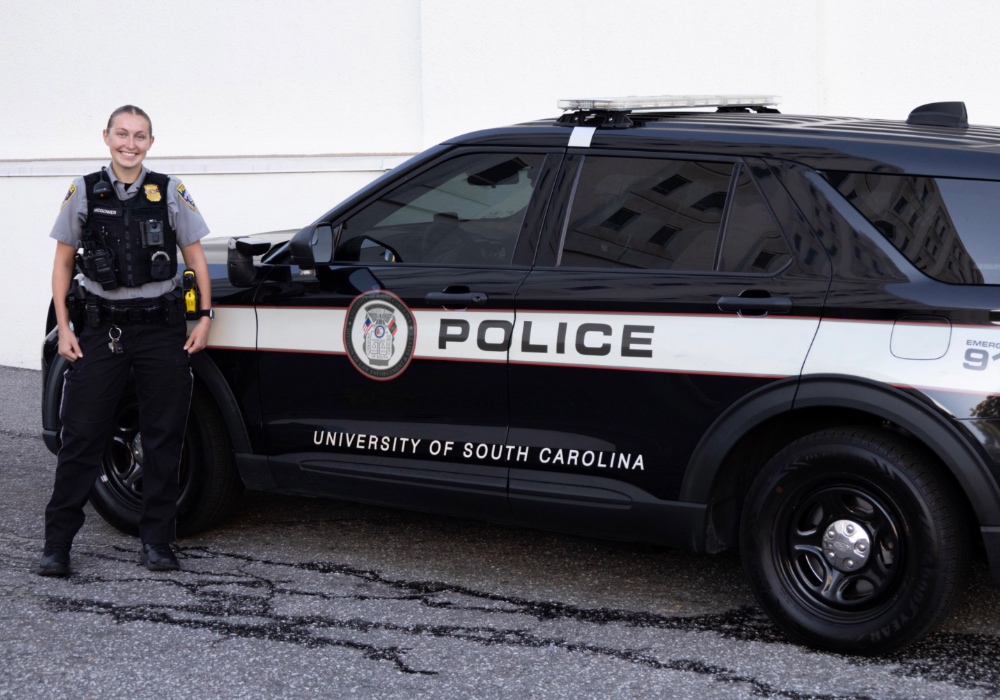
Officer Ava McGowen, USCPD patrol officer
When Officer McGowen begins her 12-hour patrol shift at 6:30 p.m., she first checks in with the previous shift, receives updates and makes sure her vehicle and equipment are ready for the night ahead.
A USC graduate, McGowen joined the department after earning her criminal justice degree in 2025.
“What better way to serve a community that once served me?” McGowen says.
Overnight, patrol officers handle traffic stops and calls for service, but they also walk through buildings and check parking lots and other areas of campus. With fewer people out before sunrise, much of the work involves noticing what does not look right.
That could mean an unlocked building, damaged property, a suspicious person or vehicle, an alarm or a potential safety hazard. While calls are generally less frequent overnight, officers still respond to noise complaints, medical emergencies and issues involving people on campus late at night or early in the morning.
As the sun rises, the focus of the shift begins to change. Officers devote more attention to traffic, busy pedestrian areas and helping people get where they need to go. During move-in and move-out, football games and other large events, the workload increases as the department works with campus partners and agencies across the state to manage crowds, traffic and safety concerns.
For McGowen, the most rewarding part of the job is helping people through difficult moments and making students feel safer on campus.
“Just knowing that our work contributes to the community makes the job very rewarding,” McGowen says.
3:30 a.m.
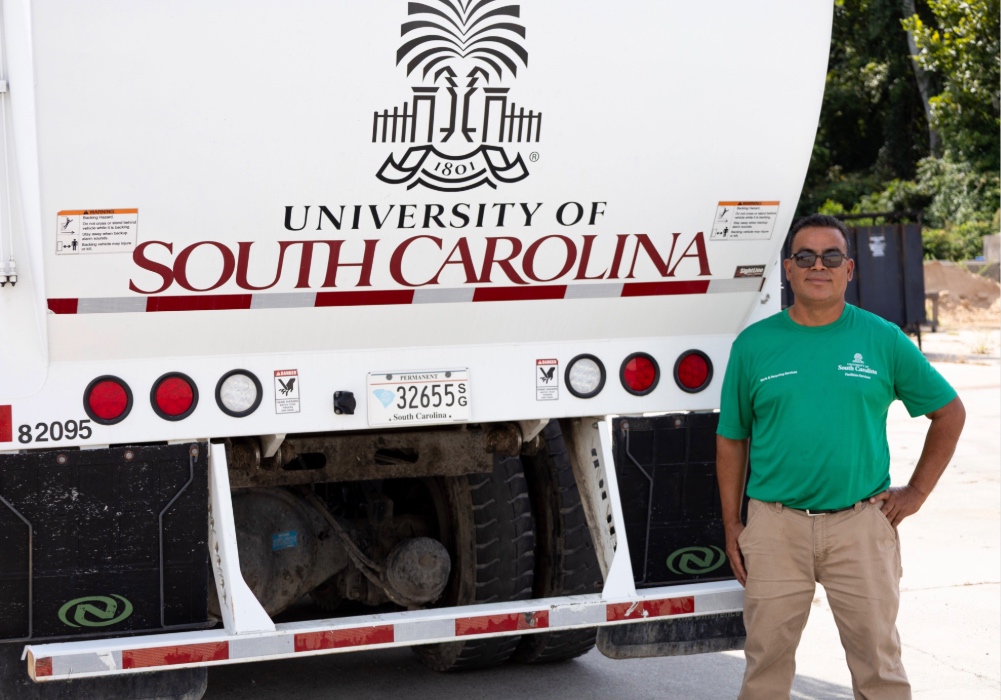
Tony Castro, trash truck driver
At 3:30 a.m., Tony Castro climbs behind the wheel of a front-load trash truck and begins an eight-hour route across USC’s campus.
Castro has spent 19 years at the university in several different facilities-related roles. Now, his mornings are dedicated to emptying trash cans and dumpsters, clearing away the previous day’s waste before students, employees and visitors begin to arrive.
“We try to get there before you get in, so you don’t have to see it,” Castro says.
Before starting the route, Castro inspects his truck to make sure it is ready for the day. Then he and his team head out while the campus is still dark. With little traffic and few people around, they can move more easily from one stop to the next. If a delivery truck or parked vehicle blocks access to a can, Castro and his coworkers circle back later and try again. Once the truck is full, he takes the load to a waste management landfill before returning to campus to finish the route.
Castro and the rest of his crew work six days a week. Regular trash pickups take place throughout the week, while Thursdays typically include collecting cardboard from the blue recycling containers.
The work becomes even more demanding during move-in and move-out. Castro and his coworkers make repeated trips around campus, circling back as quickly as possible to keep up with the volume. On one heavy moving day, the team collected about 15 tons of trash.
“We’re here pretty much all-day during move-in and move-out. We must stay for as long as needed,” Castro says.
The early mornings and long hours are nothing new to Castro. Before coming to USC, he drove interstate buses for Peter Pan Bus Lines in New York for 10 years, where an 11-hour day was considered short. He and his family eventually left New York and settled in South Carolina, where he found a home at USC.
Each morning, Castro’s goal is to complete as much of the route as possible before campus gets busy and by sunrise, he has made most of his rounds. The trash is collected, the cans are empty and campus is ready for the day — usually without anyone noticing the work it took to get there.
4 a.m.
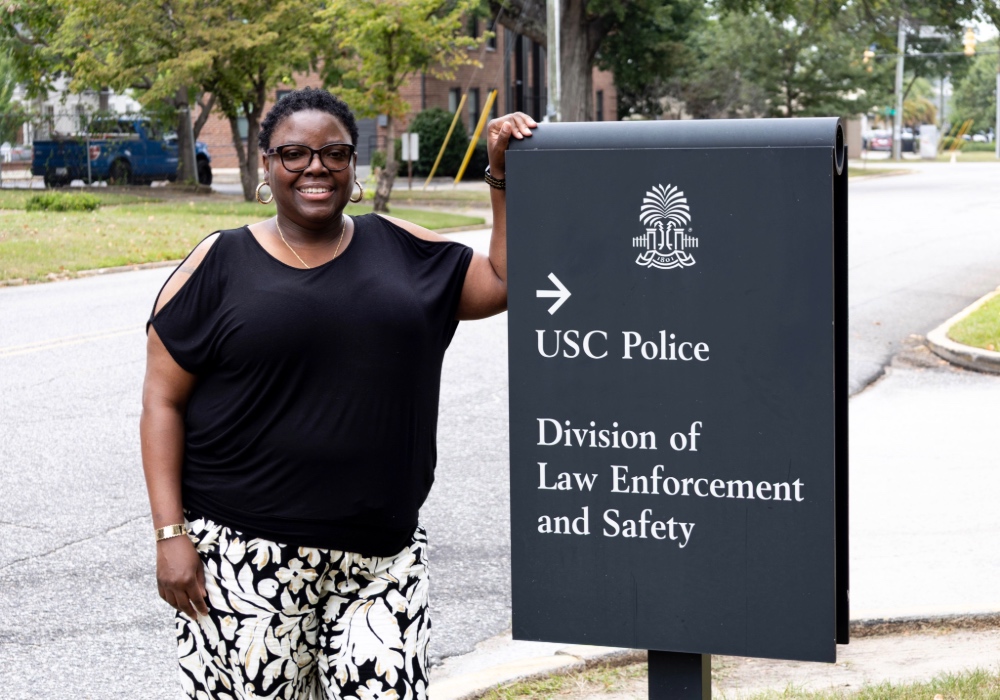
Tamika Miller, custodial operations manager; Maybelle White, custodian
Tamika Miller’s workday begins at 4 a.m., well before most of campus is awake.
After 21 years at USC, the custodial operations manager understands how much the campus relies on work completed before the day begins. Each morning, she checks in with her team, reviews priorities and supports supervisors and staff as they prepare buildings to be clean, stocked and ready for students and employees. Miller oversees custodial operations in 50 campus buildings, including the USC Police Department.
Long before most students walk into a classroom or restroom, custodial crews are already cleaning and sanitizing those spaces, removing trash and preparing buildings for the day. The goal is simple: for people to walk into a clean, welcoming environment.
“What gets me through the early mornings is knowing that what we do matters. I also take pride in my work and in supporting my team,” Miller says.
Once students and employees begin arriving, the work becomes more reactive. Calls come in about spills, locked doors, overflowing toilets, trash and other issues that need immediate attention. Miller and her team must decide what needs to be handled first while keeping the rest of their work moving.
Among the employees carrying out that work is custodian Maybelle White, whose day also begins at 4 a.m. White has worked at USC for 20 years, including 19 years assigned to the eighth floor of 1600 Hampton St. She now serves at the USC Police Department.
White begins by gathering her vacuum, trash barrel and cleaning supplies before heading upstairs. In the bathrooms, she starts with the surfaces people touch first: doors and handles.
From there, she cleans entryway doors, sinks, toilets, stall doors, trash cans and other high-touch areas. She restocks soap and toilet paper dispensers, watches for maintenance issues and keeps an eye out for holes in the walls that could allow lizards into the building.
White takes her time with each step. After disinfecting a surface, she allows it to dry before polishing stainless steel and other fixtures.
“I want to make sure whatever germs are here, it goes on that rag and in the trash can,” White says.
Before the sun rises, floors have been mopped, doors disinfected, trash removed and supplies stocked. For Miller and White, a successful day begins with a building that is clean, prepared and ready for anyone who walks through the door.
5:30 a.m.
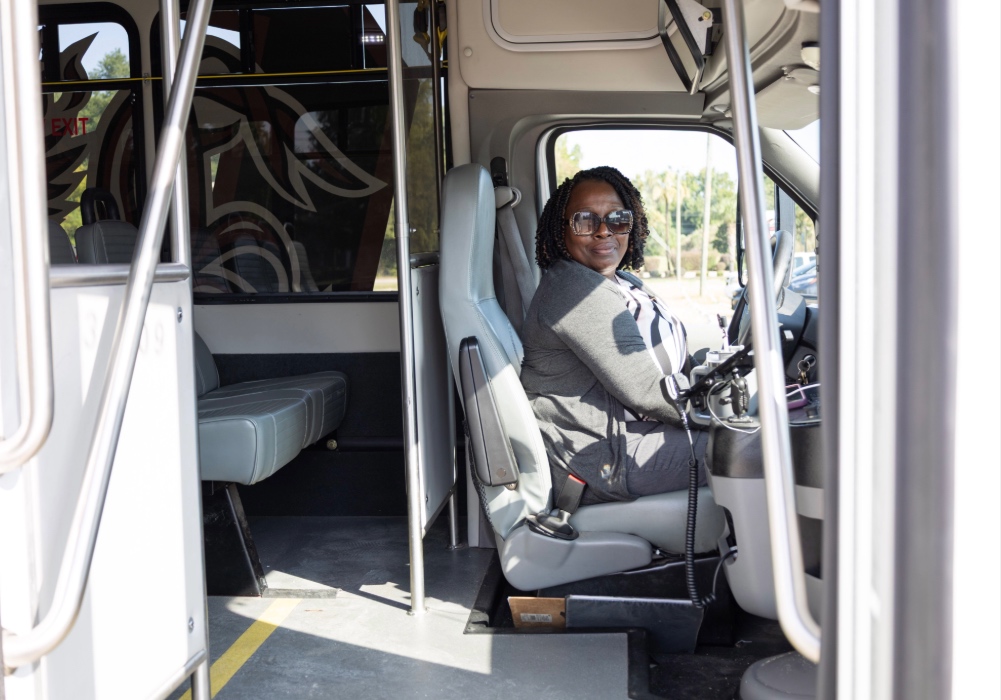
Kenyatta Green, shuttle department supervisor
Kenyatta Green, supervisor of USC’s Parking and Transportation Services shuttle department, arrives at the parking services office at 5:30 a.m. — often before anyone else. She has worked at USC for more than 16 years and has led the shuttle department for more than 12.
Before drivers begin arriving, Green checks buses at their storage locations and looks for issues from the previous day that need attention. She then returns to the office to review paperwork, check her email and prepare for the morning ahead.
The first drivers arrive around 6 a.m., followed by paratransit drivers and those assigned to the new Campus Connector routes. At 8 a.m., Green meets with drivers during a morning huddle, but much of her day after is spent away from the office.
She travels around campus, monitors routes and stays in contact with drivers throughout the day. With thousands of students walking across campus, safety is always part of the job — from keeping buses on their routes to ensuring drivers are aware of what is happening around them.
Between 8 and 9 a.m., campus becomes noticeably busier. Students begin calling the transportation office with questions about routes, GPS tracking and how to use the shuttle system.
The operation expands during major campus events. Move-in requires additional buses and drivers to transport students and families. Football games call for an even larger effort, with about 45 buses in service four hours before kickoff. For Parents Weekend, preparations can begin six hours before the game.
“My most favorite part about each day is my drivers. They are my motivators,” Green says.
After years of working alongside them, Green said she has learned patience, gratitude and the importance of maintaining an upbeat attitude. She also sees the relationships drivers build with students. For students far from home, a driver can be a familiar face — someone willing to listen or someone to turn to for help.
“When you have a positive outlook regarding the job, it’s not about just driving. You can drive anything, drive anywhere, but what difference are you making when you’re in that position? That’s what it’s about — making a difference,” Green says.
6 a.m.
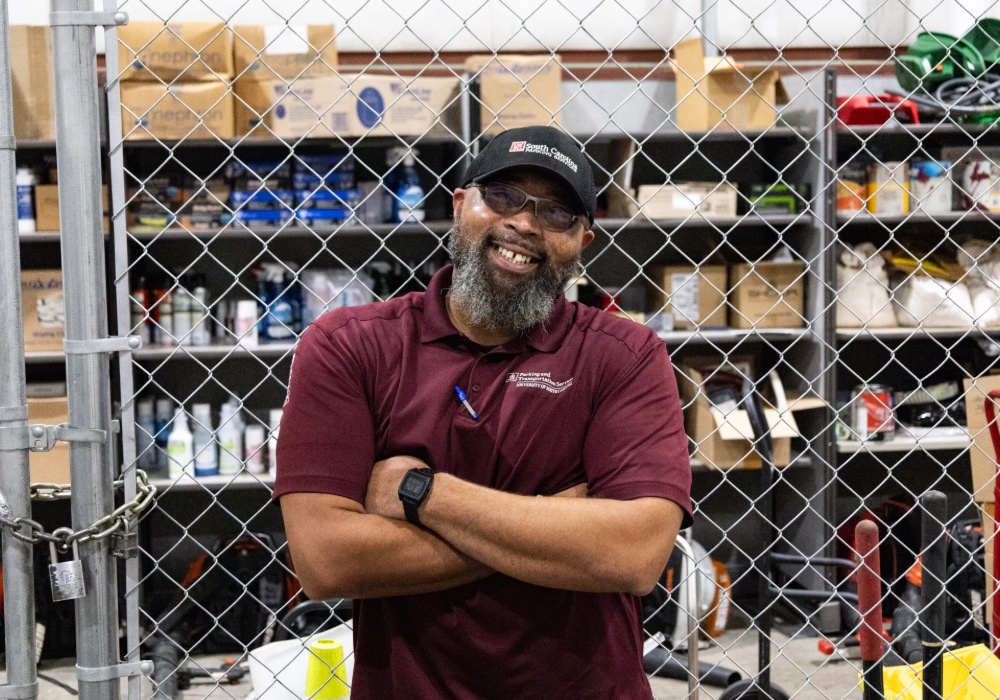
Kendall Barnes, parking facilities and maintenance manager
Kendall Barnes, facilities and maintenance manager in USC’s Parking and Transportation Services, officially begins his workday at 6 a.m. Much of his early-morning work is focused on finding problems in garages and parking lots before anyone else has a chance to notice them.
Before sunrise, Barnes and his team inspect garages, lots and equipment. They make sure gates are working, clean high-traffic areas and complete projects that would be harder to tackle once students, faculty and staff begin arriving.
“Most people don’t realize that these things even happen. We’re kind of like ghosts because it’s taken care of before you even realize it was a problem in the first place,” Barnes says.
Around 8:30 a.m., the quiet work of getting ahead gives way to phone calls. A broken gate, maintenance issue or even a tree branch blocking a parking space can suddenly require attention. When several issues arise at once, Barnes must prioritize, delegate and keep his team moving.
“There’s actually been times where a gate is broken, so now here we are fixing the gate. We get two more phone calls about two more gates, but we just try to balance it out,” Barnes says.
The work also changes during major campus events. At graduation, Barnes’ team uses ADA golf carts to help people travel from parking areas to graduation sites. During football season, they help set up the fairgrounds for buses and assist people with loading. They also work with contractors on campus construction projects, helping solve parking and logistical challenges as they arise.
When Barnes started in Parking and Transportation Services, he said he had no idea how large or complex the operation was. Fourteen years later, he still enjoys being part of the work that keeps campus moving.
“I just like being a part of that. And just seeing how big of a role that we play because we are everybody’s first and last experience on campus, we take a lot of pride in what we do,” Barnes says.
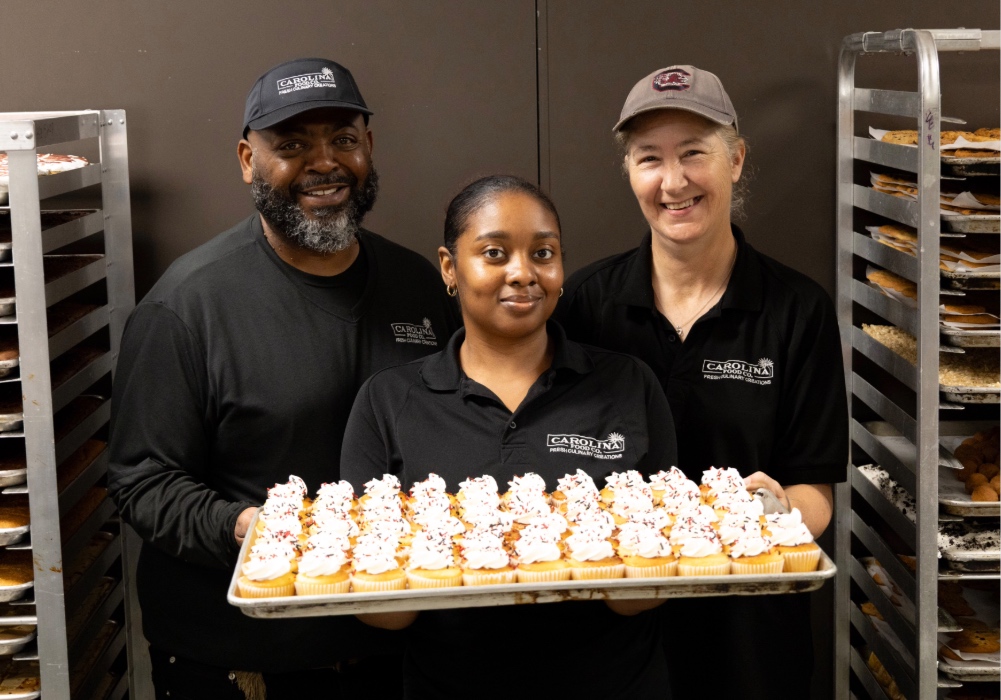
Diane Twining, bake shop supervisor; Marsheka Goodwin, baker; Stephen Belton, driver
As the sun begins to rise at 6a.m., bake shop supervisor Diane Twining heads to the bakery located in the basement of The Pavilion at Campus Village to heat the ovens. Before most students are awake, her team is already preparing baked goods for dining locations across campus.
Twining has worked for Aramark at USC’s Carolina Food Co. for six years and has served as bake shop supervisor for the past year. One of the first items on her morning list is cookies.
“I bake the cookies first because there’s a lot of cookies that have to go around campus,” Twining says.
Inside the bake shop, employees mix, scoop, pan, bake and decorate before the finished products head to dining locations. Much of what they make is prepared in-house — brownies, cakes, cupcakes, Rice Krispie treats and cereal bars. Some items, such as cookies, arrive ready for the team to finish and bake.
Each week, the bakery produces about 9,000 cookies, 4,500 brownies, 4,000 cereal bars, 3,200 cupcakes and 1,600 parfaits.
Twining also handles special orders, from birthday cakes to graduation cakes. Baking has been part of her life for years, she grew up working in her parents’ bakery before managing a grocery store bakery in Massachusetts.
The team gets especially creative around holidays and campus events. Football season brings Cocky cookies and treats in Gamecock colors, while Valentine’s Day may mean chocolate-covered strawberries and other themed desserts.
“I love the holidays, the holidays are the best,” Twining says.
Baker Marsheka Goodwin enjoys bringing that seasonal creativity to the work as well. The daily menu provides a plan, but special orders and holiday treats give the team opportunities to try something different.
Once the products are ready, driver Stephen Belton helps get them where they need to go. Belton has worked at USC for 25 years, moving food between dining locations and ensuring items prepared in one place arrive at another before they are needed.
His morning starts by picking up a van and heading to Dunkin’ for products. From there, he goes to Russell House to pick up sushi, delivers items to other dining locations and transports baked goods to the university’s six dining halls.
Much of that work happens out of sight. Food may be prepared in one location but served somewhere else, so someone has to get it across campus before it reaches the counter.
The roads are fairly quiet early in the morning, but that does not last. By 9:30 a.m., Belton said traffic can be bumper to bumper, with construction and other activity making deliveries more difficult.
“You have to be a clever driver,” Belton says.
Twining, Goodwin and Belton work in different parts of the operation, but their efforts come together at the dining counter. By the time the sun begins to rise, thousands of baked goods have been prepared and are already making their way across campus.
6:30 a.m.
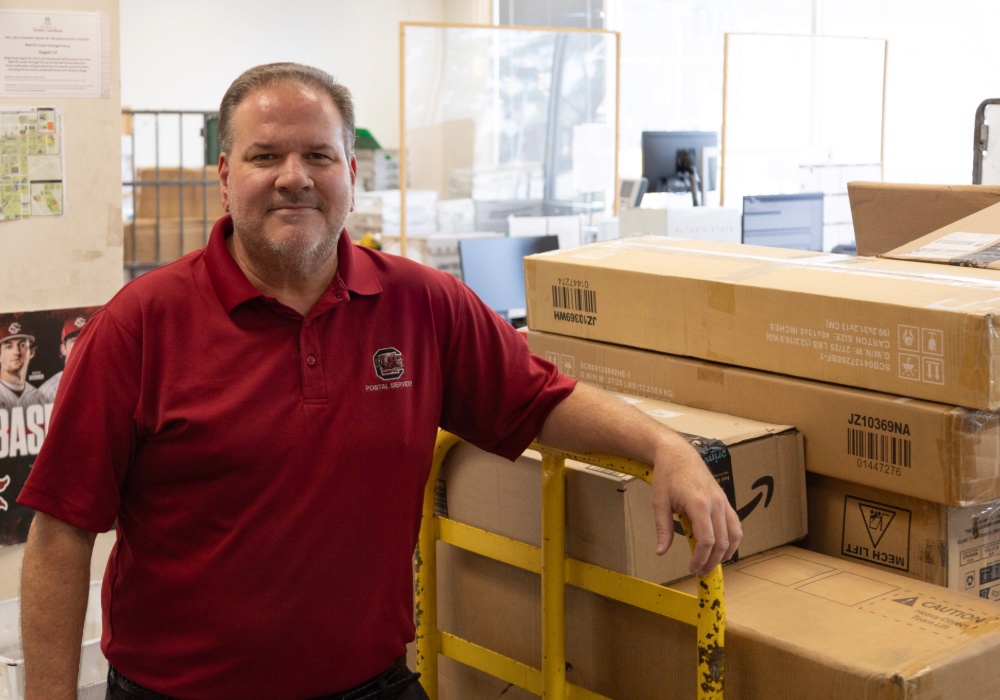
Marc Johnson, Postal Services sorting supervisor
At 6:30 a.m., Marc Johnson arrives at USC Postal Services, switches on the lights and raises the bay doors at the loading dock. Within about 10 minutes, the first USPS truck will arrive.
Johnson has worked at USC for 24 years, including the past nine as a sorting supervisor with Postal Services. Before moving to the post office, he worked in the motor pool for USC’s Parking and Transportation Services, helping run the university’s bus service.
The first truck arrives around 6:40 a.m. Johnson and his coworkers unload letters and packages for students, faculty and staff, then begin sorting them into the appropriate sections. Student mail and faculty and staff mail have different ZIP codes and every package must be entered into the system so the team can track when it arrived and where it is headed.
USPS, Amazon, UPS and FedEx vehicles make repeated stops at the loading dock throughout the day. On a typical day, about 10 delivery vehicles arrive, bringing 300 to 500 letters and anywhere from 1,000 to 3,000 packages.
By 7:30 a.m., the rest of the Postal Services crew begins arriving. Delivery drivers prepare to take packages to departments across campus, while box-truck drivers load student packages for delivery to Russell House and the Blatt Physical Education Center.
The flow of mail changes with the university calendar. Halloween brings costumes, spring break means bathing suits and formal events bring clothing rentals and other packages for students. Fall, though? It’s simple.
“We’re getting a lot of Carolina gear coming through right now as the football season is starting,” Johnson says.
Move-in is Johnson’s favorite time of year. The volume is higher, but so is the energy. Families are arriving, students are settling in and parents are calling to ask about packages their students are waiting for.
Still, Johnson sees more than boxes and envelopes moving through the loading dock.
“I don’t see mail and packages. I see connections,” Johnson says.
Those connections might be a care package from home, a postcard from a parent, bagels from New York or brownies from a grandparent. For a student having a rough day, an email letting them know a package is waiting can change everything for the better.
By sunrise, Johnson and his coworkers have unloaded the first trucks and started sorting the next round of packages, ready to get them where they need to go.
7:30 a.m.
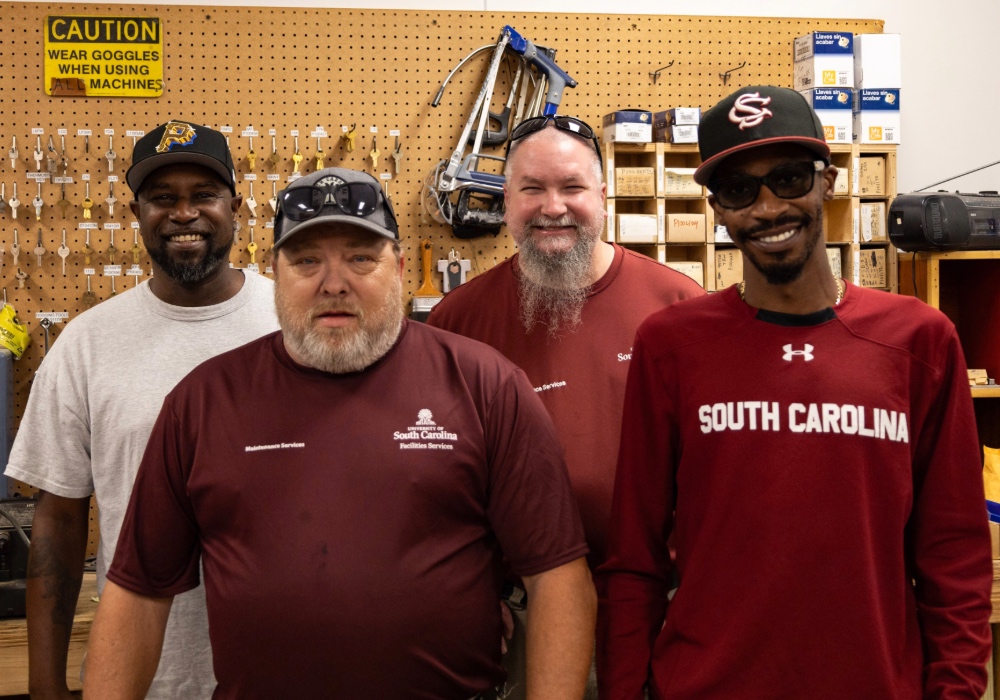
Troy Troutman, key shop supervisor; Nelson Brown, lead locksmith; Larry Ward and Bobby Leaphart, locksmiths
By 7:30 a.m., the locksmiths in USC’s Facilities key shop have already begun sorting through emails and work orders. A broken door, lost key or access problem can quickly become an issue for an office, residence hall or an entire building.
Key shop supervisor Troy Troutman works alongside lead locksmith Nelson Brown and locksmiths Larry Ward and Bobby Leaphart. Together, the four-person team maintains the locks, doors and key systems across the university — cutting keys, repairing hardware, managing access and preparing new spaces for use.
Campus doors see constant use. With thousands of people passing through some entrances each day, locks, closers and other hardware eventually wear out. When something goes wrong, it can affect a building’s security, accessibility or ability to remain open.
Much of the team’s key work happens inside the shop. Locksmiths prepare keys and cores for residence halls, offices and other campus spaces before taking the hardware into the field. When students are on campus, housing requests make up a large part of the workload, from lost keys to repairs requiring immediate attention.
Summer brings a different kind of rush. The team takes on larger projects and prepares residence halls for the next academic year. If a student does not return a key, the locksmiths must rekey the room and cut new keys for the space.
The team also responds to emergency issues, such as water leaks, that cannot wait. Construction and renovation projects keep them busy as well, with locksmiths installing hardware and preparing key systems as new spaces near completion.
“Most people on campus think all we do is cut keys, but we’re much more than that,” Brown says.
For most students and employees, the team’s work is easy to overlook — until a key is lost, a door will not open or a building cannot be secured. Each day, the key shop helps keep the campus accessible, secure and ready to function.
As the morning begins
By 8 a.m., USC’s quiet streets have filled with buses, cars and pedestrians. Breakfast is being served, classrooms are opening and campus is settling into its daily routine.
Hours earlier, employees checked buildings and parking areas, cleaned classrooms and restrooms, sorted mail, repaired doors and locks and put buses on the road. Much of that work happens before the sun rises, but it shows up in the details people rely on throughout the day: a clean classroom, a working door, a package ready for pickup or someone there when help is needed.
As students and employees begin their day, another group is finishing theirs. Their work starts before sunrise, but its impact carries through the campus long after their shifts end.