
Kayla Davenport was certain of two things when she arrived at the University of South Carolina’s campus. The first was that she loved STEM subjects and wanted to pursue a biological sciences major. The second was that the South Carolina Honors College offered an interdisciplinary education to complement her affinity for STEM.
Aside from these, however, her undergraduate experience was filled with potential ... but also many uncertainties.
“I actually didn’t know quite what I wanted to do with my future yet,” she recalls.
For a self-professed “very shy” eighteen-year-old, a large, public research university might have been an intimidating community to join. Perhaps it would have been more comfortable to choose to remain tucked away in a residence hall or the library. It would have been reasonable to take mostly STEM classes that aligned with her strengths. And it would have been easy to turn down impactful beyond the classroom opportunities like researching, going abroad and leading organizations.
But those weren’t the kinds of options that Davenport wanted. And an early choice at USC turned out to be one of the most impactful of her undergraduate career.
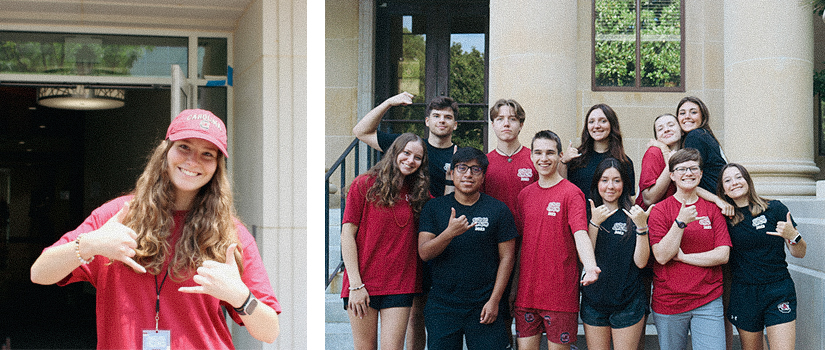
“My journey in leadership and mentorship started with the Pillars for Carolina program,” she says. “It’s a summer program for incoming freshmen ... where they explore the campus and the Columbia area and familiarize themselves with USC traditions and have the opportunity to make friends. ... I really never imagined how important that would be in shaping my undergraduate experience.”
Pillars for Carolina provided the support and foundation that Davenport would build upon for the next three and a half years. Choice after choice, challenge after challenge, opportunity after opportunity, Davenport would grow as a scholar, researcher, leader and aspiring physician assistant.
“USC is full of so many opportunities to just explore who you are and who you want to become,” she attests.
Pillar one: learning to lead
Inspired by her positive experience in Pillars for Carolina and the friendships she made there, Davenport participated in the Close Family Emerging Leaders Program (CFELP). One of the Leadership and Service Center’s oldest programs, CFELP helps students reflect on their values and investigate how those inform their approach to leadership. The program is designed for first-year students, sophomores and transfer students in particular, preparing them for leadership roles on campus.
And that’s exactly what Davenport did next. The summer before her sophomore year, she mentored her own group of incoming students at Pillars for Carolina.
“That was a really awesome full circle moment,” she says, “just paying forward the support and the guidance that I had received and helping that group of people make new friends and get ready for Carolina.”
She was also dedicated to repaying the mentorship she’d received as an Honors first-year student. Davenport credits the program for some of the most memorable community-building moments of her undergraduate career, and her Honors Peer Mentor for guiding her early steps toward a career in healthcare. She became an Honors Peer Mentor her sophomore year to have the same impact on new students.
“I wanted to pay forward that kind of support and guidance I had received,” she says. “Since then, I've had two mentees. It’s been really great to give back to them and help them, give them the tools to succeed at USC and at the Honors College.”
Pillar two: a passion for public health
Davenport took the same ambitious approach with her coursework. In addition to her biological sciences major, she pursued minors in psychology and medical humanities and culture. She appreciated the discussion-based nature of Honors courses and the opportunity to delve into healthcare-related topics — an opportunity that helped to solidify her decision to be a physician assistant.
“A lot of the other courses that I’ve taken through my minors have opened my eyes to other avenues of healthcare and how healthcare really operates. I’ve learned through those courses that healthcare isn’t just about treating physical illness,” she says. “It’s also about treating the individual as a whole, looking at their beliefs and their cultural preferences ... and understanding their background and the socioeconomic and social influences that have had an impact on their lives and then, therefore, had an impact on their health behaviors.”
One course focused on how the built environment — landscape, infrastructure and systems — impacts health outcomes. This course, taught by professor Andrew Kaczynski, sparked Davenport’s passion for combating food insecurity. She turned to the Honors College research database for projects to deepen her understanding of this challenge and what could be done to confront it. In the fall of 2024, she joined professor Angela Liese’s lab at the Arnold School of Public Health.
“I saw that (the project) combined research on food insecurity with research on diabetes, and that was particularly interesting to me because my younger sister is a type 1 diabetic,” she reflects. “So, I’ve had that firsthand experience in seeing how her condition has affected her daily life. And then also having all of that research, all that background on doing projects and learning about food insecurity, it was like the pieces fell into place.”
Pillar three: a commitment to service
Davenport’s passion for public health inspired her to join Volunteers Around the World, and she traveled with the group to Peru. There, she worked in free rural health clinics; she estimates that the group treated at least 500 patients.
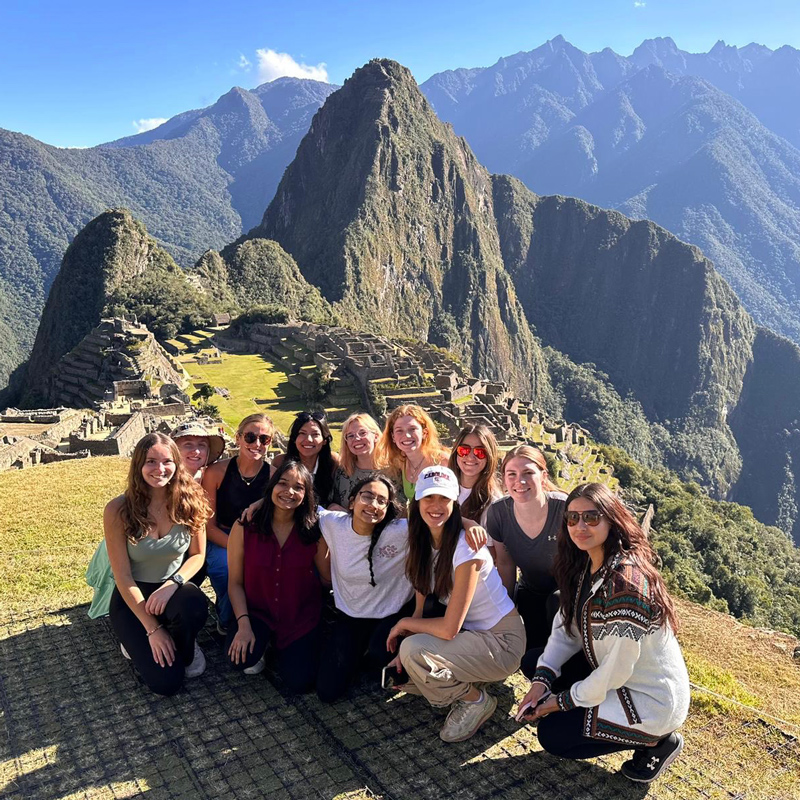
“It really taught me how to incorporate cultural competency in healthcare, aligning your treatment and how you’re communicating with people based on their cultural values and their beliefs about medicine,” she says.
When she returned to the United States, Davenport underwent over 200 hours of training to become an EMT in her hometown of Fort Mill, South Carolina, and volunteer with Fort Mill EMS. She also became the first EMT at Camp Adam Fisher in Summerton, South Carolina, a camp for children with type 1 diabetes.
These experiences allowed Davenport to put the skills she’d been learning in the classroom into practice, and she knew that other Gamecocks should have similar opportunities. Through her involvement with Gamecock EMS (GEMS), Davenport has helped to facilitate a partnership with Midlands EMS to provide USC’s first EMT course at a discounted cost to increase access to training.
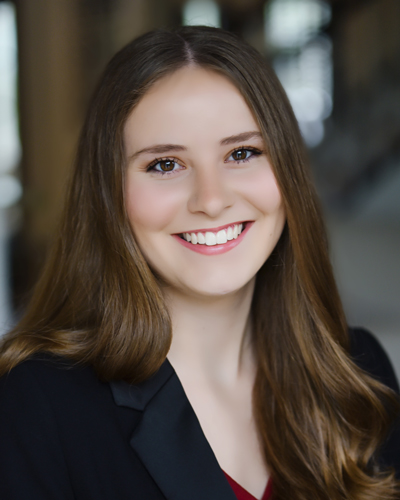
After graduating this December, Davenport plans to apply for physician assistant programs in South Carolina. She wants to dedicate her career to providing quality, holistic care to communities across the state. And as she reflects on the past three and a half years — how they built her into the confident leader and public health researcher she is today — she can’t help but marvel at the pillars of her undergraduate experience.
“If you had told a high school me that I became an EMT, I went to Peru, she would have been like, ‘You’re crazy. This is not the same person,'” she reflects. “But those experiences, while they were really scary at the time and forced me to get out of my comfort zone, they definitely were challenges that pushed me to who I am today.”