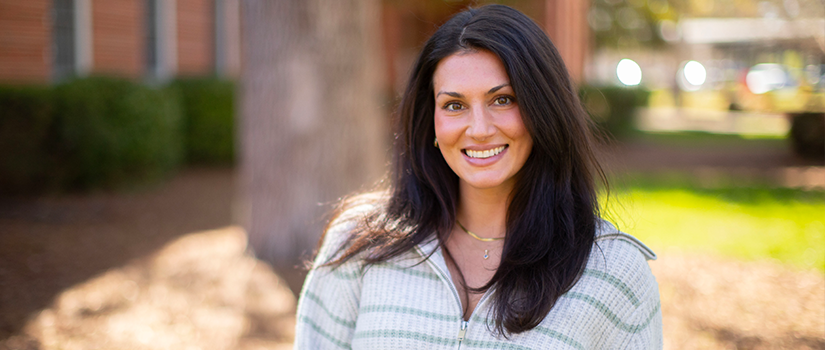
In the controlled chaos of an operating room, where every second matters, there is a moment before every procedure when trust is quietly exchanged between a patient and their care team. For future Certified Registered Nurse Anesthetist (CRNA) Cassidy Lindler, that moment is everything.
“It’s you and the patient,” she said. “You have a few minutes to establish trust and rapport. they’re trusting you with their life.”
That understanding of responsibility and trust didn’t come from a single moment of clarity. Instead, it grew from a more personal instinct that dated back to childhood.
“I think it stemmed more from a feeling,” Lindler explained. “I remember in elementary school, something that always appealed to me was being someone others could trust, whether in a friend group or otherwise. I valued being there for someone, and I think that translates into anesthesia and nursing.”
That sense would lead Lindler from her undergraduate schooling at Clemson University to a neuro trauma intensive care unit, and now into the final stretch of her nurse anesthesia training at South Carolina’s Floyd School of Medicine. Along the way, she found not only a profession, but a purpose rooted in advocacy, precision and patient-centered care.
Lindler’s path to becoming a CRNA wasn’t shaped by family influences, but rather a chance opportunity to shadow her neighbor, who was a CRNA, while in high school. She took from that experience an appreciation for the complexity and weight of responsibility that the role held.
“I was in the operating room watching a surgery thinking, ‘This is amazing,’ but also, ‘What is going on behind the drape?’ I'm in awe of the anesthetist manging so much. The patient is completely asleep, and every action and choice made are done to support the patient. The gravity of the CRNA's role was inspiring.”
During undergrad, she pursued nursing at Clemson, and her ensuing work over three and a half years in the neuro trauma ICU would solidify her path of postgraduate studies.
“There’s nothing like bedside nursing, it’s humbling and necessary,” Lindler said. “There’s a lot of hard, not-so-pretty work, but you’re with someone at their lowest, and they have no choice but to trust you. That’s special.”
In the ICU, she saw firsthand what it meant to care for patients in their most vulnerable moments. But she also took notice of the CRNAs.
“I wanted a route where I’d still be with the patient all the time. With nurse anesthesia, you meet the patient, do the pre-op, put them to sleep, care for them throughout, and wake them up,” she explained. “You’re there the whole time. It’s very patient-centric, and that’s what drew me to it.”
Despite her interest, she didn’t rush the process.
“You can apply to school after one year in the ICU, but I didn’t feel ready,” she said. “There’s a huge learning curve. I waited until I felt confident, not just technically, but in myself.”
That confidence came after more than two years, shaped by experience and by the example of those around her.
“I knew I wanted anesthesia. I saw coworkers go to school, and they were some of the best nurses I knew,” she said. “I wanted to be like them. They were top tier, so competent and impressive.”
When it came time to apply to CRNA programs, one stood out: the University of South Carolina.
“I had worked with people who went there, and I had so much respect for them,” Lindler said. “The school accepted high-quality applicants, it was clear they valued the right things.”
During a shadowing experience in Greenville, she saw that standard in action.
“The CRNA I shadowed was about a year out of school and incredibly competent,” she recalled. “I was in awe. And now I’m at the point where I’m doing what I once admired.”
Beyond reputation, the program offered what she valued most: strong outcomes and strong support.
“The program had a high pass rate, strong job placement, and supportive faculty. Those things mattered to me.”
But what she may not have expected was how much her classmates would also help shape her experience. With just a dozen students in her Greenville-based cohort, the environment is intimate and demanding, but supportive.
My favorite part has been the camaraderie. We’re all driven and ambitious, but also supportive. There’s no competition, we genuinely want each other to succeed. We constantly help each other, sharing advice, preparing for cases, supporting one another. That has been the best part, true friendship and how integral everyone has been to my success.
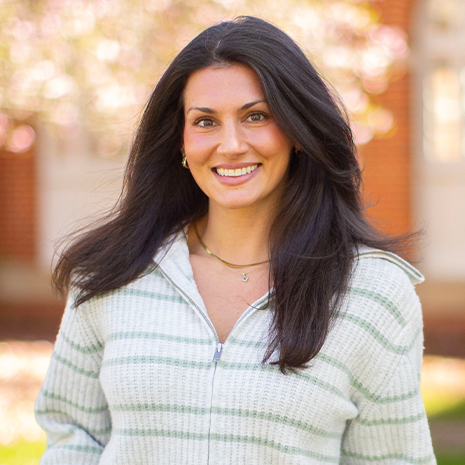
Now in her terminal rotation, her final stage of training, Cassidy is stepping into the role she once watched from the sidelines.
“It’s where everything culminates,” Lindler said. “You refine your craft and figure out what works for you.”
But rather than coast across the finish line, the final phase presents new challenges as the cohort pursues more difficult cases and relishes each opportunity to collaborate with their preceptors.
And with that comes one of the most important lessons she’s learned. In anesthesia, unpredictability is constant.
“Don’t ever think things are going too well. You can have a perfect day, and then suddenly you’re on plan Z,” Lindler explained. “Every patient is different. Two identical cases can go completely differently. It’s easy when things go right. It’s how you respond when they don’t that matters.”
For her, that unpredictability isn’t a drawback, it’s part of the appeal. Each day brings new challenges, new patients, and new decisions. And in every case, the same core principle remains be present, be prepared, and be the person the patient needs.
“There’s no monotony in anesthesia, and that’s part of the fun. That unpredictability is a big part of what drew me to it,” Lindler explained.
“You just have to be ready for anything.”