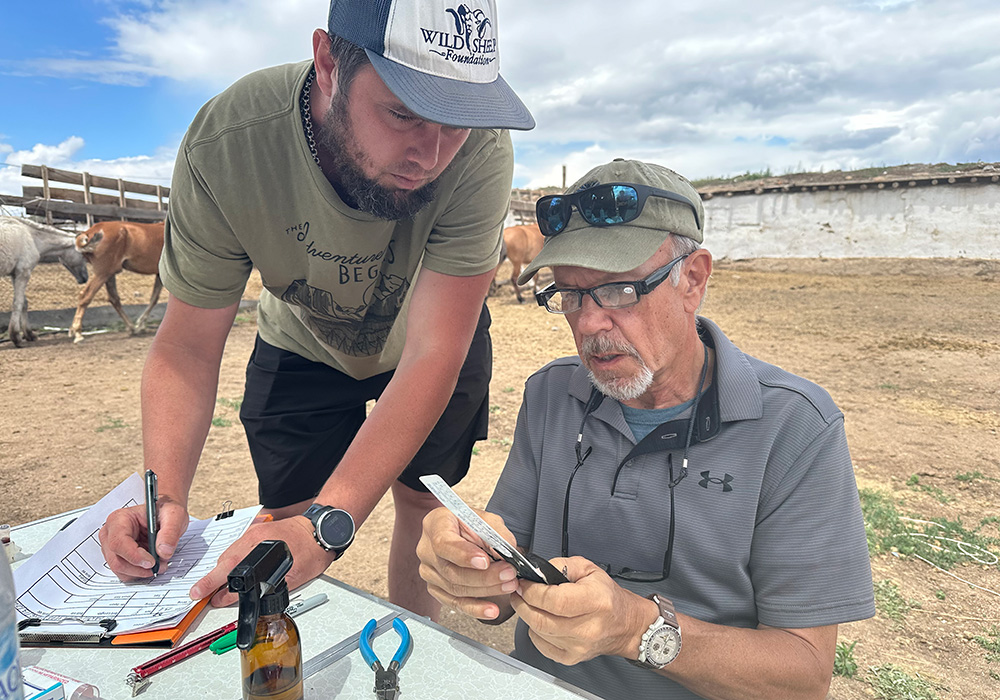
Outside the tiny settlement of Koyan in eastern Kazakhstan, farmers harvest hay and herd sheep in the rural grasslands of their home. It is one of several hamlets within the 7,000-square-mile Semipalantinsk Nuclear Test Site, which operated from 1949 until 1989, closing in 1991. Approximately the size of New Jersey, the region for 40 years was the site of hundreds of nuclear tests conducted in frightening proximity to remote settlements and their residents.
“It was a secret site, but the people knew testing was going on. They just didn’t know the gravity of the testing,” explains Magdalena Stawkowski, associate professor of anthropology at the University of South Carolina.
The testing, with a total explosive yield 2,500 times the bomb that destroyed Hiroshima in 1945, caused pervasive radioactive fallout throughout the region. Stawkowski has been studying the site and the contamination’s impact on locals for more than 10 years. This spring, she published a book on her research, Atomic Collective: Radioactive Life in Kazakhstan.
From the very beginning and now generations later — despite radioactive contamination in the environment and documented adverse health impacts (including congenital anomalies, cataracts, cancer and other serious health impacts) — humble villagers choose to remain on the land.
“To me, it was shocking to hear that people who live in a radioactive environment don’t want to leave,” Stawkowski says. “They are consuming radioactive isotopes through the soil, plants, animals and water. It is chronic exposure. … Still many see themselves as fully adapted to it now. “In the face of ongoing hardships, they have turned it into a virtue.”
Reasons for the villagers’ stubborn refusal to leave may include their lack of education and skills to find work in an urban setting. Poverty is high, and city jobs available to the villagers are scarce and low paying.
Don’t drink the water
“There are literally these large water-filled craters produced from the nuclear testing. This is radioactive water. Yet people swim, fish and eat fish from those artificial lakes,” Stawkowski says.
To me, it was shocking to hear that people who live in a radioactive environment don't want to leave. They are consuming radioactive isotopes through the soil, plants, animals and water.
Scientists in Kazakhstan believe genetic damage is being transmitted from one generation to the next. In an effort to collect available evidence, they applied tooth enamel dosimetry, which suggested the population had been exposed to excess doses of 50-60 mGy, but they could not pinpoint the exact source or timing of exposure.
“The biggest concern is tritium, which is leaking out of the mountain where some high-grade plutonium is securely stored. It continues to leach into surrounding soil and watersheds,” Stawkowski says. “There aren’t enough studies to document it all.”
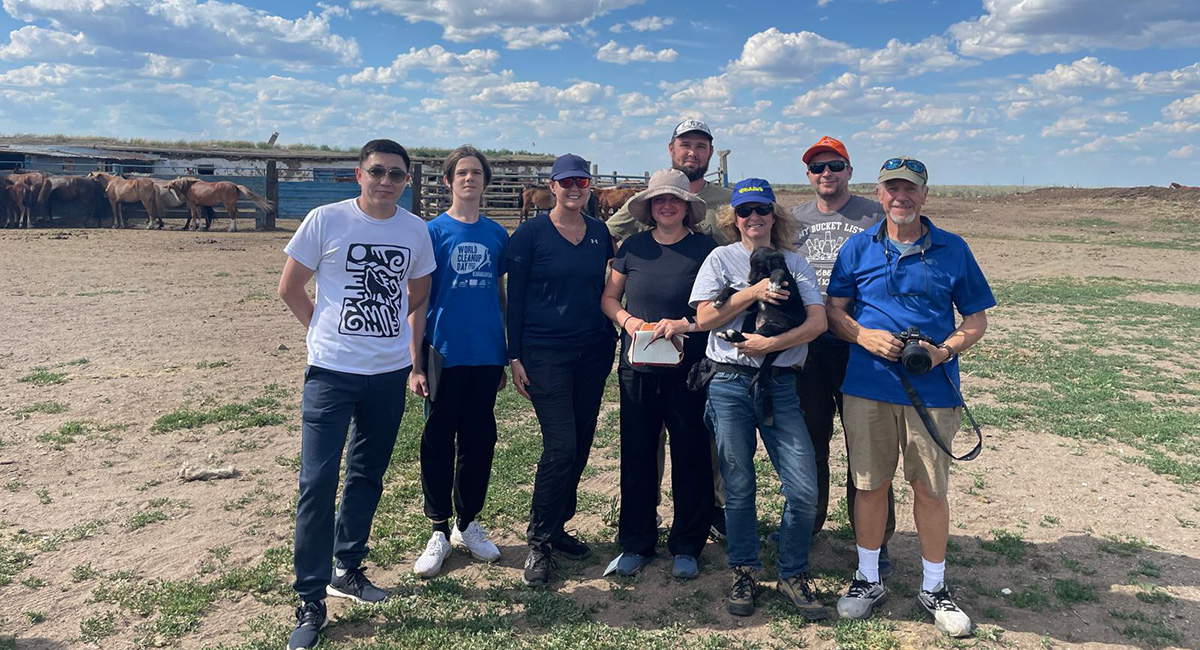
Stawkowski in recent years has been collaborating with colleague Timothy Mousseau, a biological sciences professor at USC who has long focused his research on the effects of ionizing radiation and other contaminants on organisms living in Chernobyl, Fukushima, Semipalantinsk and other radioactive regions of the world.
The truth about tritium
“Tritium is the main effluent from all operating nuclear power plants. There’s a popular notion that tritium isn’t that dangerous because it produces beta radiation. The problem is that it’s usually in the form of water and can get into anything and into any body,” Mousseau explains. “If tritium comes into contact with DNA, it can cause real damage. They call it a low-energy beta emitter, but that doesn’t mean that it’s weak.”
There is no physical process to remove tritium from water. That is of concern now because large quantities of tritium from the 2011 Fukushima Daiichi nuclear power plant disaster in Japan are being released into the sea. An earthquake-induced tsunami cut power to the coastal plant, which caused a cooling system failure and the devastating partial meltdown of three reactors.
In 2023, during in an effort to clean up the contamination at Fukushima, officials received approval to begin releasing radioactive water into the Pacific Ocean. The discharge of more than 1.33 million cubic meters of contaminated water could take as long as 40 years. Because of the inability to separate tritium from water, other radioactive elements were removed — except tritium.
“The tritium dilutes with ocean water into lower concentrations, but it does not go away. Ever,” Mousseau says.
Mousseau notes that the concern in Kazakhstan relates to the storage of “vast quantities of weapons-grade plutonium that is not properly sealed. Everything in the ecosystem makes use of that leached water.”
In all, an estimated 1.6 million people were exposed to radiation from tests in the Semipalatinsk region.
SC not at risk, for now
South Carolina operates five nuclear power plants and is home to the Savannah River Site, which remains the only facility in the U.S. to produce tritium for nuclear weapons. In recent decades, the SRS site has been undergoing environmental cleanup.
The demand for nuclear power is only growing. An estimated 37 percent of the Southeast is powered by nuclear energy. U.S. nuclear plants are allowed to release small, regulated amounts of radioactive material into the environment (within safe limits).
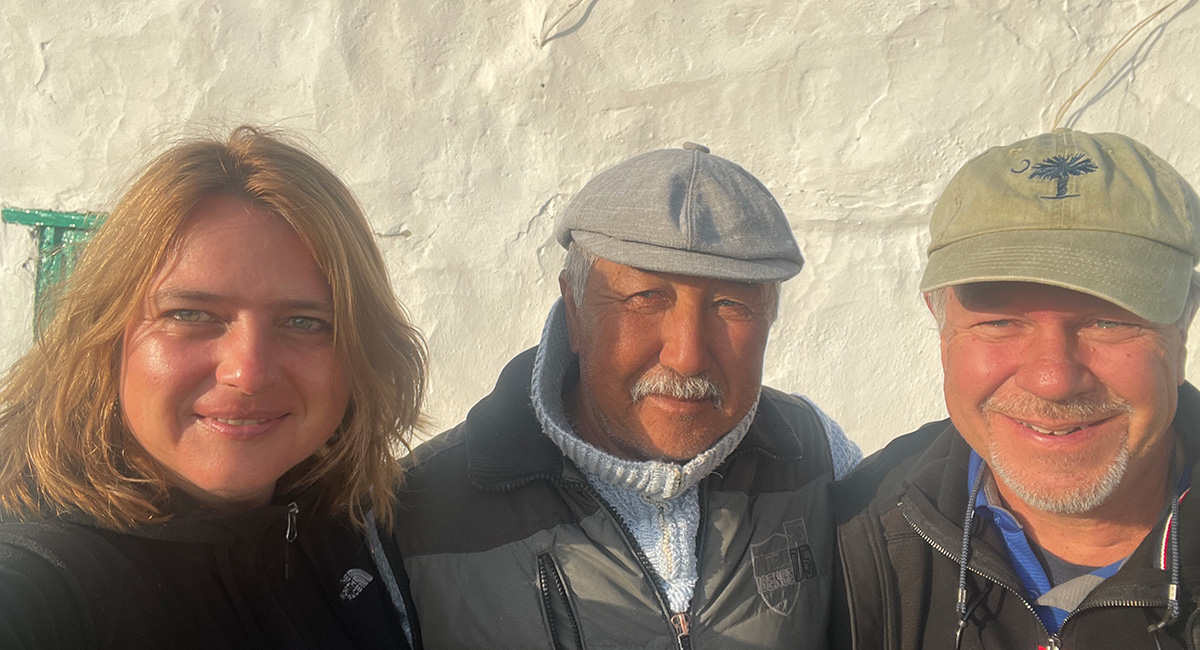
“The Savannah River Site is producing and storing tritium,” Stawkowski says. “Often sites chosen for nuclear projects are located in places deemed ‘peripheral,’ or rural and ‘empty.’ All of this is connected.”
Scientists agree that deep geological disposal is the best solution for highly radioactive waste. A proposed national permanent repository was proposed some 40 years ago for Yucca Mountain, Nevada. Opposition to the project and years of protests and politics have kept it from becoming a reality.
Thick, reinforced concrete and steel storage pools at reactor sites store assemblies of used fuel underwater to cool them for about five years before dry cask storage becomes an option. Some cooling pools are designed to last for the life of the reactor, but usually there is an expectation that the spent fuel eventually will be moved to permanent dry storage, where it is kept in sealed metal cylinders enclosed within metal or concrete. Without disposal options, some reactors continue to store spent fuel in pools indefinitely. In fact, the amount of spent fuel stored at nuclear power plants nationwide, including South Carolina, accumulates by about 2,000 metric tons a year.
Mousseau says every aspect of the nuclear cycle releases significant amounts of radioactive effluents into the environment. Such releases are often below detection levels but exist nonetheless.
“My desire is to contribute new knowledge to what is already known so that we might better understand how the natural world is affected by stressors, natural and anthropogenic,” he says. “Although much is known about how radiation moves through the environment, relatively little is known about how radiation can affect biological communities and ecosystems.”
Stawkowski hopes their research can shift attitudes.
“South Carolina’s nuclear power plants store all of their waste onsite even though this storage is supposed to be temporary,” Stawkowski asserts. “We need long-term storage solutions, better environmental monitoring and transparency. I just don’t believe waiting for a disaster is the best strategy to adjust policies.”