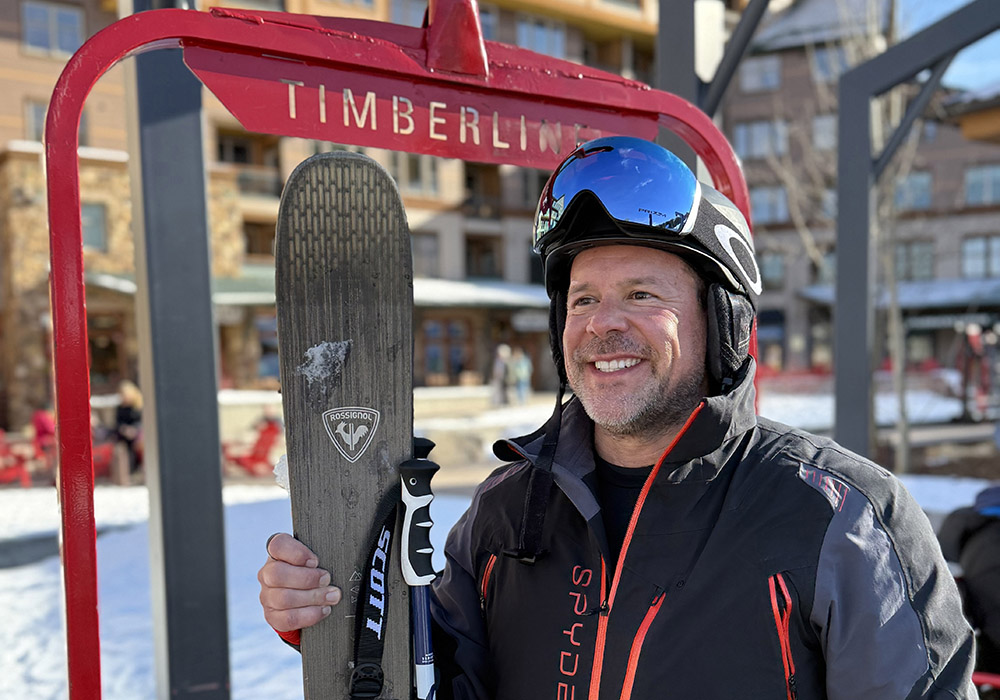
For those who enjoy the rush of snow skiing, there’s good news — it’s a thrill for the body plus a workout for the brain.
That’s because downhill skiing requires constant coordination between sensation, perception, cognition and movement, says Shawn Arent, chair of the Department of Exercise Science in USC’s Arnold School of Public Health.
“In terms of safe downhill skiing, it really is one of the best things you can do for your brain,” Arent says. “Our brains are primed for learning during action. When you're moving quickly, your brain really engages — because you're either going toward something or away from something.”
Those neural demands can even strengthen cognitive abilities that transfer to other parts of daily life, a phenomenon researchers call “far transfer.” But as Arent points out, skiing also poses real risks — especially when it comes to traumatic brain injury (TBI).
Understanding the risks
High-speed winter recreation offers both the benefits and hazards.
“Most people think of hockey when they think of TBI — and about 25 percent of all hockey injuries are concussions,” Arent says. “Skiing’s injury rate is actually higher. Depending on whether we're talking about snowboarding or skiing, anywhere from 25 percent to 40 percent of injuries involve concussion.”
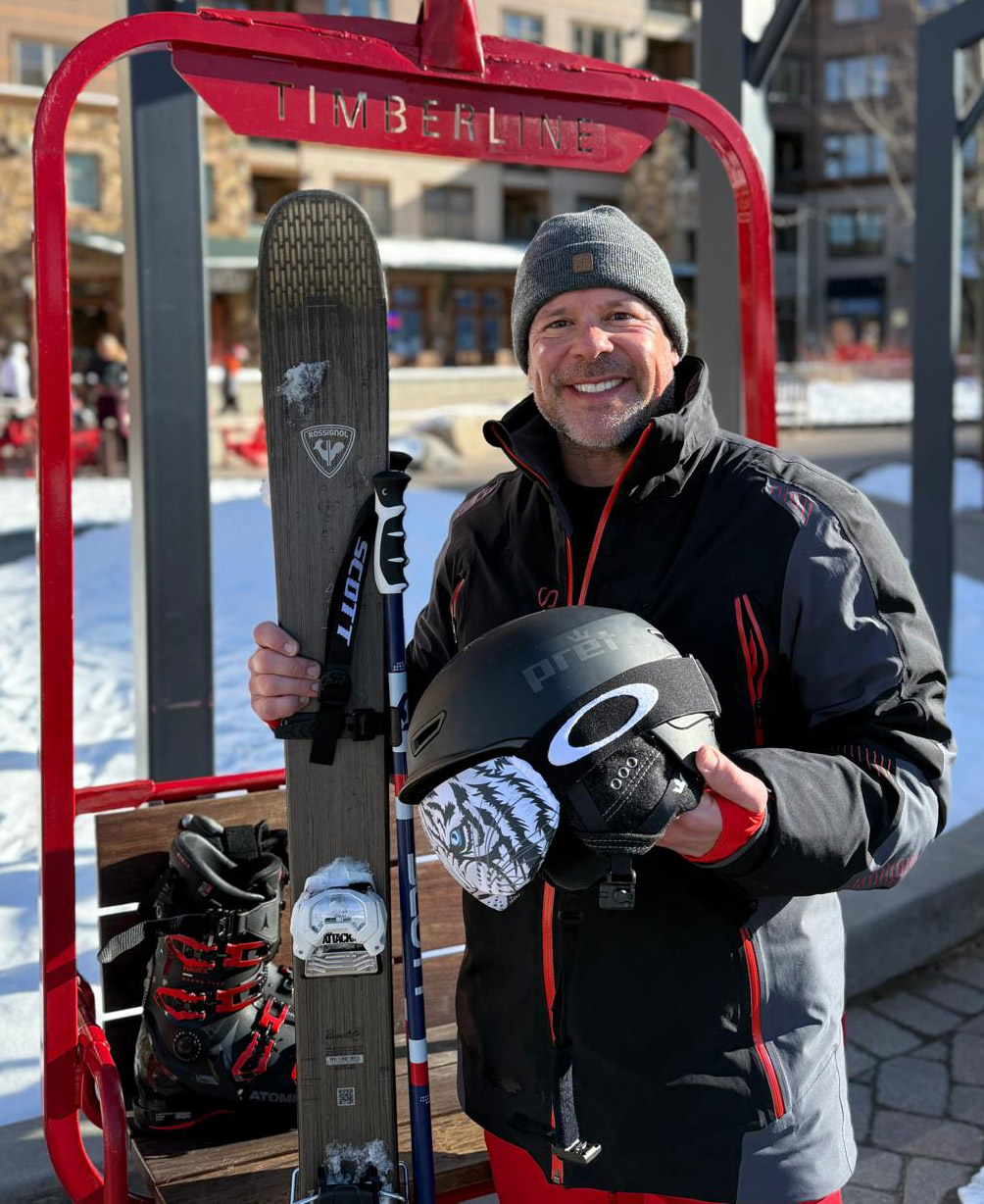
Arent says most of these accidents occur among two groups: elite athletes pushing physical limits, and vacationers who underestimate the challenge.
“Some people say, ‘I want to go to the Rockies for a ski vacation,’ and they’re coming from South Carolina,” Arent says. “Suddenly, they find themselves 10,000 feet up, maybe not that fit — and that’s where you tend to see accidents.
“Most people think, ‘Oh, it’s snow, it’s no big deal. I went sledding as a kid.’ Well, you weren’t sledding at 50 miles an hour, head-first,” he says. “Whenever there’s potential for contact, don’t have that false sense of confidence.”
Arent stress that skiing and other winter sports can be exhilarating and rewarding — but only if approached with respect, preparation and awareness.
“You push it enough, you’re going to wipe out once in a while,” Arent says. “What matters is doing what you can to make success more likely and minimize unnecessary risk.”
Safety Step 1: Wear a helmet
The most important precaution is simple: always wear a helmet.
“No matter what you do, wear a helmet,” Arent says. “You never see someone going down the luge or skeleton track without one, right? It’s obvious that if you’re going fast and hit something hard, it’s not going to end well.”
Choose a helmet that fits properly, provides coverage over the ears, and includes modern safety technology such as MIPS — the Multi-directional Impact Protection System — which offers better protection against rotational impacts.
“If you’ve been skiing with the same helmet for 10 or 15 years, you might want to look at some of the newer designs,” Arent says.
Safety Step 2: Get fit and stay hydrated
Fitness plays a major role in injury prevention. Fatigue and dehydration can impair coordination, reaction time, and judgment — all of which are crucial for maintaining control on the slopes.
“When you’re overexerting yourself, you’re going to be more prone to accidents,” Arent says. “The longer you go, the more tired you get — so make sure to hydrate. It really does affect your thinking.”
Training your body before ski season can help prevent injuries. Strength, endurance and balance training are particularly valuable for skiing, snowboarding and other winter sports that challenge stability and lower-body control.
Safety Step 3: Recognize concussion symptoms and seek help quickly
One of the most common — and most misunderstood — dangers in winter sports is delayed concussion symptoms.
“Unfortunately, we often see people several weeks after their injury,” Arent says. “Someone gets a concussion or suspects one, they go to a general practitioner who refers them to neurology, and neurology says, ‘That’s orthopedics or physical medicine.’ By the time they reach a concussion specialist, it’s three to 12 weeks out — and that delay increases the chances of long-term problems.”
Arent emphasizes that early assessment and treatment are key to recovery. Dizziness, headache, confusion, or sensitivity to light and noise can all be signs of a concussion. When in doubt, he says, sit it out.
Safety Step 4: Respect your limits — especially at altitude
Part of the thrill of skiing and other winter sports is the adrenaline rush. But higher elevations, cold air, and reduced oxygen can make even moderate exertion more demanding.
“The people who love these sports often love the risk,” Arent says. “That’s fine — but it’s about taking calculated risks and doing the things that make success more likely.”
The bottom line
Winter sports are exhilarating — and when approached safely, they can also sharpen your mind and strengthen your body.
As Arent puts it: “It’s about balance — knowing the risks, preparing properly, and protecting your brain so you can keep enjoying the slopes for years to come.”
And if something doesn’t feel right after a fall? Arent offers the best advice of all: When in doubt, sit it out.