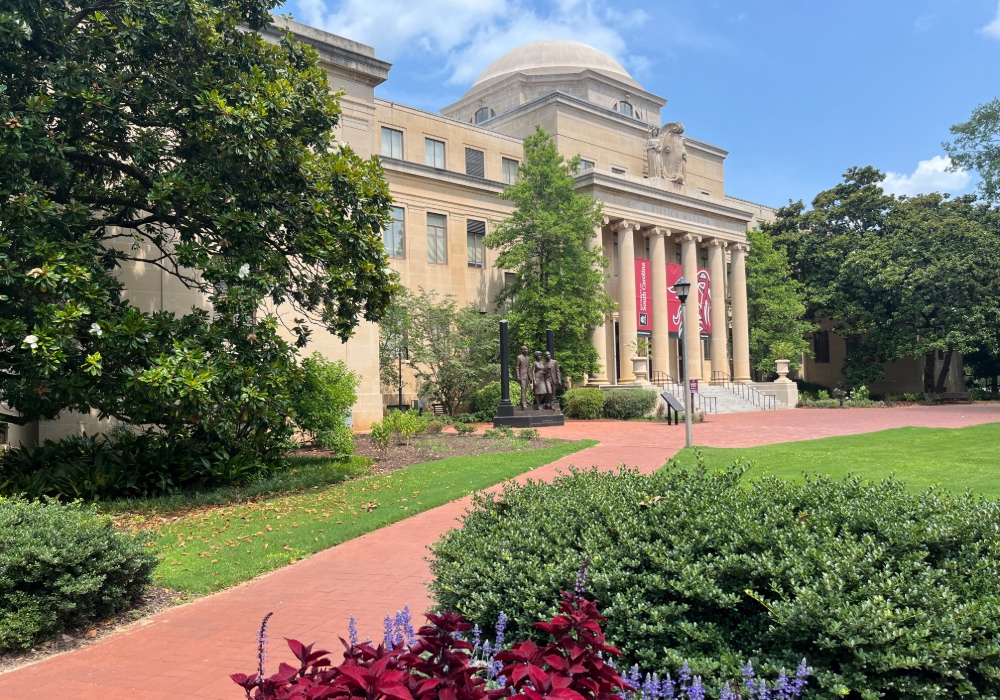
McKissick Museum stands as one of the most historically significant buildings and cultural institutions at the University of South Carolina. Positioned at the head of the historic Horseshoe, the oldest part of campus, the museum reflects generations of history while preparing for a transformation that will reshape how students engage with it.
As part of USC Next, the university’s long-term campus master plan, McKissick Museum is set to undergo a major renovation beginning November 2026, that will bring new life to the Horseshoe. The project aims to transform the building from a traditional museum into a dynamic hub where students can study, learn and interact with collections as part of their daily routines.
The museum’s roots date back to 1823, when South Carolina acquired Thomas Cooper’s gem and mineral collection, laying the foundation for the university’s broader collecting efforts. Over time, those holdings grew to include art, artifacts, geological specimens and textiles. In 1976, these collections were brought together when the museum formally opened in the McKissick building. Since then, it has become known for its research and preservation of Southern material culture, including pottery, basketry and textiles, helping to document and preserve traditions that might otherwise have been lost.
Today, McKissick Museum houses more than 100,000 objects, ranging from natural science specimens to cultural artifacts, Southern folk art and historical materials from across the region. As part of the university, it serves not only as a public-facing institution but also as a teaching and research resource for the students as well as the community.
The decision to renovate the building is driven by broader campus priorities, with the project supporting efforts to bring more student activity back to the Horseshoe and strengthen its role as a central hub of campus life. Director Lana Burgess said the museum plans to continue supporting faculty research, inspiring student curiosity and more intentionally reconnecting with the greater Columbia area following the renovations.
Planned updates include classrooms, study spaces, a café, a visitor center and new access points, all designed to create a more open and inviting environment. Interior walls will be reconfigured to allow for more natural light and a flexible layout that supports both academic and social use.
“As the focal point of the Horseshoe, the McKissick Museum Building enjoys a preeminent location on campus. Celebrated for its fine neoclassical architecture and timeless limestone exterior, the building deserves to be a more memorable part of the student and visitor experience at USC,” says Derek Gruner, university architect.
“This renovation will not only renew building systems, it will rejuvenate the soul
of the building with an infusion of life and natural light.”
A central feature of the redesign is the integration of museum collections into everyday student spaces. A dedicated object study classroom will allow students to work directly with artifacts from the museum’s collection. “Students will actually be learning from the real thing, not just the concept,” Burgess said. Additional exhibition areas will be incorporated throughout the building, creating opportunities for students to encounter collections in the spaces they move through each day.
While the building is closed, much of the museum’s work continues behind the scenes. Staff are carefully packing and documenting historic objects in preparation for relocation to a climate-controlled facility.
The move is expected to take several months, followed by unpacking and reinstallation. At the same time, the museum is expanding digital access to its collections and offering students opportunities to assist with cataloging and preservation work. Burgess said the renovation presents an opportunity to rethink how the museum operates, both on campus and within the broader community, with a renewed focus on accessibility and engagement.
Through these changes, McKissick Museum is being reimagined as a space where students encounter history as part of their everyday experience, not only within gallery walls, but in the classrooms and shared spaces they use daily.
“Our current location is prime real estate on campus, but we are landlocked. Our community patrons cannot easily access us during the academic year,” Burgess said. “I hope that through these changes, we can provide better care for our collections and create a space where students, faculty and the Columbia community are more involved in shaping what we do and how we present it.”