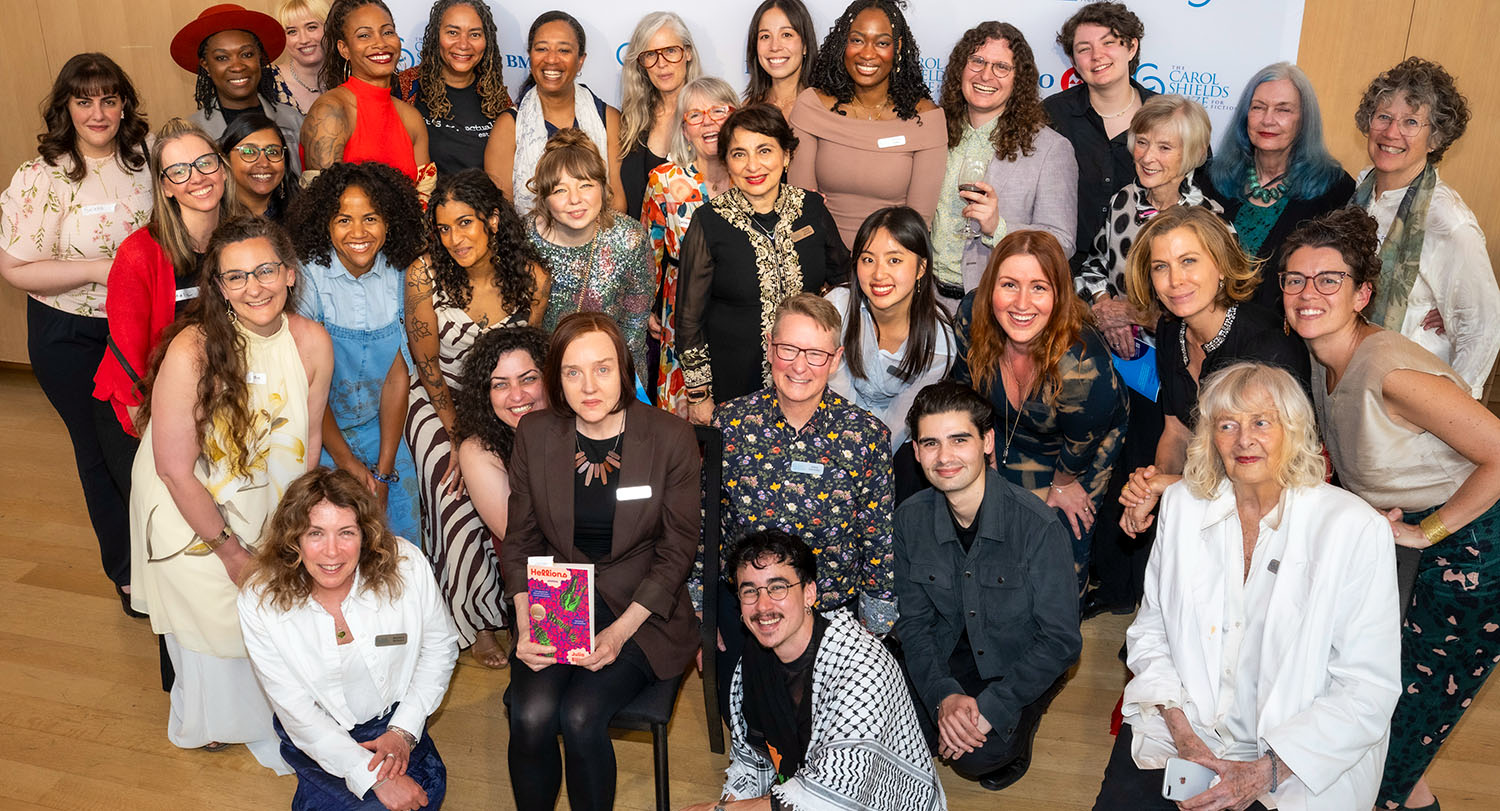
Known for her fluid, label-defying prose, author Julia Elliott found herself in excellent company last month among a literary cadre of distinct, even unconventional voices. As one of five finalists for the 2026 Carol Shields Prize for Fiction, she was in Toronto attending its June 2 gala presentation. To her delight, the nominated works could not be tucked into a single genre.
In the last century, the harshest critics argued that literary prizes were pretentious and celebrated only safe, homogenous works. That is decidedly no longer the case.
After the initial longlist of 15 semifinalists was released in March, Elliott started reading the nominated titles. What the USC Palmetto College professor of women's and gender studies and English experienced was an incredible breadth and blending of genres. The finalists included writers of a graphic novel, a work of autofiction, a dystopian novel and a realist novel with surreal elements and innovative prose.
“I wasn’t surprised that they had genre-bending stuff. I believe all the finalists were genre-benders,” she says, noting that prominent author and Substacker Lincoln Michel has written at length about this. Michel observed that some kind of genre-bending work now is represented on most short or long lists for major literary prizes, and it’s becoming part of the literary ecosystem.
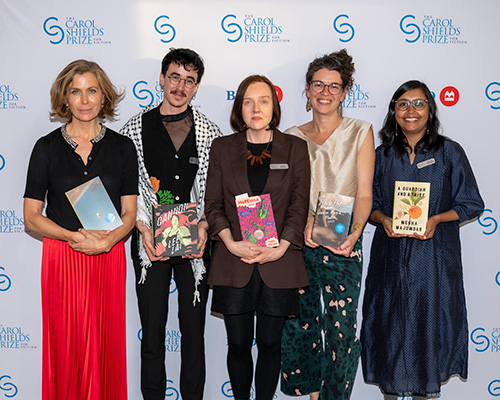
“By the time I got to Toronto, I had read everybody on the list,” she says. “I really loved all the books ... I honestly did not think I had a chance of winning. I was really impressed with the other writers. All of them seemed like better contenders than me.”
Lo and behold, it was Elliott’s name announced over the sound system as the winner for her critically acclaimed, genre-bending short-story collection, Hellions.
Elliott was stunned … and a bit panic-stricken.
“There was the practical matter of — oh my God — I have to give a speech in front of this big crowd! No matter how shocked you are, you’ve got to get up and walk to that podium and make a speech,” Elliott recalls. “I was still very emotional and crying a bit when I got up there.”
The trouper that she is, Elliott managed to get through the ordeal with reasonable composure. The honor, which celebrates the work of women and nonbinary writers, comes with $150,000 and a five-night residency at the Fogo Island Inn in Newfoundland.
Mother-daughter fan girls
The nearly surreal, whirlwind trip included a cocktail party, a reading, and the awards ceremony and reception, where Elliott mingled with people from the literary world, including the Carol Shields staff and board, an array of authors, bookstagrammers and other people passionate about literature.
Elliott brought her daughter, Eva, along for the events, and they got to meet renowned poet and author Margaret Atwood, among others. Atwood’s dystopian novel, Oryx and Crake, remains a favorite read for both. (Atwood is perhaps best-known to mainstream audiences for her 1985 novel, The Handmaid’s Tale.)
“It’s taken me a very long time to get to this point. I’ve had a lot of rejections. I can live with rejection, but I think the biggest fear would be actually losing interest in writing, getting disconnected from the magical process of creating fiction.”
Asked whether she prefers short- or long-form fiction, Elliott says she enjoys both, but she’s been writing short stories from the beginning and has had much more practice with them.
“When you’re writing a short story, it’s kind of exciting all the way through because you don’t have time to get bored with it,” she explains. “I think every novelist would admit that, no matter how engaged they are with the writing, about two-thirds of the way through, they get a little tired of the idea. You have to perform little tricks to stay engaged and push yourself through.”
Elliott says her biggest fear as a writer is losing her devotion to the craft or her ability to continue producing the provocative prose for which she has become known.
“I actually love to write. That sustains me,” she says. “It’s taken me a very long time to get to this point. I’ve had a lot of rejections. I can live with rejection, but I think the biggest fear would be actually losing interest in writing, getting disconnected from the magical process of creating fiction."
Most successful authors are queried about their method and practice, so we had to ask.
“What’s most difficult for me is just starting in a way that feels authentic and good,” she says. “The writing itself has to be done with a really sharp mind. That means a good night’s sleep, coffee in the morning, then getting down to business.”