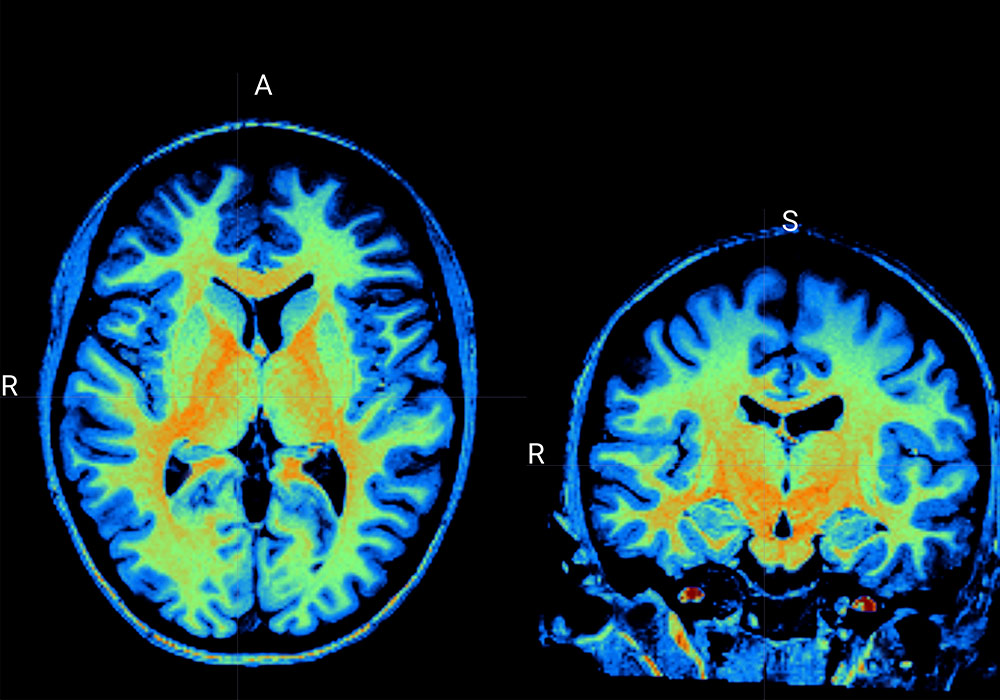
Understanding how the brain works and improving outcomes for patients are major priorities for University of South Carolina researchers.
That work gained momentum this year with the opening of the new Brain Health Center. The center brings together clinical services, advanced imaging, infusion therapy, rehabilitation and research in one location — a newly renovated, 65,000-square foot facility on the university’s new Health Sciences Campus.
And that’s just one of the ways the university is concentrating on the brain. Researchers in fields from public health and engineering to psychology and biology are studying areas such as recognizing the early impacts of autism, learning ways to best support caregivers and developing an arts initiative that combines neuroscience, creativity and social interaction to support older adults.
They also are making use of more powerful MRI scanners, leading to new grant opportunities and facilitating new research studies that have advanced understanding of aphasia, stroke treatment and brain aging.
Here are just a few of the stories offering a sampling of USC’s ongoing efforts in neuroscience.
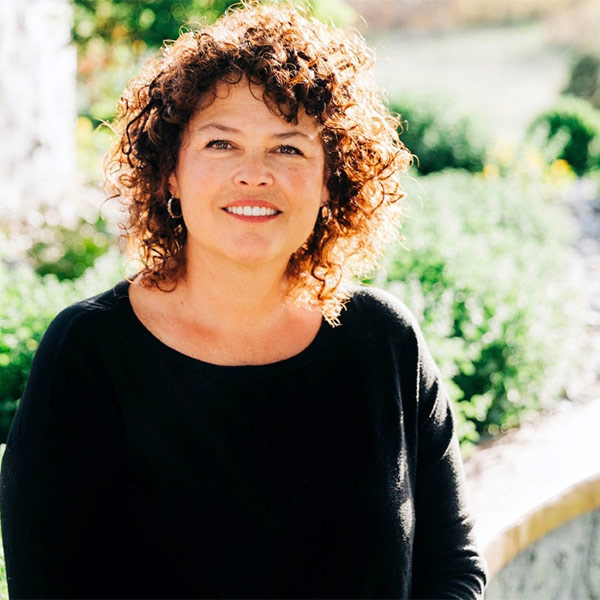
From helping to establish a popular undergraduate neuroscience major to attracting more than $120 million in research grants, the Carolina Autism and Neurodevelopment Research Center at USC has achieved notable success since its launch seven years ago.
And the momentum isn’t slowing. The center’s leadership has ambitious plans to serve
more citizens of South Carolina.
One key area are the tests the center offers for the early detection of autism. Center
director Jane Roberts, Carolina Distinguished Professor of psychology, wants to make
the assessments more widely available.
“Our research programs for early detection of autism are effective, but our goal is
to open a clinic to make our expertise available to the general public — not just
those who meet the criteria for evaluation in our grant-funded projects,” says Roberts,
who helped launched CAN in 2019 with biological sciences professor Jeff Twiss.
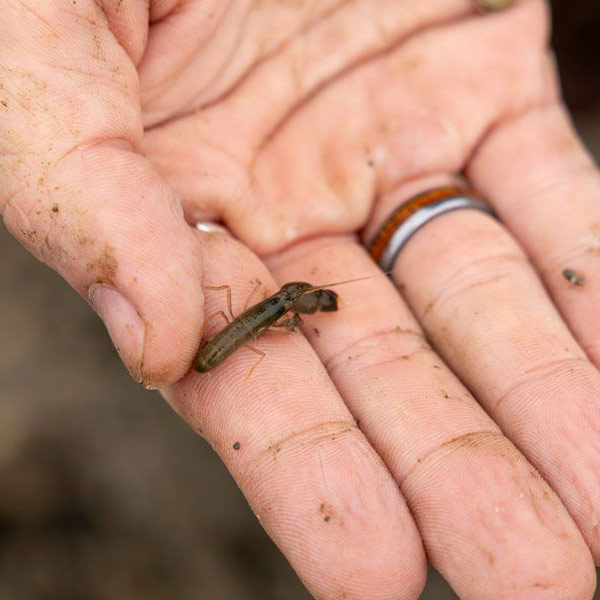
Snapping shrimp can create shockwaves strong enough to stun prey. But how do they survive each other’s blasts?
USC biologist Dan Speiser and his team discovered that a special “orbital hood” — a helmet-like shield around the shrimp’s eyes and brain — protects them from these powerful shockwaves.
Collaborating with biomedical researchers at the Molinaroli College of Engineering and Computing, the team is studying the hood’s structure to design next-generation helmets that could protect human brains from shock waves and even reduce the risk of PTSD in military personnel.
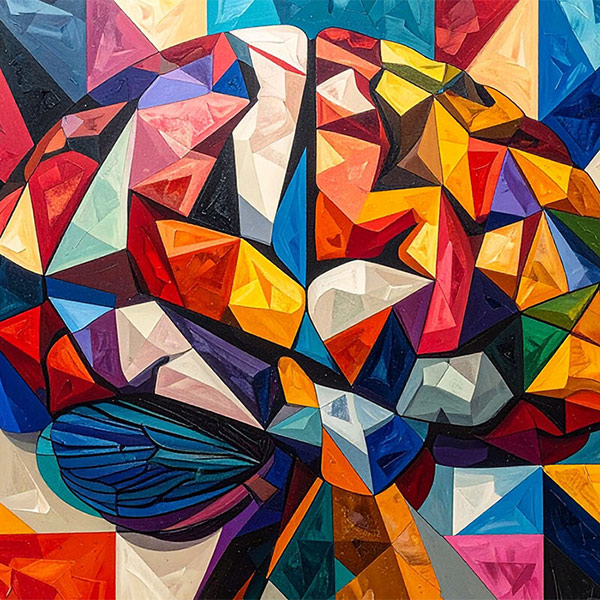
Cognitive decline is a significant problem for South Carolina’s aging population. That’s one reason the University of South Carolina has prioritized its efforts to improve brain health across the Palmetto State. At USC’s Arnold School of Public Health, researchers are leading the charge to better understand how diet, exercise and intervention factor into the solution.
Meet three faculty members — Meisam Arjmandi, Elizabeth Regan and Brie Turner-McGrievy — whose expertise offers insight into a holistic approach to improve brain health in South Carolina.
“Brain health is a pervasive interest of public health,” says Tara Sabo-Attwood, dean of the Arnold School of Public Health. “The work to enhance our understanding of brain health and how to preserve it is reflected across each of the disciplines of public health.”
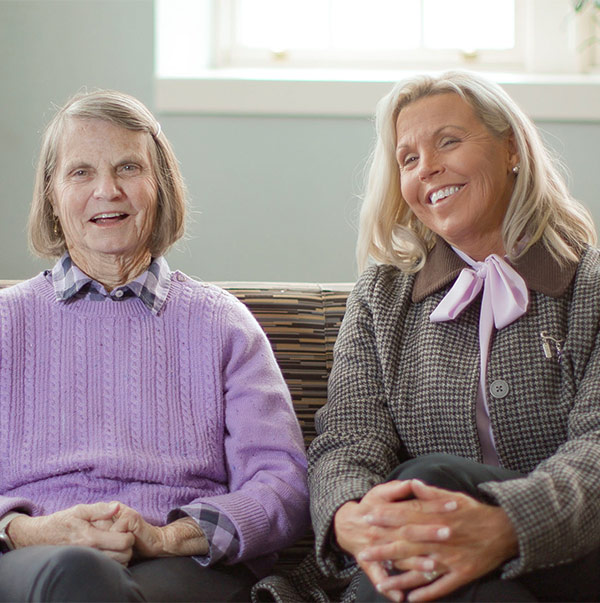
Laura Haynes learned about the University of South Carolina’s Brain Health Network as her mother, Janice Jones, was dealing with memory loss. The network has helped them both feel empowered and less alone as they cope with the challenges of the diagnosis.
Haynes, who spoke at the ribbon cutting for USC’s Brain Health Center, shared her experience and offered a window into Alzheimers and related disorders. She says the Brain Health Network helps ensure patients and caregivers all receive the care they need. That is especially important in a state like South Carolina, where 112,000 people live with Alzheimer’s disease — and that number is expected to rise.
“We’re opening the door to families searching for guidance, reassurance and for someone to say, 'We’re here. We can help you,’” Haynes says.

Students Ansley Martin and Stella Tew have been working with USC Brain Health to launch a program called Vibrant Minds, an expressive arts initiative that combines neuroscience, creativity and social interaction to support older adults living with neurological conditions.
The program helps adults facing cognitive challenges connect with their memories and each other through art and creative projects.
USC Brain Health is committed to improving access to cognitive care for underserved residents throughout the state of South Carolina. In addition to operating clinics, it also provides support services for patients and their caregivers, which made the idea for a creative arts pilot program a good fit in the spring of 2025.
What began as small, occasional sessions soon grew into a powerful model that combined evidence-based art activities with reflection, storytelling and conversation.
For Alyssa Blickensderfer Paley, a Brain Health program manager, Vibrant Minds represents what Brain Health aims to achieve.
“This work isn’t only about positive outcomes for the residents,” she says. “It’s about building meaningful experiences that reduce isolation and encourage creativity, which can improve brain health.”
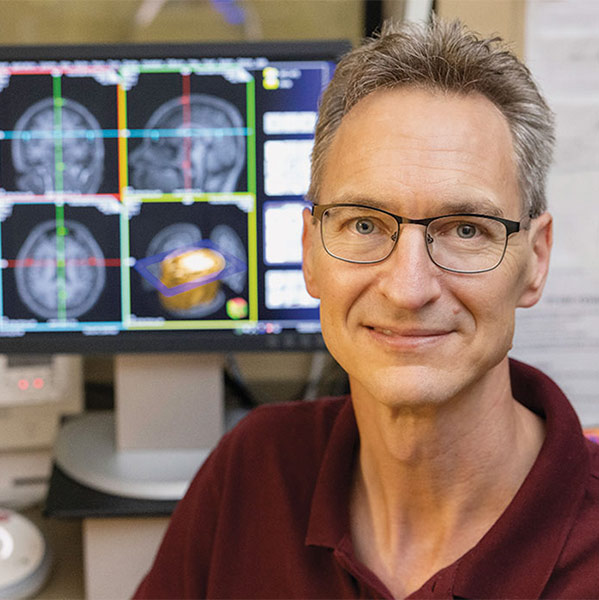
MRIs are commonplace in hospitals today, but most have a magnetic field strength of 1.5 Teslas or less. USC’s McCausland Brain Imaging Center is equipped with a 3 Tesla scanner, which is twice the strength of typical MRIs. And the university’s new state-of-the-art Brain Health Center boasts South Carolina’s only 7-Tesla MRI dedicated to patient care, as well as a wide-bore 3-Tesla MRI scanner.
Access to equipment of that caliber has enabled the center to bring in tens of millions in grant funding and has led to a major increase in research studies that have advanced understanding of aphasia, stroke treatment and brain aging.
Just ask psychology professor Chris Rorden, whose Endowed Chair of Neuroimaging is funded by USC benefactor Peter McCausland. Rorden is co-director of USC’s McCausland Brain Imaging Center, home to the equipment used to scan thousands of USC study participants since 2006.
Then there’s the appeal to prospective students and faculty. Rorden himself was drawn to USC by the scanner. The researcher, who earned his Ph.D. from Cambridge, developed the free neuroimaging visualization software that’s used by scientists around the world.
“It really turned out to be a magnet to attract a lot of other people to come here,” Rorden says, “because we have an instrument that allows us to do cutting-edge research.”
Kim Tieu, an internationally recognized neuroscientist whose research focuses on the
mechanisms underlying neurodegenerative diseases, particularly Parkinson’s disease,
has been named the Peter and Bonnie McCausland Distinguished Chair in Neuroscience.
Tieu joins USC with decades of experience in neuroscience and neurodegenerative disease
research, including leadership roles at leading global universities.
The endowed chair was created in 2026 to advance neuroscience research, education
and public impact across the state and beyond. It was established through the continued
philanthropy and vision of Bonnie and Peter McCausland and the McCausland Foundation,
whose longstanding support has helped elevate neuroscience research and education
at USC.
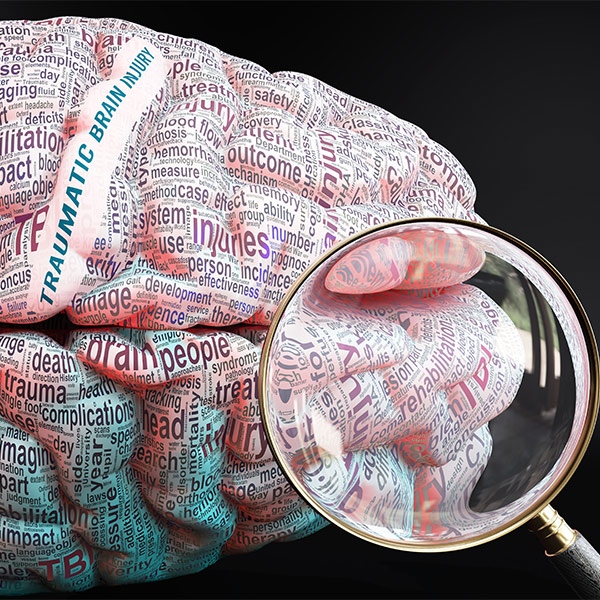
More than 214,000 people were hospitalized for traumatic brain injury in 2020, with more than 69,000 TBI-related deaths reported in 2021, according to the Centers for Disease Control. TBI may lead to short or long-term health problems.
USC biomedical engineering assistant professor Ahmed Alshareef is working to better understand the biomechanics of the human brain during high-severity impacts.
Alshareef’s five-year, $2.6 million project is funded by the National Institute of Neurological Disorders and Stroke and the National Institutes of Health. The multi-institution project is in collaboration with the University of Virginia and Uniformed Services University, and aims to combine to learn more about how the brain deforms from external impacts to the head, which is relevant to automotive crashes, concussions, and military and sports-related blunt impacts.
“If we can measure the relationship between how the head moves and how the brain deforms
during an impact, we can develop tools to mitigate those injuries,” Alshareef says.
“This includes tools that account for different sized heads or brains, and other subject-specific
factors that can lead to different mechanical responses or risk of injury.”