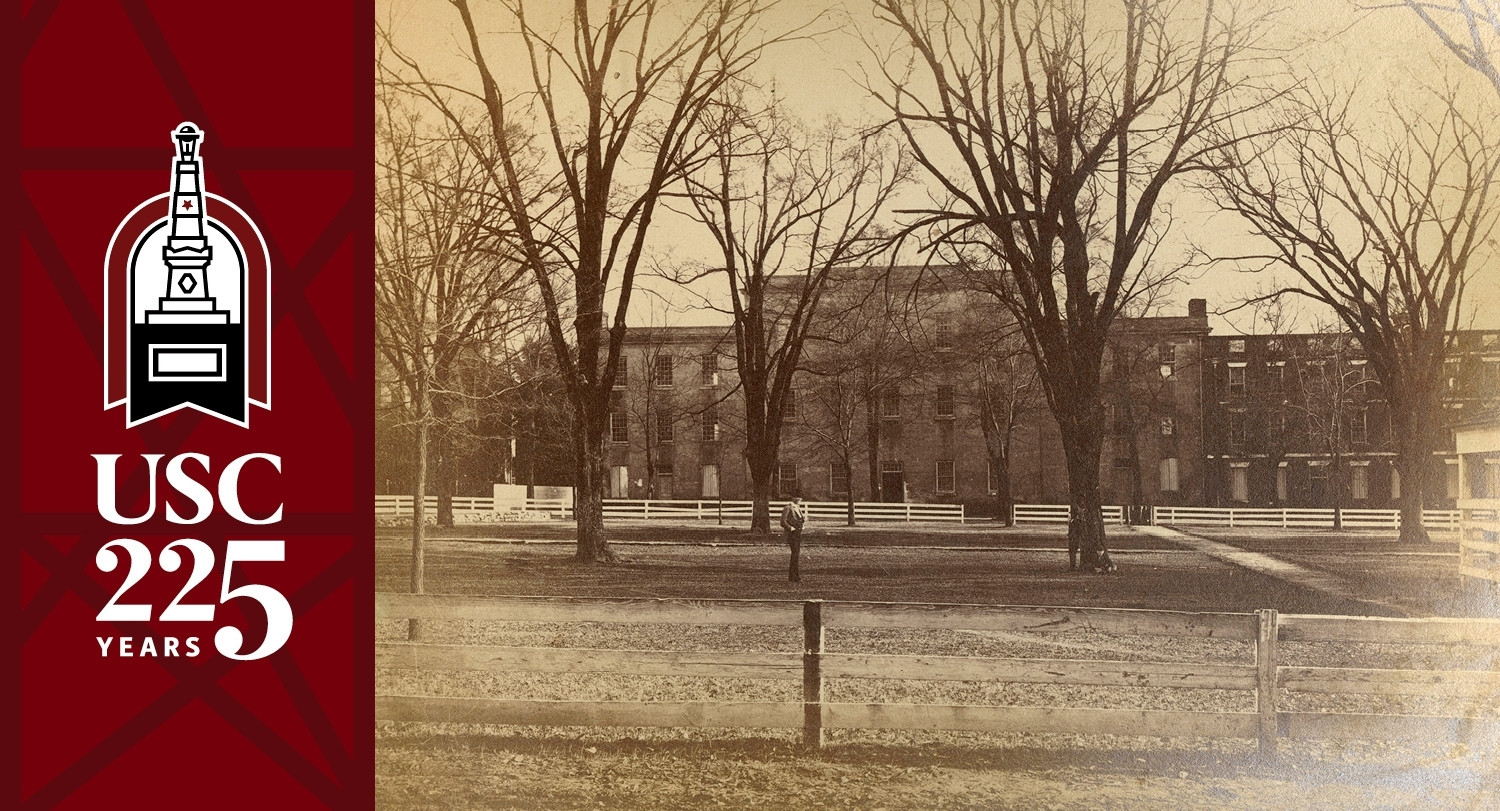
On-campus living has been a rite of passage at the University of South Carolina since before it was actually a university. But the campus housing experience has changed pretty dramatically since the first nine students arrived at South Carolina College in 1805.
Look no further than the mid-1860s, when the college reopened with a new name — the University of South Carolina — following the Civil War and Gen. William T. Sherman’s burning of Columbia. Talk about timing. …
Thanks to the wartime decision to convert campus buildings to hospitals, the now-historic campus core survived the burning of Columbia, but just barely. According to the diaries of Emma LeConte (daughter of chemistry and geology professor Joseph LeConte), the flames that consumed the capital city in February 1865 reached “the very campus walls” but spread no further.
The years immediately after the war were tough, finances were tight, but that didn’t dissuade Gov. Benjamin F. Perry, a former college trustee, from spearheading the movement to reopen as a university. Perry’s successor, Gov. James Lawrence Orr, pushed through the legislation making the change in name, curriculum and ambition official in December 1865.
Not so move-in ready
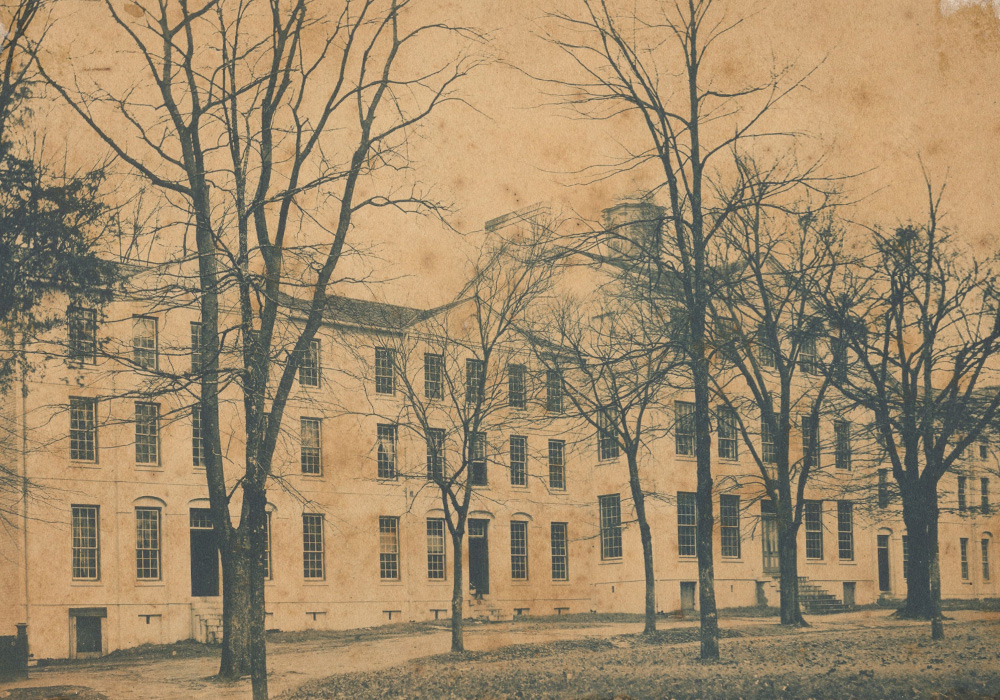
The newly christened University of South Carolina aimed to welcome students back to campus in January 1866. But that didn’t mean they could just roll up at Harper-Elliott and start unloading their LED string lights and twin XL comforters from Target. College activities had been suspended since 1862, and after the Confederate surrender in April 1865, the Horseshoe tenements (i.e. dormitories) weren’t exactly move-in ready.
The University of South Carolina changed its name to the South Carolina College of Agriculture and Mechanic Arts following the Reconstruction Era, then reverted to the original moniker of South Carolina College a couple of years later. In 1887, the institution again adopted University of South Carolina as its title, before reverting yet again to South Carolina College in 1890. In 1906, for the third and final time, the home of the Gamecocks was renamed the University of South Carolina.
According to Daniel Walker Hollis’s 1956 history of the university, former dormitories remained occupied by the U.S. military, by refugee families driven from their homes by Sherman or, in the case of Legare and DeSaussure, by both. DeSaussure also housed a military prison. Rutledge was used by the military, the post office and South Carolina’s secretary of state.
And while the institution was about to embark on an exciting new chapter as the state’s first university, newly elected bursar and marshal W.H. Orchard had his work cut out. There was barely money for repairs, never mind bunting, tailgate tents or First Night Carolina.
College trustees requested $4,000 from the federal government for repairs and supplies, but the request was denied. As Hollis explains, “the only sum made available to Orchard was $500 which Governor Orr scraped together from contingency funds. Orchard devoted this money to the whitewashing and plastering of dormitory rooms.”
Life as a postwar college student
Who knows what the 20 students who arrived that January truly thought of their new digs, but as Hollis points out, “a large proportion of the applicants for admission were veterans.” After living out of a tent and eating hardtack for a couple of years, throwing a log in the fireplace and gazing out on the Horseshoe while you finished your Latin homework probably felt pretty sweet.
And the rules for campus residents weren’t as strict as they had been. Whereas before the war, student quarters were subject to daily inspections by the professors, the postwar USC student could lay his waistcoats where he saw fit. Students could also come and go as they liked and were no longer expected to stay in their rooms for compulsory study hours.
There was no Five Points party scene back then, but a sketchy bar district known colloquially as Hell’s Half Acre cropped up between the university and the Congaree River, in what’s now known as the Vista. Surely at least a couple rowdy undergrads might have ventured downhill following a lively literary discussion with USC’s Clariosophic Society.
But the college lifestyle was getting more expensive all the time. At $115, tuition and fees were more than double what they were before the war. Twenty dollars of that went to “room rent,” and then there were additional living expenses, including fuel ($6/cord), washing ($2.50/month) and board ($5-$8/week).
According to the Bureau of Labor Statistics’ Consumer Price Index, $115 in 1866 would equal just north of $2,400 in today’s money.
Sounds like a square deal, right? Maybe. Or maybe not. Before we start bellyaching about how good college kids had it during Reconstruction, it’s worth remembering: Twenty bucks in room rent didn’t cover much more than, well, a room to rent. And while we don’t know how proprietary Mr. Orchard was regarding his newly renovated tenements — or if the university’s newly elected bursar was proprietary at all — that plaster and whitewash didn’t come cheap. If somebody had nailed a neon “Forever to Thee” sign above their bunk at Harper, Elliot, Pinckney or Legare, it’s safe to say there would have been questions.
Editor’s Note: This article draws heavily on University of South Carolina, Vol. II: College to University by Daniel Walker Hollis (University of South Carolina Press, 1956).