Last spring, Discover USC — our signature showcase of research, scholarship and creativity — celebrated ten years of providing a platform for undergraduate and graduate students, medical scholars and postdocs to present their mentored projects in an energizing and supportive environment designed to help them develop professionally.
We know that engaging in research is a great way for students to supplement their classroom studies, deepen their academic knowledge and cultivate the career skills they need to thrive. To get a feel for how student research experiences continue to reverberate beyond college and into the workforce, we checked in with four alumni who engaged in undergraduate research and won awards for their presentations at the first-ever Discover USC event in 2017. Read about the lasting legacy of confidence and achievement undergraduate research experiences instilled in these young professionals, in their own words.
Jazmine Benjamin, Ph.D., USC Aiken, class of 2017
My early research experiences at USC helped me build the scientific, communication and critical thinking skills that paved the way for graduate school and ultimately my career in medical affairs.
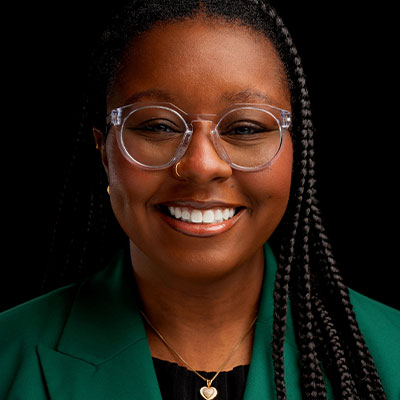
Since graduating from USC Aiken in 2017, I earned my Ph.D. in Biomedical Sciences from the University of Alabama at Birmingham, where my dissertation focused on the impact of chronic circadian disruption on cardiovascular disease risk factors. Following graduate school, I conducted postdoctoral research at Vanderbilt University before transitioning into medical affairs. Today, I serve as a medical science liaison at a mid-sized pharmaceutical company where I specialize in rare diseases and engage with healthcare professionals to advance scientific exchange and improve patient care.
I discovered my love for science in an intro biology class during my freshman year. I thought I wanted to go to medical school, but I realized that what excited me most was asking questions, figuring out the answers and sharing what I learned. Research gave me the chance to do all of those things. I really enjoy talking about science and critically analyzing the details of research papers, and that is a big part of what I do for a living today. My early research experiences at USC helped me build the scientific, communication and critical thinking skills that paved the way for graduate school and ultimately my career in medical affairs.
William Capell, M.D., MPH, USC Honors College class of 2017
My career path would not have unfolded the way it did without my early research experience at USC.
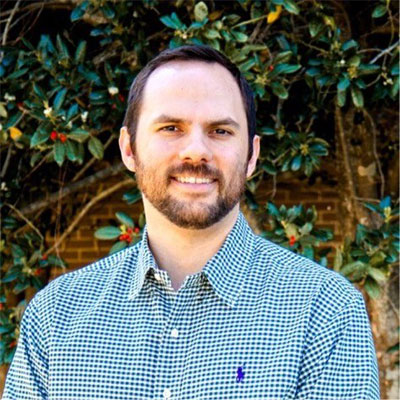
After graduating from the USC Honors College in 2017, I completed medical school at UCLA in 2021 and a residency in general preventive medicine at Prisma Health, which included an MPH from the Arnold School of Public Health. I finished training in July 2026 and now serve as a medical consultant for the South Carolina Department of Public Health and as research faculty with the preventive medicine program at Prisma Health. My work and interests focus on chronic disease prevention, vaccine‑preventable illnesses and applied epidemiology.
My career path would not have unfolded the way it did without my early research experience at USC. Through the Office of Undergraduate Research’s database, I connected with Dr. Michy Kelly in the Department of Physiology, Pharmacology and Neuroscience, and she fundamentally shaped my understanding of what research could be. The opportunities she created — from grant support to presentations, awards and publications centered on our work with the enzyme PDE11A4 — gave me a level of experience that made medical school possible and built the foundation for the research I now lead within the preventive medicine program at Prisma Health.
Meredith Love Gawai, GIT, McCausland College of Arts and Sciences class of 2017
The skills I developed through both undergraduate and graduate research have continued to shape me as a scientist and have proven invaluable in my professional career.
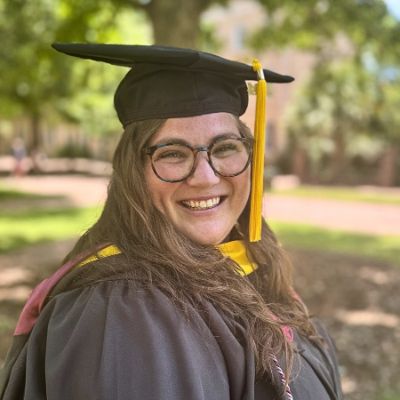
Since graduating from the University of South Carolina in May 2017, I have worked as a Geologist for the South Carolina Department of Health and Environmental Control (now the Department of Environmental Services), where I focused on the cleanup of petroleum releases from underground storage tanks. In 2021, I returned to the University of South Carolina to pursue my Master’s degree, building on the research I conducted as an undergraduate. Since earning my Master’s degree, I have continued my career as a Geologist with the North Carolina Department of Environmental Quality.
Conducting undergraduate research in Dr. David Barbeau’s Tectonics and Sedimentation Laboratory gave me a clear sense of direction and purpose in my geological career. This experience not only provided an opportunity to explore my passion for geology but also taught me how to ask meaningful questions and think critically about geological processes. The skills I developed through both undergraduate and graduate research have continued to shape me as a scientist and have proven invaluable in my professional career, even outside of a traditional research setting.
Olivia Reszczynski, M.D., McCausland College of Arts and Sciences class of 2019
The best research relationships are ones where you are not just asking what you can learn, but also thinking about how you can contribute.
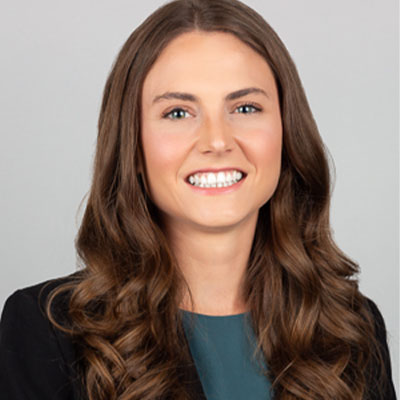
After graduation, I worked for a year as a healthcare consultant at FTI Consulting in Washington, D.C. I learned how to use large datasets and became proficient in coding languages like SQL, STATA and R. Afterwards, I attended the Medical University of South Carolina for medical school and later matched at the University of Virginia for an internal medicine residency where I am currently a third-year resident.
Dr. Reszczynski offers words of wisdom for undergraduate students pursuing research
for the first time:
My first research opportunity came after nearly 50 cold emails, and my first job came
after almost 100 applications and cold emails. I learned early on that the more opportunities
you pursue, the “luckier” you become because eventually something will work out. Do
not be afraid to put yourself out there, even when you expect to hear no.
Once you do get an opportunity, remember that mentoring an undergraduate takes real time and effort from your mentors. Look for ways to make yourself genuinely useful. Volunteer for the extra task, apply for grants, pursue awards and find opportunities that help move the project forward while also reflecting positively on your mentors. The best research relationships are ones where you are not just asking what you can learn, but also thinking about how you can contribute.