
Jack Vinzani
Jack Vinzani is a freshman in the South Carolina Honors College. He wrote this story for the Honors Writing for Mass Communications course taught by Bertram Rantin.

In the beverage lab of the Close-Hipp Building, the soft hiss of brewing kettles and the quiet clinks of glasses create an environment that feels closer to a tasting room than a lecture hall. This relaxed space serves as a home for a course where students study the creation, evaluation and presentation of craft beer.
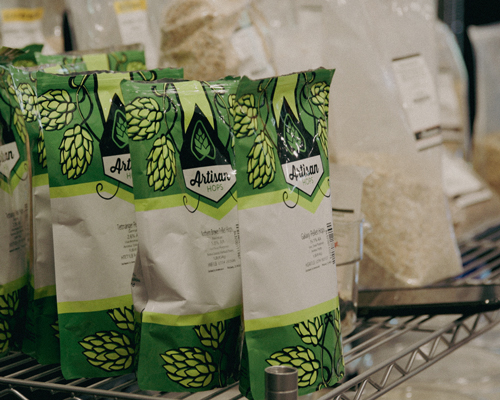
The South Carolina Honors College course “Exploring the Craft Beer Trend,” taught by Chef Robert Lybrand in the School of Hospitality and Tourism Management, introduces students to the fundamentals of beer production, sensory analysis, alcohol safety and the brewing industry. The class combines tasting sessions, brewing demonstrations and visits to local breweries to help students understand how craft beer is made and how it fits into the broader hospitality industry.
“We already had the wine class, which was very popular, and we wanted to expand our selection of beverage classes,” said Lybrand, who has brewed beer for more than 30 years and teaches several beverage courses at USC. “Craft beer is a multibillion-dollar industry, and if you want to be a part of it, you need to have both hands-on experience and knowledge about it.”
Before students begin any tastings, the course spends its opening weeks preparing them for the ServSafe Alcohol Service Training exam, which covers responsible service, legal guidelines and safety procedures used throughout the hospitality industry. The early focus on safety gives students a baseline understanding of how alcohol should be handled in a professional setting before they ever touch a beer in class. As the semester progresses, the class shifts to building the knowledge required for the Level One Cicerone Beer Certification Exam, which tests students on beer styles, ingredients and production. Together, the safety training and certification work help prepare students for the tasting and analysis later in the semester.
Each week, the class focuses on a different style of beer that students study through guided tastings and comparisons. Lybrand begins by outlining how that style is traditionally brewed and what students should expect to find in each sample. From there, the class moves through appearance, aroma and flavor, noting how ingredients and brewing techniques shape the final product. “We talk about what they look like, smell like, taste like,” Lybrand said. “We also look at the cans, the design, the description and the marketing on them.”
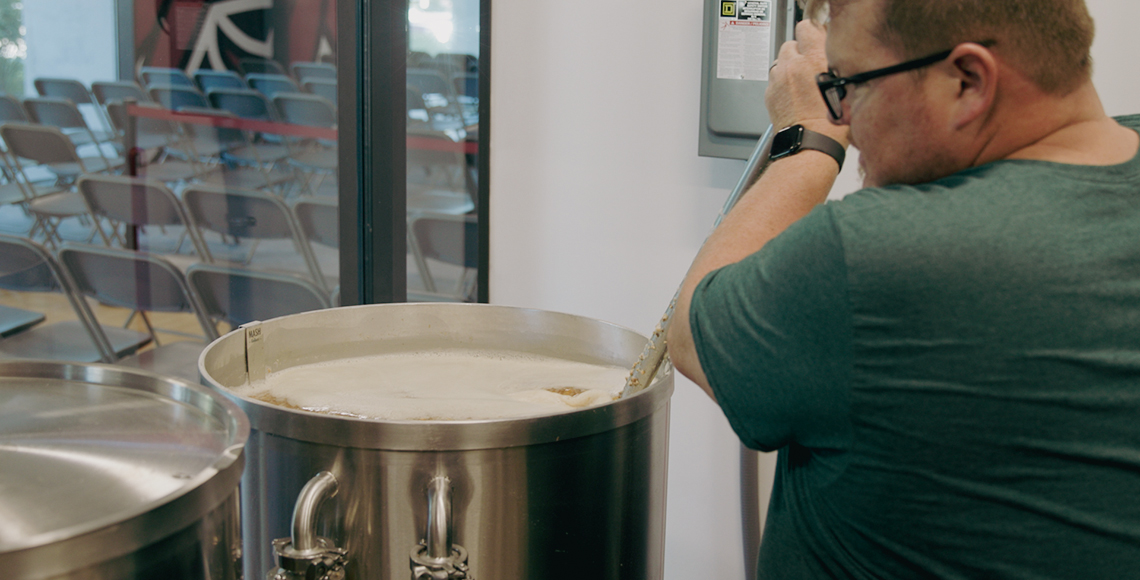
The tasting portion is a central part of the course and plays a major role in how students engage with the material. Each week, students work through five samples, starting with clarity and color before moving into aroma and flavor. “We take one of each, usually five types of beer, and look at the clarity, smell it, see what we’re smelling, then taste it and compare,” senior Alex Downs said. Senior Peter Desimini added that breaking down each sample helped him notice details he hadn’t paid attention to before. “You start realizing how much the individual ingredients matter,” he said. “The smell plays a much bigger role than you’d think.”
That close attention to detail carries over into the way Lybrand leads the class. His teaching style mixes technical knowledge with a relaxed, conversational approach that encourages students to take ownership of what they notice. He often begins class with simple questions about a beer’s traits and then lets the discussion grow, guiding students as they talk through their first impressions. Downs shared the open exchange makes the class feel more collaborative. “He definitely tries to include us and make it a discussion instead of just lectures.” Desimini also discussed how that openness extends into Lybrand’s personality, which helps keep the room warm and comfortable, whether he is breaking down a brewing term or slipping in one of his “dad jokes.” “He makes it easy to speak up,” he said. “Even if your answer is kind of out there, he’ll hear you out.”
The brewery visits give students a chance to see how the techniques they study in class translate to large-scale production. The class toured three local facilities this year, each offering a different look at the steps involved in brewing on a commercial level. Downs said the visits helped connect the tasting work in the lab to real industry practice. “You get to see the machines up close and talk to the people who actually make the beer,” he said.
Together, these experiences give students a clearer understanding of how beer is produced and evaluated beyond the classroom. Whether identifying ingredients or watching a commercial brew in progress, students said the class helps them see the craft behind each beer more clearly.
“It’s a fun class to be in,” Downs said. “You learn so much, but it never feels heavy.”
Jack Vinzani is a freshman in the South Carolina Honors College. He wrote this story for the Honors Writing for Mass Communications course taught by Bertram Rantin.