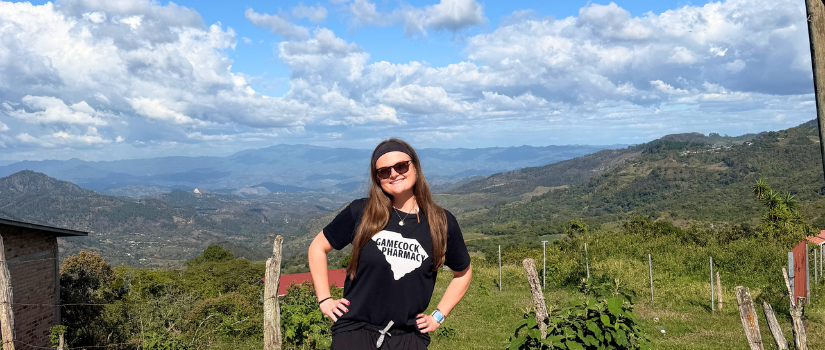
Experiential learning is a cornerstone of the Doctor of Pharmacy (Pharm.D.) program at USC, giving students the opportunity to apply classroom knowledge in real-world settings. Through more than 600 practice sites across South Carolina and beyond, our students gain hands-on experience in a variety of pharmacy settings while building essential patient care skills.
For Haley Nicholas, a fourth-year pharmacy student from Middletown, New Jersey, that learning extended far beyond the classroom—and beyond borders. Through an international rotation in Honduras, she gained valuable clinical experience while immersed in a new culture, an opportunity that reflects the breadth and impact of experiential education at South Carolina.
What inspired you to do this rotation?
HN: I’ve always been interested in travel and learning about other cultures. Because I was on the accelerated GPA pathway into pharmacy school, I knew I likely wouldn’t have the opportunity to study abroad during my undergraduate years. With that in mind, I planned to incorporate travel into my P4 year through my APPE rotations. When the opportunity to complete an international elective came up, I immediately pursued it. While I’ve traveled personally, this was my first experience working as a health care provider abroad.
What did your typical day look like?
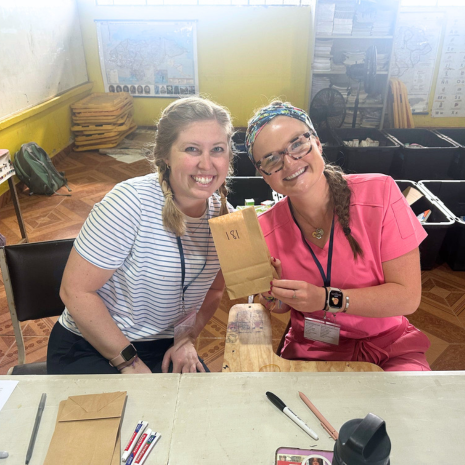
HN: Clinic days started early with breakfast at our hotel before traveling to the community we were serving, which was anywhere from 20 minutes to over an hour away. Once there, we set up the clinic, which included triage, point of care testing, and vital checks before patients were seen by a physician.
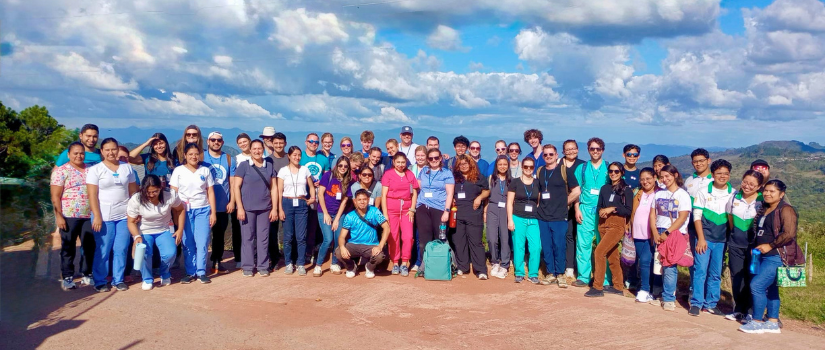
Local technicians and translators worked alongside us to assist with labeling medications and counseling patients. Throughout the week, I assisted with pediatric dosing, making recommendations to physicians, and answering drug related questions from physicians and patients. By the end of the trip, we had seen over 700 patients and filled over 2,100 prescriptions!
What knowledge and skills did you gain from this experience?
HN: Working in a resource-limited setting strengthened my critical thinking and problem-solving skills. Without consistent internet access, we relied on clinical references that we had on-hand with us. I also gained valuable experience acting in a pharmacist role, verifying prescriptions, counseling patients, and dosing medications. The fast-paced environment pushed me to improve my organization, communication, and stress management skills. Beyond clinical skills, I developed a deeper understanding of global health care systems, travel medicine, and Honduran culture, all of which broadened my perspective on patient care.
How did the College of Pharmacy help make this experience possible for you?
HN: The College of Pharmacy was incredibly supportive throughout the process. I shared my interest in an international rotation early on, and the Experiential Office consistently provided information on available opportunities. The college’s partnerships with the Undergraduate Study Abroad Office and One World Health (the organization who runs the Honduras trip) made coordination seamless.
I was also fortunate to receive financial support through a travel scholarship I applied for from the Kennedy Pharmacy Innovation Center, which helped offset some expenses. I’m very grateful for the college’s encouragement and resources that made this experience possible!
Beyond work, what else did you get to experience in Honduras?
HN: One World Health made a strong effort to incorporate cultural experiences into the trip. Early in the week, we went kayaking on one of Honduras’s largest lakes and shared a meal at a local restaurant. We explored local coffee, pastry, and chocolate shops, and on our final night, we attended a cultural celebration featuring traditional Honduran music and dance.
Some of the most meaningful moments came from simply spending time together, sharing meals, listening to each other’s stories, and connecting outside of the clinical setting. These experiences gave me a deeper appreciation for the culture and the people we were serving. Everything about this trip was intentional and well-organized, which enhanced all aspects of the rotation.
How did this experience influence your long-term career goals?
HN: This experienced confirmed my interest in incorporating travel medicine into my future career. I’ve already registered with One World Health as a pharmacist volunteer for future trips and hope to return many times if my schedule allows.
More broadly, this rotation reshaped my perspective on health care and service. It reinforced the importance of adaptability, cultural awareness, and most importantly, giving back to those in need. Whether through travel clinics in the US or future international opportunities, I’m excited to continue pursing this path! I would highly encourage everyone to consider making travel medicine and global health a part of their P4 year or pharmacy careers.
Topics: Pharm.D. Program, Experiential Learning, Student Experience