Today, student health and fitness are as central to the University of South Carolina college experience as choosing a major. Whether scaling the 52-foot climbing wall at the Wellness and Fitness Center or stopping by Student Health and Well-Being for a flu shot and a mental health counseling session before grabbing a Power Smoothie at the Russell House, the modern undergrad has every opportunity to lead a healthy lifestyle.
But that wasn’t always the case — at USC or, really, any other American university.
Which is not to say 19th- and early 20th-century university officials didn’t care if a student got sick or fell off a horse.
In the 1880s, according to historian Daniel Walker Hollis, President John McLaren McBryde “established a makeshift infirmary” above the campus dining hall. Whether or not the location of one owed anything to the location of the other is up for debate, but Hollis hints at a connection.
“If one became ill from indulging too freely in [caterer] Davis’ food on the first floor of Steward’s Hall,” he writes, “he could apply for help upstairs.”
But bloating and indigestion were hardly the only ailments of the era. The 19th-century college student was at risk for a whole range of genuine diseases, and McBryde knew it. Hollis again:
“The president realized the inadequacy of such an arrangement, for measles, mumps, and typhoid fever were frequent on the campus in the days before modern plumbing and adequate sewage facilities. When sixteen cases of measles broke out in 1886, he warned the trustees that the situation had reached the stage of emergency.”
A cure for campus health
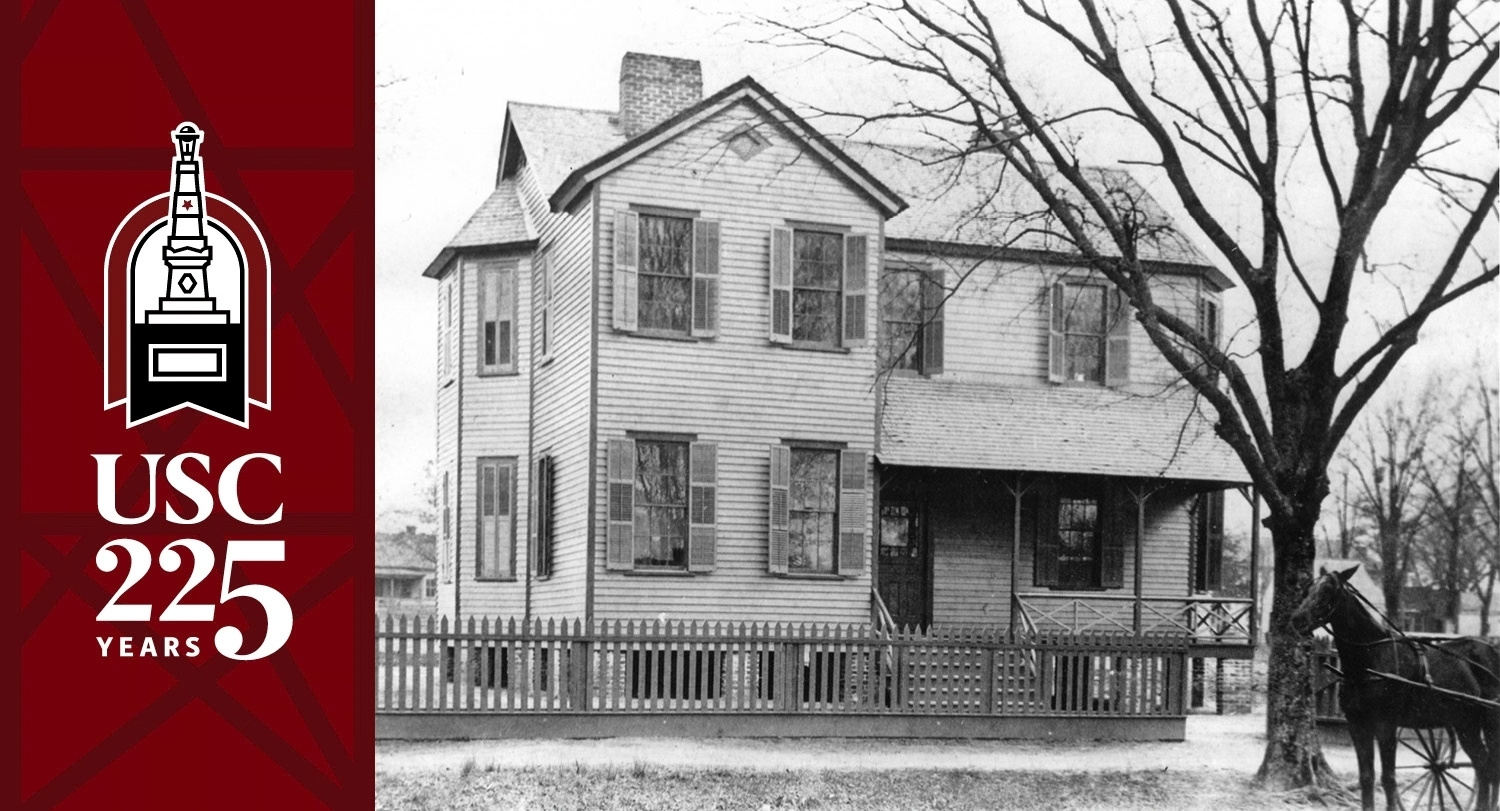
His solution? A dedicated infirmary, the university’s first, which opened in a frame house on the south side of College Street in 1888. The university also retained two physicians, A.N. Talley and B.W. Taylor, according to Hollis, as well as a “matron,” Mrs. M.J. Ferrell.
It’s hard to say what sort of equipment Talley and Taylor had at their disposal — modern germ theory was just emerging, blood work was a thing of the future and physical therapy typically amounted to walking it off — but healthcare was advancing, and the university kept up with the times.
Indeed, the university’s first true infirmary lasted just 20 years. In the summer of 1908, a woman named Ann Jeter donated $20,000 for the construction of a new infirmary at the corner of Greene and Bull streets. The Wallace Thomson Memorial Infirmary was named after Jeter’s nephew, a university alumnus, and was described in The Gamecock as “beautiful” and “a handsome gift” at the time of its opening.
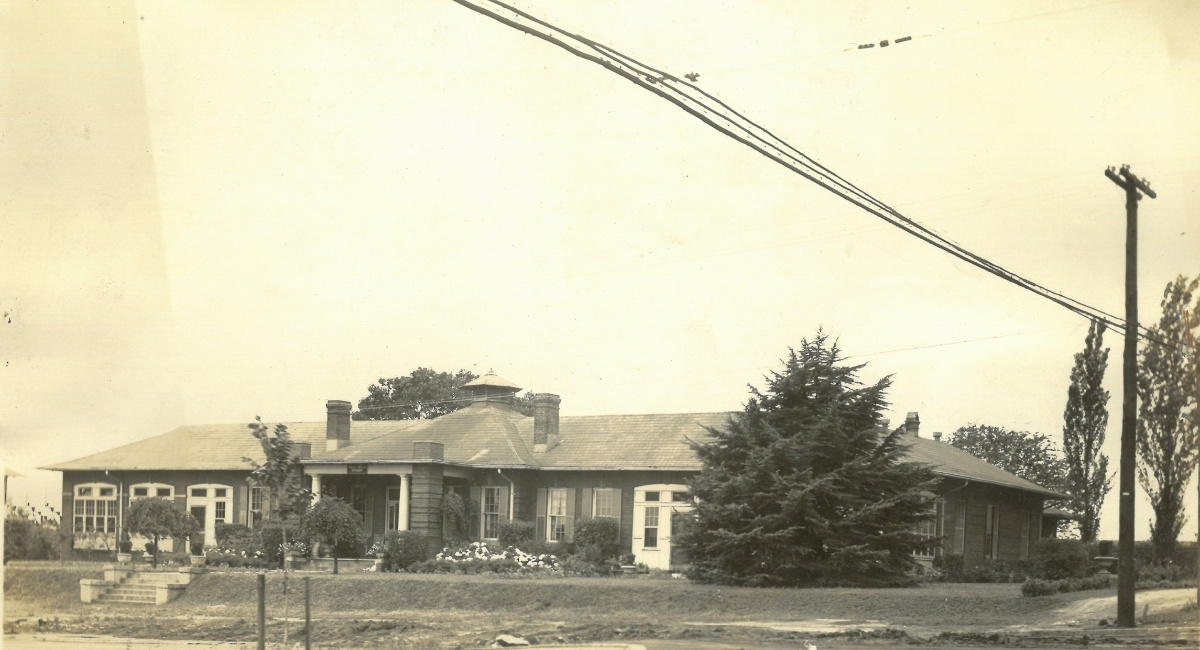
It was also well used, and even better publicized. Among the infirmary’s earliest patients was student P.W. Ferguson, who was “able to continue his studies … after suffering a severe attack of grippe. He was confined in the Infimary [sic] for several weeks and came near having pneumonia.”
How do we know Ferguson was so incredibly sic [sic]? Because in March 1910, nobody blanched if they listed the names of patients and their illnesses in The Gamecock.
Confidentiality and typos aside, the Thomson Infirmary filled a real need.
“The Wallace Thompson [sic] Infirmary, completed in 1908, provided the student body for the first time with facilities adequate to safeguard its health,” Hollis writes. “The university continued to retain two physicians on a fee basis until 1913.”
When the flu came to town
Unfortunately, from 1913 until 1924, the facility was overseen solely by one man, Dr. J.J. Weston. Why unfortunately? Because Weston could have used a little help when the influenza pandemic hit Columbia in 1918.
Please understand: It could have been worse. Toward the end of World War I, campus wasn’t exactly hopping. Much of the student body was off at war, and the remaining civilian students barely rubbed elbows with the several hundred Student Army Training Corps cadets stationed alongside them, whose college days started with reveille and ended with supervised study and a strictly enforced curfew.
But the flu doesn’t care about curfew — or reveille, either, for that matter — and before Doc Weston could say “Jack Robinson,” the dreaded disease swept through campus. All told, there were more than 300 reported cases of influenza on campus that October.
The university imposed a quarantine and classes were canceled for more than a week. When the infirmary hit capacity, Woodrow College was converted to a convalescent hospital. So was Longstreet Theatre, which at the time was the college gymnasium. The worst cases were transported to the hospital at Camp Jackson [now Fort Jackson].
One of the few S.A.T.C. cadets who managed to avoid the flu that fall was 16-year-old Gadsden Shand, who was interviewed by university archivist Elizabeth West shortly before his death in 1998. Shand was captain of an S.A.T.C. company when the flu came to town and soon found himself tending to his fellow cadets, who all seemed to fall ill in a single day.
“I couldn’t even find a doctor, they were all so busy,” Shand told West in an oral history quoted by University of South Carolina podcaster Chris Horn in 2020, who based said podcast on a USC Times feature by Craig Brandhorst, the writer of this mostly accurate history. “So, I looked after the whole company, had to feed them and clothe them and everything else. I managed to get by with it somehow.”
Editor's note: All names, dates and quotations herein are drawn from Daniel Walker Hollis’s University of South Carolina Vol. II: College to University (University of South Carolina Press, 1956); The Gamecock; University Archives; and Remembering the Days, the official USC history podcast, hosted by Chris Horn and Evan Faulkenbury.