We asked Arnold School alumni why they chose the Arnold School, the mentors who influenced their journeys and how their degrees prepared them for their next steps.
Job Title: Senior Principal Biostatistician
Employer: Novartis Pharma
Arnold School Degree(s): Ph.D. in Biostatistics, 2018
How did you become interested in public health or your area of study? I first became interested in this field during my undergraduate studies in statistics. I enjoyed learning how statistical methods could be used to make sense of complex data, and I quickly realized how useful and practical this knowledge could be in solving real-world problems. Over time, I became especially interested in applying statistics to health-related questions, where data can help improve research, guide decision-making, and ultimately benefit people’s lives. Biostatistics appealed to me because it sits at the intersection of statistics, medicine, and public health.
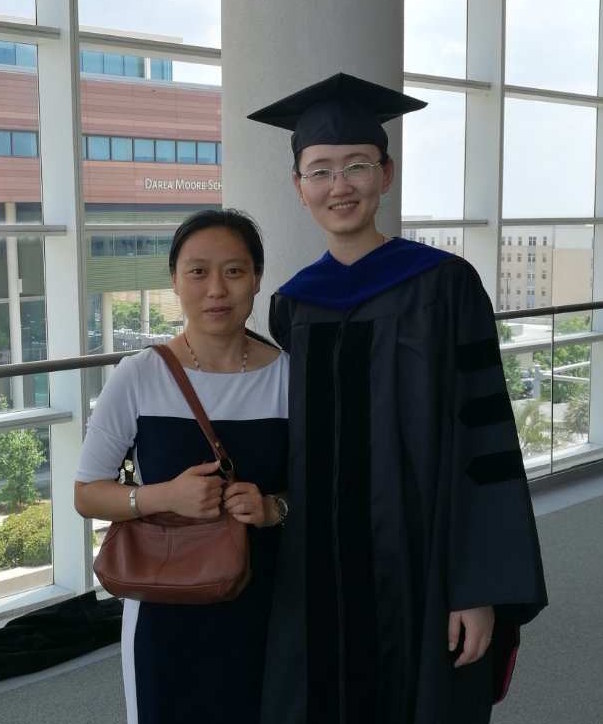
How did you decide to attend USC for your degree? My decision to attend USC was strongly influenced by mentorship and personal recommendation. During my undergraduate studies in statistics, my mentor knew a faculty member in the Department of Biostatistics at the Arnold School of Public Health and recommended that I consider the program. That connection helped me learn more about the department, the faculty, and the opportunities available at USC.
As I explored the program further, I was attracted by the Arnold School’s strong training in biostatistics and its emphasis on applying statistical methods to public health and biomedical research. I felt that USC would be a place where I could continue building my statistical foundation while gaining experience with real-world health research. Looking back, I am grateful for that recommendation, as it led me to a supportive academic environment and to training that helped prepare me for my current career in the pharmaceutical industry.
Who were your Arnold School mentors, and how did they influence you? My Arnold School mentor was Dr. Jiajia Zhang, who had a tremendous influence on my journey. She not only provided strong academic training in biostatistics but also showed me how statistical thinking can support meaningful research in public health and medicine. Her mentorship helped me connect the statistical knowledge I had gained during my undergraduate studies with practical applications in health research.
What I appreciated most was her guidance, patience, and encouragement. They challenged me to think critically and communicate clearly. Her support helped me gain confidence as a researcher and prepared me for my current role in the pharmaceutical industry, where collaboration and careful statistical reasoning are essential.
What were some of the most valuable knowledge, skills or experiences you gained during your program? Some of the most valuable knowledge and skills I gained during my program were a strong foundation in biostatistical theory, study design, statistical programming, and the application of statistical methods to public health and biomedical research. Coming from an undergraduate background in statistics, I already appreciated the value of quantitative methods, but my Ph.D. training helped me understand how to apply those methods in a more rigorous and impactful way to real-world health questions.
Beyond technical knowledge, the program helped me develop important professional skills such as critical thinking, problem-solving, scientific communication, and collaboration. Working on research projects with faculty and colleagues taught me how to contribute effectively to studies involving clinicians, epidemiologists, and other public health researchers.
How did you get your start in your field? My start in the field began with my undergraduate studies in statistics, where I developed a strong interest in using data and quantitative methods to solve practical problems. Through that training, I realized that statistical knowledge could be applied in many meaningful ways, especially in health and medical research.
A very important early experience for me was my six-month internship at Novartis during the summer of 2015. During that internship, I supported research work for an ongoing clinical trial, which gave me firsthand exposure to how biostatistics is applied in the pharmaceutical industry. It helped me see the important role statisticians play in clinical development, from supporting study analyses to contributing to evidence generation for new treatments.
That experience also sparked my interest in working in pharmaceutical companies. In addition to the technical and research experience, I had the opportunity to meet and work with people at Novartis, some of whom later became my colleagues. The internship helped shape my career direction and gave me a clearer vision of how I wanted to use my biostatistics training after graduation.
What do you do in your day-to-day work, and how do you use your degree in your work? In my day-to-day work as a Senior Biostatistician at Novartis, I support clinical research and drug development by applying statistical methods to the design, analysis, interpretation, and reporting of clinical trial data. My work involves collaborating closely with cross-functional teams, including clinicians, data scientists, statistical programmers, clinical scientists, and regulatory colleagues. Together, we work to generate reliable evidence that can help evaluate the safety and effectiveness of treatments.
How do you stay connected with other Arnold School alumni? I stay connected with other Arnold School alumni, especially classmates and colleagues from the biostatistics program. We keep in touch through statistics conferences, social media platforms such as WeChat, and occasional personal communication. It is always encouraging to see the different career paths Arnold School graduates have taken across academia, industry, government, and public health organizations.
What advice would you give to students pursuing a similar career path? My advice to students pursuing a similar career path is to build a strong foundation in statistics and biostatistics, but also to look for opportunities to apply what you learn to real-world problems. Technical skills are very important, but the ability to understand scientific questions, communicate clearly, and collaborate with people from different backgrounds is just as essential.
I would also encourage students to seek out internships, research projects, and mentoring relationships early. My internship at Novartis was an important experience that helped me understand how biostatistics is used in the pharmaceutical industry and gave me a clearer sense of my career direction. Practical experiences like that can help students explore different paths and make more informed decisions about their future.
Finally, stay curious and open-minded. A degree in biostatistics can lead to many opportunities in academia, public health, government, healthcare, technology, and the pharmaceutical industry. Career paths are not always linear, and every experience can help you grow. Be proactive in learning, ask questions, build relationships, and trust that the skills you are developing are highly valuable and widely applicable.