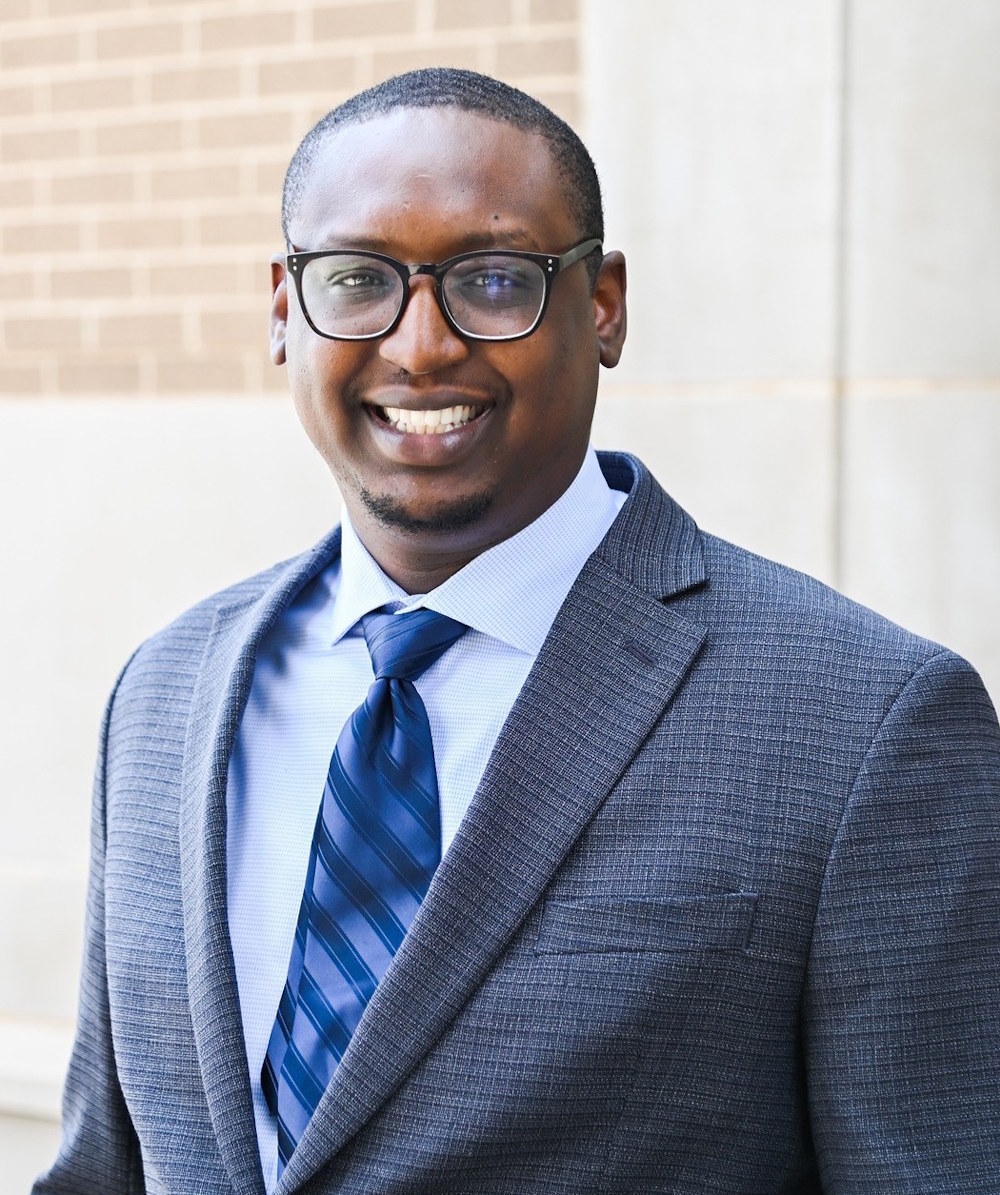
Tremaine Sails-Dunbar’s work is informed by his ministry, lived experience and commitment to public health
research. The first-generation college student may be graduating with a doctoral degree
and hundreds of thousands of dollars in prestigious funding and fellowships to his
name, but he’ll never forget being homeless.
It was 2013, and a lack of access to mental health treatment left him unhoused and
floundering. He recalls making a promise to God that he would dedicate his life to
helping others if God would help him change his life. That fall, Sails-Dunbar enrolled
in Nashville’s American Baptist College, but while he was studying to become a pastor,
he also discovered a passion for research.
Ask questions that make you think deeply about your positionality as a researcher,
as well as the potential disparities that your population of interest faces. This
reflection can help you create projects that are both novel and personally meaningful.
Tremaine Sails-Dunbar
“I realized my true calling was to help others facing similar challenges by becoming
a public mental health researcher for underserved groups,” he says.
As an undergrad, Sails-Dunbar secured multiple fellowships to support his advocacy
and research activities in these areas. He then enrolled in a master’s program at
Vanderbilt Divinity School, where he was awarded a $10,000 grant to help connect African
American religious communities with mental health resources.
Sails-Dunbar’s opportunities and recognition have continued to flow during his four
years in USC’s Ph.D. in Health Promotion, Education, and Behavior (HPEB) program. The Norman J. Arnold Doctoral Fellow is also a USC Grace Jordan McFadden
Professors Program Scholar, Robert Wood Johnson Foundation Health Policy Research
Scholar, Inter-university Consortium for Political and Social Research Diversity Scholar,
Academy of Criminal Justice Sciences Doctoral Summit Scholar, and Health Affairs Health
Equity Fellowship Trainee.
Tremaine Sails-Dunbar graduates in December with a Ph.D. in Health Promotion, Education,
and Behavior.
His participation in these programs is not only a reflection of Sails-Dunbar as a
promising scholar and the importance of his area of research, but it has also provided
him with the critical foundation and precise expertise needed to carry on this work
throughout his career. The significance of Sails-Dunbar’s efforts was further confirmed
by two additional fellowships aimed at supporting his dissertation project: a Dissertation
Award from his Health Policy Research Scholars program and a Gueron Scholar Fellowship
from the Manpower Demonstration Research Corporation.
“My dissertation focused on the lived experience of unhoused Black men in Columbia
and their social service utilization,” Sails-Dunbar says. “I centered the voices of
men as well as service providers as contextual data to uncover barriers to social
service uptake as well as factors that contributed to unhoused Black men’s mental
health-seeking behavior. My findings revealed that veteran participants reported better
access to coordinated services than nonveteran participants, revealing differences
in levels of perceived support for basic needs and mental health-seeking behavior.”
After graduating in December, Sails-Dunbar will continue working to improve the health
and well-being of unhoused men with a postdoctoral fellowship focusing on veteran
homelessness and mental health outcomes. He says that his doctoral program has prepared
him for this work through its strong foundation in scientific methods and the flexibility
to explore his areas of interest by taking courses from across the university. He
also credits his advisor, HPEB associate professor Hala Ghattas, for helping him refine his research questions and gracefully guiding him through
the conceptualization and writing process.
“Focus on mastery, whether it be content area or methodological expertise because
employers and universities value graduates with skill sets that will help them accomplish
their objectives,” Sails-Dunbar advises students considering a graduate degree in
public health. “In addition, ask questions that make you think deeply about your positionality
as a researcher, as well as the potential disparities that your population of interest
faces. This reflection can help you create projects that are both novel and personally
meaningful.”