Find Out More
Epidemiologists design and conduct investigations aimed at improving the health of groups of people by combining knowledge from the social sciences, medicine, biology, the environment, and statistics.
September 1, 2026 | Erin Bluvas, bluvase@sc.edu
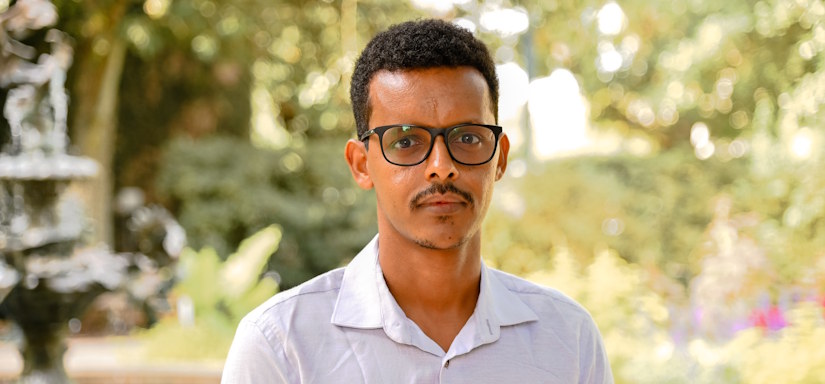
“I came to this work through the delivery room,” says Hiluf Abraha, a Ph.D. in Epidemiology candidate whose work focuses on maternal and child health.
Initially trained as a midwife, Abraha spent years managing the labor and delivery ward in a war-torn region of northern Ethiopia. Responsible for the healthcare of women diagnosed with high-risk pregnancies, he began to notice patterns over time.
“I observed the same complications, women in labor arriving too late, the same women bearing the worst outcomes, and survival often having less to do with biology than with the conditions around a mother, such as access and resources,” Abraha says. “Those patterns led me to shift from providing care to asking why they exist across whole populations and what I could do to prevent them.”
Guided by this broader, systems-level perspective, Abraha completed a master’s in biostatistics and health informatics at Mekelle University while also holding full-time positions in healthcare systems and data management in the institution’s hospital – the same one where he had worked as a midwife.
“I lived and worked through the war and siege, coordinated hospital data and quality improvement while the region was under blockade, as medicines ran out and health services collapsed,” Abraha says. “During this grim time, alongside my colleagues, I authored and co-authored publications on how the war affected maternal mortality, neonatal deaths, and births forced to occur outside health facilities. Doing all of this, often without reliable internet, power or resources, is one of the hardest things I have done.”
When he began looking at doctoral programs, Abraha had to decide between the Arnold School and another fully-funded offer in Australia. USC won him over due to the pre-candidacy coursework in advanced epidemiology and biostatistics, and the fit with his mentor, associate professor Nansi Boghossian. Their shared interests in perinatal and maternal health epidemiology, disparities in maternal and infant outcomes, and the use of large national datasets cemented Abraha’s belief that this was where he would grow the most as a researcher.
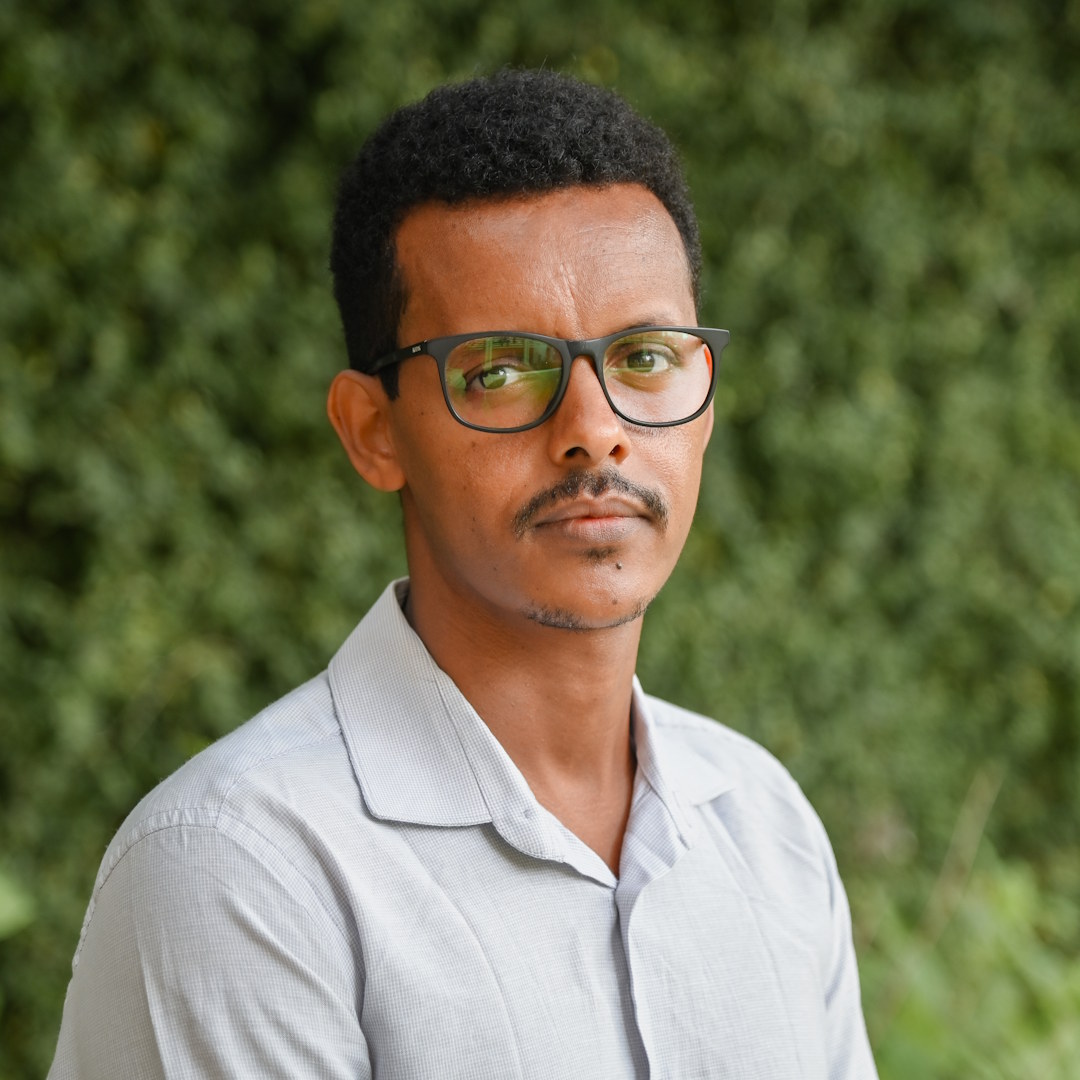
For the past three years, the Norman J. Arnold Doctoral Fellow has worked closely with Boghossian as a graduate research assistant while also gaining experience as a Junior Scholar with the South Carolina SmartState Center for Healthcare Quality. As additional preparation for his future career as an independent researcher, teacher and mentor in academia, Abraha is a scholar in USC’s Grace Jordan McFadden Professors Program.
“Dr. Boghossian, has shaped me as a researcher in many ways – giving me the trust to lead my own work while pushing me to think more rigorously at every step,” says Abraha, who credits this balance of independence and mentorship with the reason they’ve already co-authored papers in major journals, like JAMA Pediatrics, together.
Abraha’s research focuses on high-risk pregnancy, severe maternal morbidity, and the structural and policy factors behind disparities in maternal and perinatal outcomes. Other mentors, such as health services policy and management associate professor Peiyin Hung, epidemiology professor Jihong Liu, and his dissertation committee members, Angela Liese, Nandita Perumal, and Jeffrey Buzas, have also played an important role in his development.
“The department has been a welcoming community, with leadership that genuinely listens and takes your concerns seriously,” Abraha says. “I have found a real sense of belonging among faculty and fellow students alike. Coming from Ethiopia, the transition was smooth, and living in Columbia has been great for me and my family.”
With plans to graduate next year, Abraha already has published 18 peer-reviewed articles – spanning his work in Ethiopia and the U.S. – since arriving at USC (he has 38 altogether). He’s also the recipient of a SPARC grant from the USC Office of the Vice President for Research and the Travel Award to Promote Equity from the Society for Pediatric and Perinatal Epidemiologic Research. For future students, he recommends leaning into these types of experiences.
“When you learn something new, dig deeper into it,” Abraha says. “Build research relationships
early and say yes to collaboration; much of my growth came from working on several
studies with different teams. And if you are from a clinical background, don't underestimate
your prior clinical or field experience; it gives your research questions a direction
that academic training alone can't.”