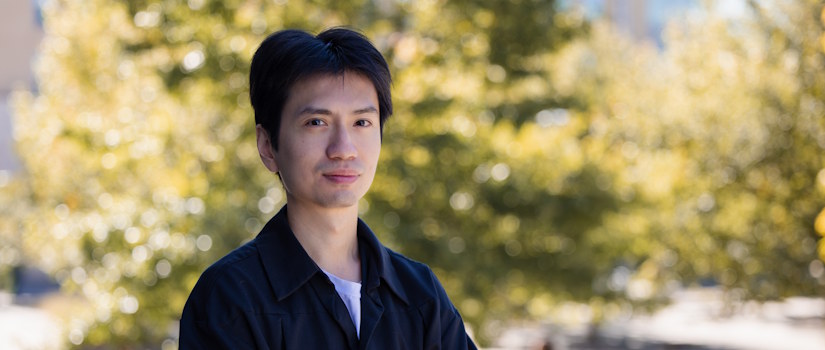
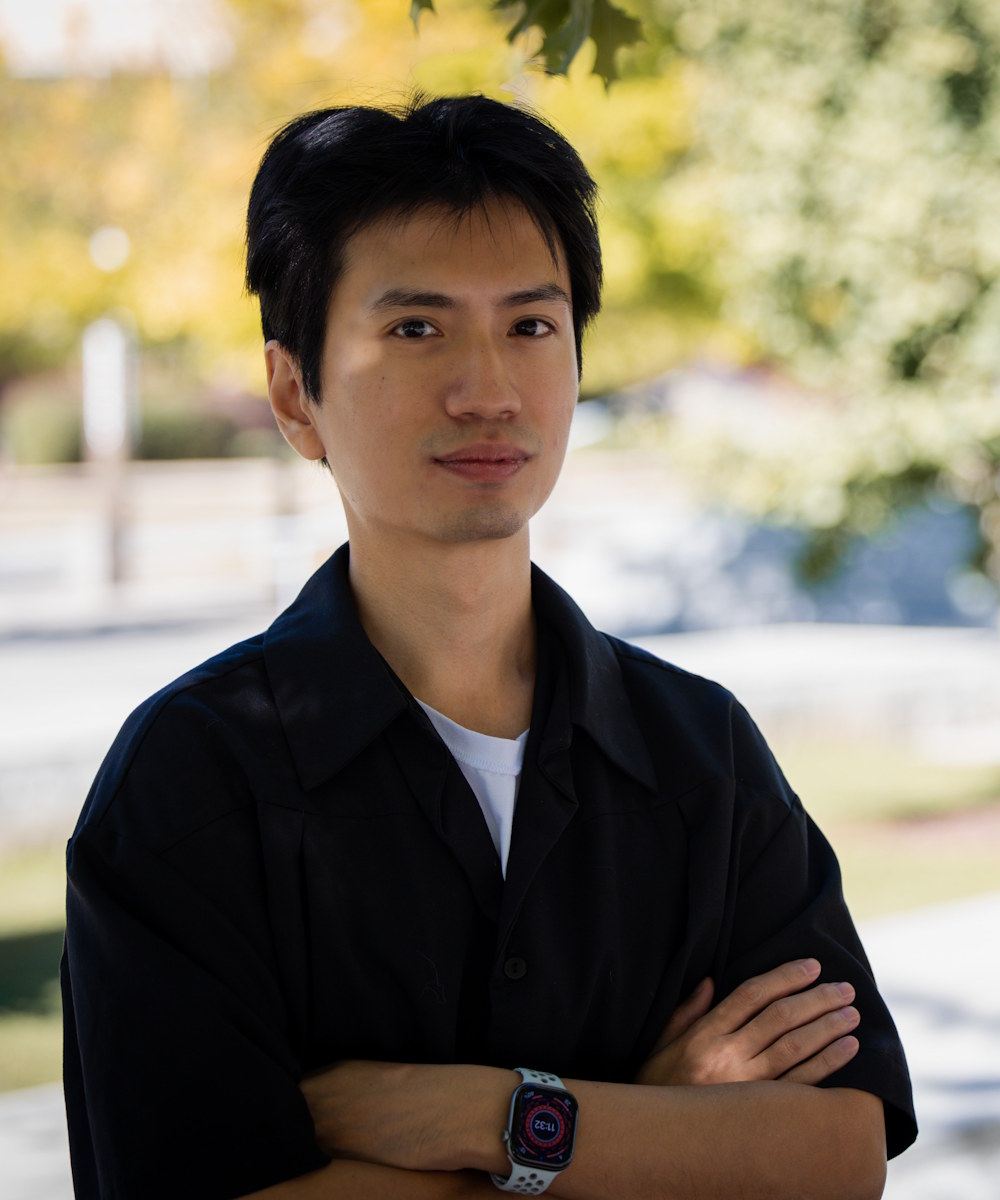
Yuanzhen Yue already had two biostatistics degrees under his belt when he discovered his niche
in the field. After completing his master’s at Georgetown University, he returned
to China to gain applied experience at ChiaTai TianQing Pharmaceutical Group as he
began looking into various doctoral programs.
Looking back, my experiences over the past few years have helped me become a more
independent researcher, a better problem solver, and someone who is more comfortable
facing uncertainty.
Yuanzhen Yue
“While I enjoyed applying statistical methods to real-world problems, I realized that
pursuing a Ph.D. would allow me to deepen my statistical knowledge, develop independent
research skills, and open up more opportunities for long-term career growth,” Yue
says. “Several of my former classmates had joined the Ph.D. in Biostatistics program at USC and shared very positive experiences with me.”
He was particularly attracted to the program's strong emphasis on methodological research
and its applications to public health. Yue came into the program with experience in
the branch of statistics known as survival analysis (i.e., measuring the time until
a specific event occurs). When biostatistics professor Jiaja Zhang introduced Yue to assistant professor and functional data analysis expert Rahul Ghosal, his interests expanded.
“I gradually developed a deeper understanding of functional data analysis – which
enables researchers to model temporal trajectory – and discovered how fascinating
this field can be,” Yue says. “What particularly excites me is its ability to naturally
handle complex data, such as those collected from wearable devices, and offer new
perspectives on public health research.”
Yuanzhen Yue graduates in December with a Ph.D. in Biostatistics.
Over the past four years, the Norman J. Arnold Doctoral Fellow has gained experience
as a graduate research assistant with the Arnold School and as a statistical consultant
for the Department of Epidemiology and Biostatistics’ Research Design, Compliance, and Data Management Core. The past two summer were
spent completing internships with Genetech and Novartis – working with clinical scientists
to leverage wearable data to improve the health of individuals with conditions such
as multiple sclerosis. And Yue secured his own funding with a SPARC Award from the
USC Office of the Vice President for Research.
The technical difficulties of implementing new statistical methods have presented
their share of challenges, but those experiences have been some of the most rewarding
of Yue’s research journey. He’s also gained significant experience in the process
of submitting papers for publication, which he says has taught him the importance
of patience, persistence and continuous refinement.
Throughout his time at USC, Ghosal and Zhang have remained important mentors.
“Dr. Ghosal has patiently guided me through research challenges, offered valuable
advice, and consistently encouraged and supported me,” Yue says. “Dr. Zhang has also
been incredibly supportive. As my co-advisor, she has provided valuable guidance and
advice at several important stages of my Ph.D. journey. I am truly grateful to both
of them for their mentorship, encouragement and support.”
Yue found a close-knit community among fellow students in the department as well as
with faculty and staff. Together, they have enjoyed USC’s vibrant campus and its many
events and activities. One of Yue’s favorite memories was attending a preseason soccer
match between Liverpool and Manchester United at Williams-Brice Stadium.
After graduating December with his department’s Outstanding Biostatistics Doctoral
Student Award, Yue plans to pursue a career as a biostatistician in the pharmaceutical
industry. His goal is to apply statistical methods to real-world healthcare challenges.
“Looking back, my experiences over the past few years have helped me become a more
independent researcher, a better problem solver, and someone who is more comfortable
facing uncertainty,” he says. “I believe the combination of industry experience and
academic training I’ve experienced will allow me to bridge the gap between methodological
research and practical applications, ultimately contributing to drug development and
improving patient outcomes.”