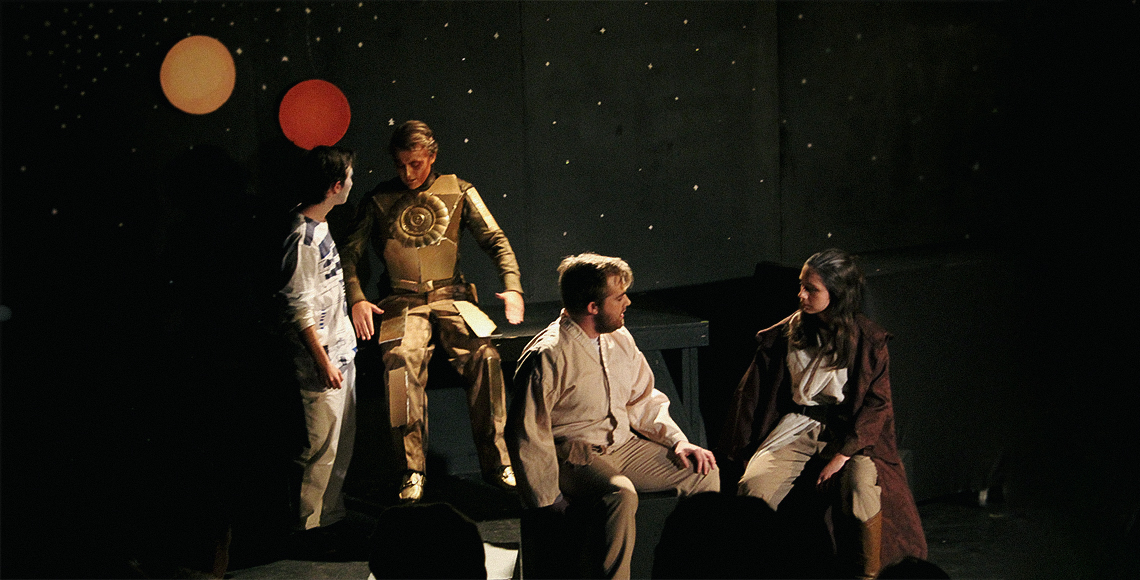
These two Honors College senior thesis projects couldn’t be more different: a Star Wars musical and a research thesis highlighting the role women of the American Revolution. These two topics surely have no business being in the same sentence, let alone the same feature story.
The first, written and composed by English and pre-med major Hansel Haase ‘20, wasn’t exactly a content area on his MCAT examinations for medical school. The second, written by history and American studies BARSC major Riley Sutherland ‘22, fueled the research she completed in graduate school at the University of South Carolina and informs her current dissertation work at Harvard University.
Despite their differences in subject matter, Star Wars: The Musical and “Portrait of a Camp Follower: Continental Army Women in the Revolutionary War” have much in common. Both provide a deeper, alternative glimpse into two touchstones of American culture. Both give voice and nuance to previously underappreciated characters. And both demonstrate that, whether an Honors thesis reflects one’s career trajectory or creative interests, an interdisciplinary process leaves a lasting impact.
The origin stories
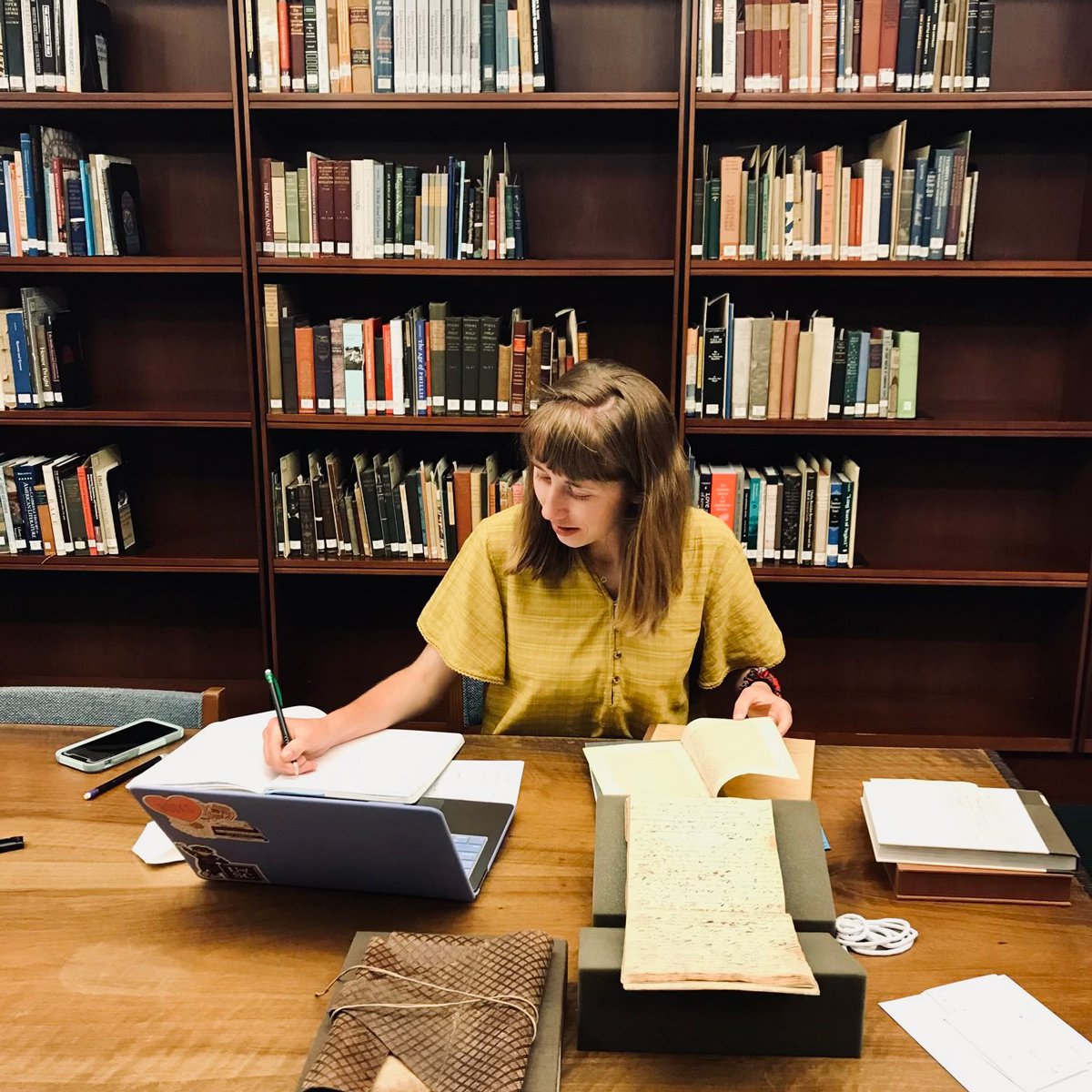
When asked what sparked her interest in history, Riley Sutherland mentions Nancy Drew stories and falling in love with the idea of being a detective. As years passed, Sutherland began to give up her dream — until seventh grade National History Day. Sutherland was tasked with researching a historical topic for a year and presenting her work.
“It gave me this ability to travel, to talk to folks from different backgrounds and places to piece the little fragments together in a story that’ll never be complete, but can at least be enough of a mosaic for us to get a better sense of what we’re working with,” she says. “And from that moment on, I knew I wanted to be a historian.”
Her specific fascination with women of the American Revolution piqued in high school. One of her books referenced Anna Maria Lane, a Revolutionary War nurse who was injured in battle. And that’s where the story ended. This budding historical detective wouldn’t have that.
“My senior Honors thesis is actually an expanded version of a paper I wrote my senior year of high school, and I just didn’t want to stop,” Sutherland laughs. She attests that the Honors College “gave me the opportunity to flesh it out in all of the ways I wanted, but also to apply different disciplinary lenses to the research that I didn’t have access to before.”
Hansel Haase’s love of the Star Wars universe also started early. His father introduced him to the sci-fi series when he was about five years old.
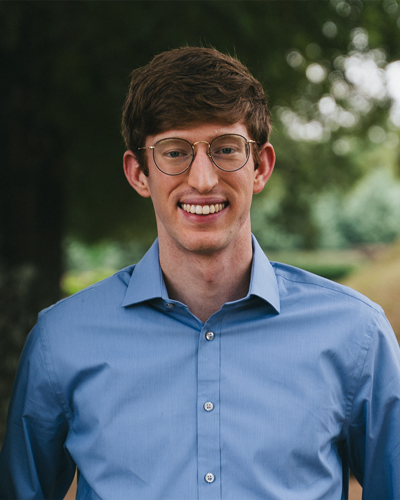
“I had several Star Wars-themed birthday parties when I was a kid. I’m a big fan of the old Star Wars expanded universe, the Legends books. I’ve actually got a bunch of copies in my room,” he says, holding up a few for emphasis.
Haase also had a passion for music and composition. Though he didn’t double-major in music and English as an undergraduate, he pursued the subject through coursework and extracurriculars. This interest inspired him to take professor Catherine Keyser’s Honors course on Broadway adaptations of literary works. One assignment was to propose a text to be adapted into a musical.
“And I thought, man, what better thing to do than Star Wars?”
And that’s exactly what he did. After receiving positive feedback from professor Keyser, Haase decided that his vision couldn’t be confined to just one assignment. And he knew the perfect troupe to perform his adaptation: USC’s Off Off Broadway student-run theatre organization.
Composition and conversation
Haase received enthusiastic approval from Off Off Broadway, and soon, he was collaborating with an interdisciplinary creative team and preparing for a November 2019 premiere.
“One of the biggest things was learning to take a hands-off approach when it came to the final product,” he says. He learned to work with the director, costume designer and sound designer; each role contributed individual areas of expertise to create the final product.
He appreciated working with Ellen Guilford, his co-writer, as they adapted one of the most popular films — and film scores — of all time, choosing where they could add their own artistic vision to the story and the music. For example, they added a light saber battle between hero Luke Skywalker and Darth Vader, the iconic villain, to flesh out the father-son relationship. Haase also composed a score that alluded to John Williams’ music without imitating it; he enjoyed creating motifs for each character that wove throughout the show.
Sutherland faced a similar challenge: How should she weave together women’s stories and shed light on their experiences? She turned to pension records, reading through an interdisciplinary lens that drew from her history, economics, literature, law and social science courses.
The space might be different, but the types of questions you’re asking are just as necessary ... no question is too small.
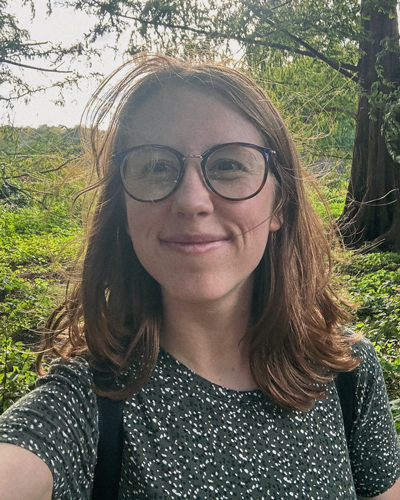
“There are 80,000 pension records,” says Sutherland. “A lot of them belong to women who are widows claiming pensions, theoretically for their husbands’ Revolutionary War service. But oftentimes they would lace these applications with their own service or their own experiences to argue they personally had a claim to the American Revolution.”
Sutherland was determined that her thesis would depict women’s individual voices, inclusive of free, enslaved and indigenous persons. Record by record, she pieced together how they navigated relationships with each other in Continental Army camps. They went on strike for better wages, acted as spies and even informed on their husbands’ comrades to improve their own standings in the camp.
“I also wanted to emphasize that histories of women aren’t always histories of women as a singular collective group,” says Sutherland. “This group is so much more complex and aware of power dynamics within itself.”
Community and audience
Through Honors courses with professors such as Joel Collins, Mark Smith and Allison Marsh, Sutherland learned that a historian’s work doesn’t exist in a vacuum. Public history is the intersection of community, history and societal questions, a framework that guided Sutherland’s research.
“I want the American public to know that the American Revolution was messy and complicated and had completely different outcomes for every person,” says Sutherland. “For some people, they experienced it as simultaneously a triumph and a tragedy.”
For Haase’s thesis project, he had two rather opinionated communities to impact: Star Wars fans and musical theatre aficionados. As opening night approached, he was excited to bring these fanbases together and showcase the Off Off Broadway team’s efforts.
“At the time, it was record-breaking numbers of attendance for Off Off Broadway, as least as far as a student-written performance,” Haase recalls. “We also had record-breaking donations.”
The show sold out almost every night for two weekends, and the donations enabled Off Off Broadway to fund large-scale performances for the next several seasons.
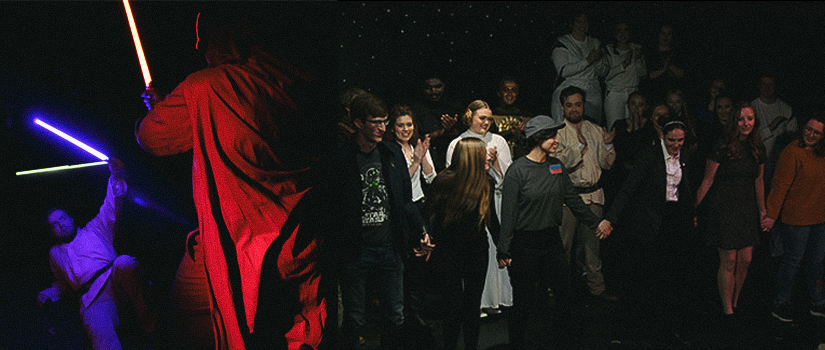
“It brought everyone together, lots of people from different places and different studies and different things they value,” he reflects. “And it was just cool to see everybody pulling together for one show.”
Dare to question
While Haase might not be composing sci-fi-inspired musicals in his last semester of medical school, the lessons he learned from his thesis apply to his future career as a rural physician.
“I think knowing that even though I had an important role, it’s not the only role. It doesn’t mean that I’m the most important person in the room. And I think that’s an important kind of mindset to have going into being a physician as well,” he says, citing the contributions of pharmacists, nurses and other parts of a patient’s care team.
He encourages students considering a thesis topic unrelated to their major or career interests to “absolutely go for it” and enjoy the freedom to explore something they love.
“Star Wars: The Musical ended up being the highlight of college for me,” he attests.
For Sutherland, that love just happened to coincide with her goal of being a historian. She will earn her Ph.D. in history from Harvard University in 2030; her dissertation focuses on Boston’s Adams Nervine Asylum, a hospital that treated women from 1880 to 1970. For students considering humanities research, she suggests following the advice given by one of her high school teachers — advice that could describe Sutherland’s or Haase’s approach to the Honors College senior thesis.
A humanities researcher must utilize strengths from all fields: the analytical skills of mathematicians, poetic lyricism and the innovation of engineers. Life, society and community are their labs.
“The space might be different, but the types of questions you’re asking are just as necessary,” says Sutherland. “And if you don’t know where to start, just start asking questions. Literally no question is too small.”