
Established in 2015 to honor the legacy of William A. Mould, the first dean of the South Carolina Honors College, the Mould Outstanding Senior Thesis Award annually recognizes excellence in research, creative endeavor or impact in a senior thesis. Each year, thesis directors nominate Honors students who have completed a thesis, and at least one student is honored at May Revocation.
Since its inception, the $1,000 award has been bestowed upon students in a variety of disciplines. We caught up with some of the winners from the past decade to learn about what’s happened in their lives since they crossed the Revocation stage.
“Reading the fascinating stories of these four award winners and the incredible work they did while they were undergraduates in the South Carolina Honors College — and have gone on to do — is truly awe-inspiring,” says Lucille Mould, wife of the late William Mould. “I was particularly struck by how often the students’ initial research led them into careers that they could not have predicted. Their profiles exemplify Dr. Mould’s vision of the senior thesis being the ‘ideal capstone experience’ allowing students to explore broadly and creatively. Their impressive achievements — including degrees earned and awards received — demonstrate that these Honors College scholars continue to excel and continue to have an immeasurable impact on their professions and on their communities. Honors College alums are truly extraordinary people, and Dr. Mould would be proud of all of them!”
Dr. Habiba Fayyaz (biological sciences ‘17)
Thesis: “Research on Orexin A and the Prevention of Cognitive Decline”
Driven by the motivation to pursue research that could treat neurological diseases, Habiba Fayyaz started working with professor Jim Fadel at the USC Floyd School of Medicine Columbia her sophomore year. Her Honors College senior thesis was the culmination of three years of research on neuropeptide Orexin A, a protein that could be a breakthrough treatment for cognitive decline. By that point, she was adept at lab procedures, but the thesis developed her critical thinking and leadership skills.
“Taking the next step and making it into my senior thesis really helped me grow as an investigator and helped me actually put myself in the shoes of if I was the lead researcher or just a researcher on a future project — what are the things that I would really need to think about? Because, when I started the project, I was a lot younger,” she reflects.
While completing medical school at MUSC in Charleston, Fayyaz shifted her focus from neurology to internal medicine, but her passion for addressing difficult-to-treat diseases remains the same. She now treats and investigates rheumatology diseases as the chief resident at the University of Cincinnati Medical Center in Ohio.
“When I think about the things that drew me to rheumatology as a field, it’s a lot of those same things, like working with really complex patients and having long-term relationships with them and then helping them work through some very physically debilitating disease processes,” she says.
Upon completing her residency this spring, Fayyaz will return to the Southeast for a rheumatology fellowship at Emory University in Atlanta, Georgia.
Hannah Joy Cooley, MS (marketing and management ‘22)
Thesis: The Backbone Documentary
When Hannah Joy Cooley began her term as USC’s Student Body Vice President, she encountered a major challenge: the COVID-19 pandemic. Despite physical distancing, she sought to connect with students through podcasts and other digital platforms. One of her first endeavors, the Give Black Podcast-a-thon, also connected her with notable Black USC alumni.
“I have now recorded tapes of all of these amazing, influential Black alumni from USC, and a lot of them were women,” she recalls. “What if I get more? We can record them and make a film.”

And that is exactly what she did. For her senior thesis, Cooley created a documentary film, The Backbone, to highlight the contributions of Black women to USC and their legacies.
The dedication to community didn’t stop there. Cooley earned a master’s in development management from the London School of Economics. She then worked for the Blaze Group, founded by one of the alumnae she featured, Casey Richardson, and spearheaded initiatives to increase children’s literacy rates in Black communities. Her role with the Blaze Group allowed for the opportunity to live in the Dominican Republic, where she also taught English.
Cooley now works in Greenville, South Carolina, as an asset project manager for her family’s businesses and the Carlo and Nika White Foundation. She continues to build community partnerships through administering grants, scholarships and leadership programs, and The Backbone still resonates with new audiences. The documentary earned the Best Film 37 Award at Black International Cinema Berlin in 2022.
Gretchen Bollar Fiorenza, Ph.D., and Dr. Anthony Kocur (biochemistry and molecular biology ‘19)
Thesis: “Disinfection By-Products in Bottled Water: Is It Really Safer Than Tap Water?”
Gretchen Bollar Fiorenza and Anthony Kocur dealt with their share of challenges while researching the levels of disinfection byproducts (DBPs) in bottled water: late nights and long hours in the lab and a malfunctioning mass spectrometer, to name a few. But before they could start testing bottled water, they had to purchase it.
“That stuff is not light!” Kocur says, recalling the push pallet they loaded with packs of bottled water.
“We had to justify that purchase, and they were wondering why we were buying groceries in the department, which was quite interesting,” says Bollar Fiorenza.
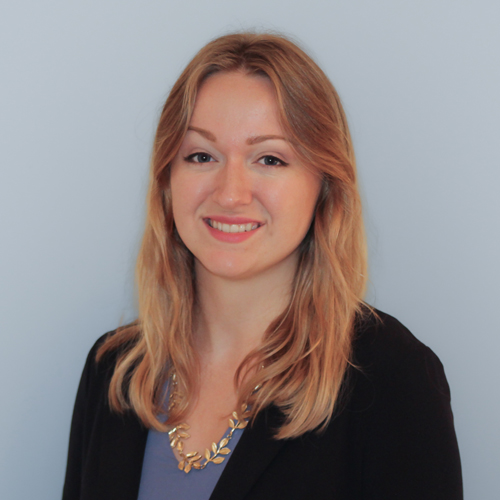
Despite these challenges — and over two years of extracting and analyzing compounds from bottled water to test for DBPs — Kocur and Bollar Fiorenza associate their senior thesis project with intellectual curiosity, teamwork and tenacity.
“It was all hands on deck between the two of us... I was really focused on the communication side of things,” she says. “He’s exceptionally technically minded.”
Bollar Fiorenza and Kocur continue to build on these strengths. Bollar Fiorenza earned a Ph.D. in biomedical science from the University of Alabama at Birmingham and focused on infectious disease research. During the COVID-19 pandemic, her interest in scientific communication and writing was piqued. She realized that she wanted to make an impact outside of the lab as well as within.
“I started thinking about partnerships and what happens in a science communication sphere,” she says. “How do you get research out into the world?”
Her Honors thesis mentor, professor Susan Richardson, later encouraged her to revisit the thesis and pursue publication. Bollar Fiorenza resumed the project, and “Bottled or tap? Comparison of 64 DBPs, total organic halogen, and calculated toxicity” was recently published in Water Research.
When she isn’t continuing her research or lending her expertise to peer reviews for scientific journals, Bollar Fiorenza fosters research partnerships between universities and companies. She is a program manager at UIDP (University-Industry Demonstrative Partnership), a global nonprofit membership organization based in Columbia, and is thrilled to promote collaboration and scientific communication, and help shape new opportunities for Ph.D. students.
“Life has a really interesting way of bringing you where you need to be,” she says. “It has a very interesting way of evolving. Even if you think, ‘Okay, the work I’m doing right now isn’t going to be relevant to the next thing,’ you’re still building fundamental skills that are going to be transferable no matter what you do.”
After taking a gap year to pursue volunteer opportunities and work for a nutraceuticals startup, Kocur attended medical school at the USC Floyd School of Medicine. He’s currently pursuing a psychiatry residency at East Carolina University and is still motivated by the idea of a long-term endeavor: He enjoys the opportunity to work with patients for an extended period and to witness their progress.
Throughout his four-year residency, he’ll explore new pharmacological methods of treating conditions such as schizophrenia that are often difficult to target with medication. And he still appreciates working with a team; instead of testing water samples with Bollar Fiorenza, however, he’s working with a medical care team to treat patients.
For Honors students preparing for the extended project that is the senior thesis, Kocur has some uplifting advice.
“Make sure that when you’re doing the project, you have some little bit that is fun every day with it, because it is an absolute long haul, and not every day is going to be wonderful, but just having a little bit of joy to get you through the days when you’re doing that work is wonderful.”