Madison Putman grew up knowing all about the University of South Carolina: She lived just 25 minutes from campus in West Columbia and was raised a Gamecock fan. When she learned about the South Carolina Honors College during her first year of high school, her passion for all things USC only increased.
"I knew I would have an amazing time at USC, but seeing the academic rigor that the Honors College provided was amazing," she says. "After being invited to dinner by the SCHC my junior year, I was thoroughly convinced that this was the school for me."
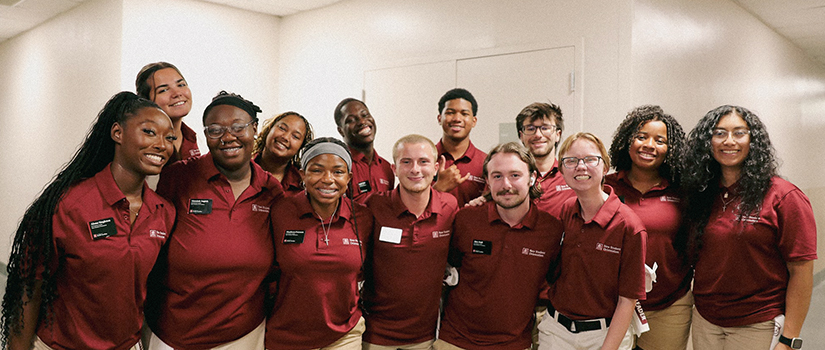
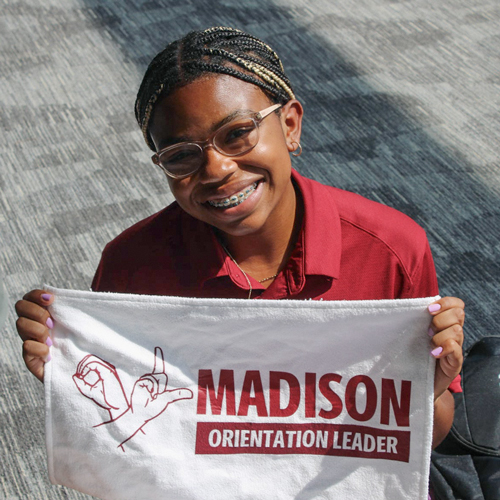
It's no wonder, then, that in just over a year of undergraduate study, Putman has become one of USC's most passionate advocates. By serving as a University Ambassador, an Orientation Leader and a Pillars for Carolina Lead Team member, she has shared how USC and the SCHC have made college "the opportunity of a lifetime" — and encouraged her peers to begin charting their own paths.
As the Honors College celebrates First-Gen College Celebration Week, we caught up with Putman, a sophomore computer science major, to learn more about the experiences that have defined her time in college and the ambitious goals she's looking to conquer next.
Question: You’ve dedicated a lot of time to representing USC and helping students find their place here: University Ambassador, Orientation Leader, Pillars for Carolina and more. What motivates you to pursue these kinds of opportunities, and what has been a standout experience from any of your leadership roles?
Answer: Throughout my time on campus, I have truly fallen in love with the University of South Carolina for a lot of different reasons. I have also found a great community of individuals who also love USC for their own personal reasons. I am 100% positive that every student could fall in love with at least one thing at USC; they just have to find it. That is why I pursue these opportunities. University Ambassadors allows me to help prospective students learn about the variety of opportunities at USC tailored to their specific interests. Working as an Orientation Leader and Pillars Lead Team was a little different. These students have already chosen to make USC home, now they just have to find something within our college to make them want to stay. In these roles, I get to provide more direct guidance instead of just providing a broad list of things to look into. All of these roles have blessed me to be able to help students fall in love with USC like I did. Sometimes I help guide them here, then I get to help create the blueprint to build their story. These roles also provide many ways to grow in leadership and professional development. One example of this was the NODA, the Association for Orientation, Transition, and Retention in Higher Education, Spring Learning Conference in Florida for New Student Orientation. This conference allowed me to learn about different orientation programs across the southeast, and how I can better serve as a leader to incoming students. It also gave me the opportunity to form a true community with my orientation team before we began working during the summer.
Question: The motto of the Honors College is Sapere Aude — “Dare to Learn” or “Dare to Know.” What have you been daring to learn or know throughout your time as an Honors student?
Answer: When I first entered SCHC, I was mostly interested in advancements in cybersecurity, AI and technology as a whole. However, throughout my time here, I have also become curious about what motivates individuals to succeed. Through my leadership opportunities and personal experiences, I have realized that while I may be working toward similar goals as those around me, our motivations may be completely different. I want to understand not only how to spark motivation in others, but also how we develop our own motivations to complete certain goals or tasks. Are these motivations short-term or long-term, and what influences how long they last? Can someone's motivation change over time, and if so, what causes that change?
Question: Speaking of intellectual curiosity, which Honors class has been the most influential on your academic journey so far?
Answer: My favorite class has definitely been SCHC 158: Honors Rhetoric with professor Jonathan Edwards. I took this class in my first semester to fulfill my speech credit in a smaller class setting. But professor Edwards used this course to allow us to learn more about a topic we were interested in. He allowed us to pick a topic of our choice to research and give speeches throughout the semester. He challenged us to pick a topic that has interested us, but we haven’t really looked into. I chose to research the monuments of South Carolina politicians who pushed racist agendas within our state. Doing research on these individuals forced me to search for unbiased sources, and I was constantly challenged to create speeches based on fact rather than emotions. Professor Edwards provided ample guidance and examples of strong rhetoric with a variety of historical speeches. The speeches advocated for women’s rights, civil rights, freedom of speech and more. This course taught me how much power my words can hold if intentionality is used.
Question: Outside of the classroom, have you had the opportunity to connect with other first-gen students?
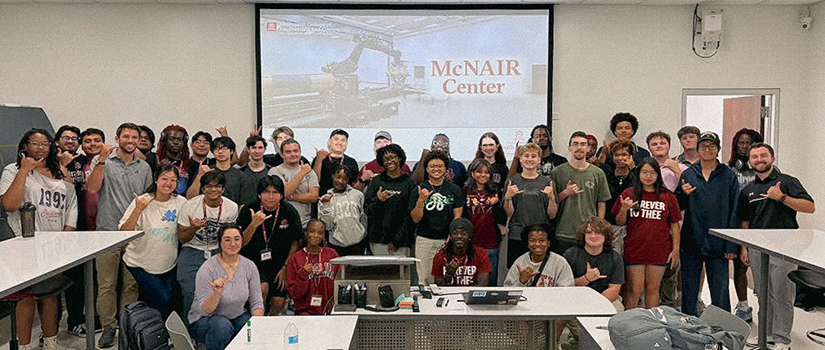
Answer: Yes! I have been involved with the Molinaroli College of Engineering and Computing First-Gen Club and their Summer Start program. My freshman year, I got to move in a week early and participate in a variety of opportunities to prepare for college. While there I also got to meet several other first-generation engineering and computing scholars, some of which are some of my best friends to this day. We explored Columbia, walked our classes, learned about research, created resumes/LinkedIn accounts and how to be a successful Gamecock. I loved the program so much I decided to come back as a volunteer counselor to help the incoming class of scholars the same way my counselors helped me.
Question: You’ve already been highly involved during your time at USC, but what goals do you have for the rest of your time as an undergraduate?
Answer: As I go into the rest of my undergraduate journey, I want to continue finding quality experiences. Through my time in college, I have been able to pursue a large amount of leadership opportunities. Of course I want to continue to grow as a leader, but I also want to pursue other opportunities to round out my college experience. Specifically, I want to participate in more community outreach and get involved in more opportunities related to my major and the Honors College in general. I plan to hopefully pursue a fellowship and potentially complete a Maymester and/or internship before I graduate. I am so grateful for all my experiences so far, but I am looking forward to exploring more of what USC has to offer!
Ever the ambassador, Putman has insights to share with her fellow first-generation students. She acknowledges that imposter syndrome can be difficult to avoid, but she advises others not to let it stand in the way of their goals. One of the best things about being first-gen, in her mind, is being a trailblazer.
"Even if you feel nervous about being first-gen, or the first in your family in the Honors College, your experience is paving the way for those who come after you. Be the blueprint and take pride in it!"