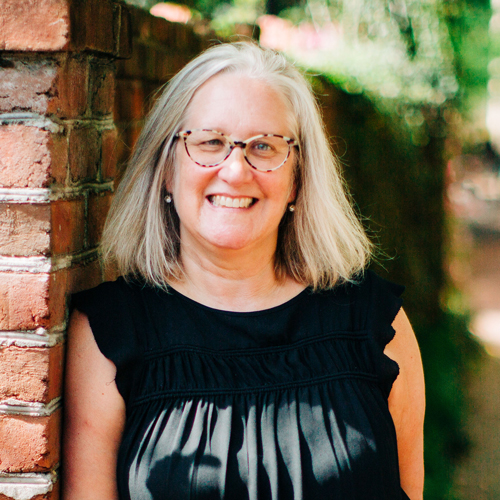
In the early 1990s, Jan Phillips Smoak had an idea. As a master's student in the higher education and student affairs program in the College of Education, she began envisioning an eight-week course, taught on Thursdays from 6 – 8 p.m. in room 303 of the Business Administration building. It would be facilitated by the Dean of Student Life and a graduate assistant, and filled, not with University of South Carolina students, but another important part of the Carolina community: parents. Smoak's proposed class, Parents as Partners, aimed to assist USC parents as their students transitioned from high school to college.
“I was so excited about it, because parent programming was my whole reality in grad school,” says Smoak, who served as the first graduate assistant for what was then Parent Programs (now the Office of Parent and Family Programs).
Smoak, a first-generation graduate (‘89 journalism, ‘91 Master of Education), had taken University 101 as an undergrad at her mother's insistence. “That was the only course she ever told me to take because she knew how helpful it could be for a first-gen student,” she recalls. As Smoak facilitated family programs in her GA role, she reflected on the value of a first-year experience course and wondered: Could parents benefit from something similar?
Parents as Partners took shape in the spring of 1991 as an assignment for a master's course taught by John Gardner, architect of the course now known to Gamecocks as University 101. He had some logistical questions for Smoak: Who would teach this course? How would costs be covered? And what about out-of-state parents? If those questions could be answered, the course had the potential to strengthen the connection between parents and the university.
Thirty-four years later, Smoak had it all figured out. Who would teach the course, now called SOS: Supporting Our Students? She would — she'd just experienced her own daughter's first years of college. In her role as assistant dean for awards and enrollment management at the South Carolina Honors College, she would spearhead the pilot section for Honors parents. The course would be free of charge. And those out-of-state families? Thanks to video calls, now anyone could participate.
“When I sat down to write the syllabus, I completely forgot that I had my original project from grad school in my desk,” Smoak says. “The plan just flowed out of me, and when I looked back at the project, I realized that I'd recreated it from memory.”
Honors students often expect more from themselves and work toward perfection, which isn’t achievable. SOS is designed with this in mind as parents and supporters discuss challenges and issues often specific to their student that other folks may not understand.
If she had any doubts about interest, those were quickly assuaged: Sign-ups for the initial 20 spots filled in less than an hour. The Fall 2025 pilot section averaged 30 participants per session, meeting seven times.
Using Karen Levin Coburn and Madge Lawrence Treeger's Letting Go as a guide, SOS's topics include student development theory, the rhythm of the academic year, communication expectations and parenting styles. Parents present to one another about USC campus resources and hear from guest speakers, such as the SCHC deans.
“I really like the text that she recommended for this course,” says Samantha Stein of Baltimore, Maryland. “It's been helpful thinking about the development and the changes that our kids are going through. It's been really helpful to read about it and then have a community to talk about it with.”
Above all, Smoak seeks to be a partner to her fellow parents, providing practical tools that they could use to navigate the transitional period. She also shares insights from her own experience parenting a college-aged student, a perspective that participants appreciated.
“Jan has been fantastic in giving us a better perspective as to what life is like when you first get started here,” says David Omura of Columbia, South Carolina. “As parents that have our first child here on campus, it's reassuring to know exactly what we can expect, and to learn more about different clubs and campus safety. It's been really reassuring to get a better perspective through Jan and her own experience through her daughter.”
In just two years, dozens of parents have connected with Smoak, with one another and even met up during Family Weekend. The 2025 pilot cohort had one key suggestion for Smoak: Start the course earlier. The 2026 cohort began meeting in July, preparing for the move to college alongside their students. Smoak has also matched some of this year's participants with 2025 SOS alumni, forming a Parent Peer Mentor program.
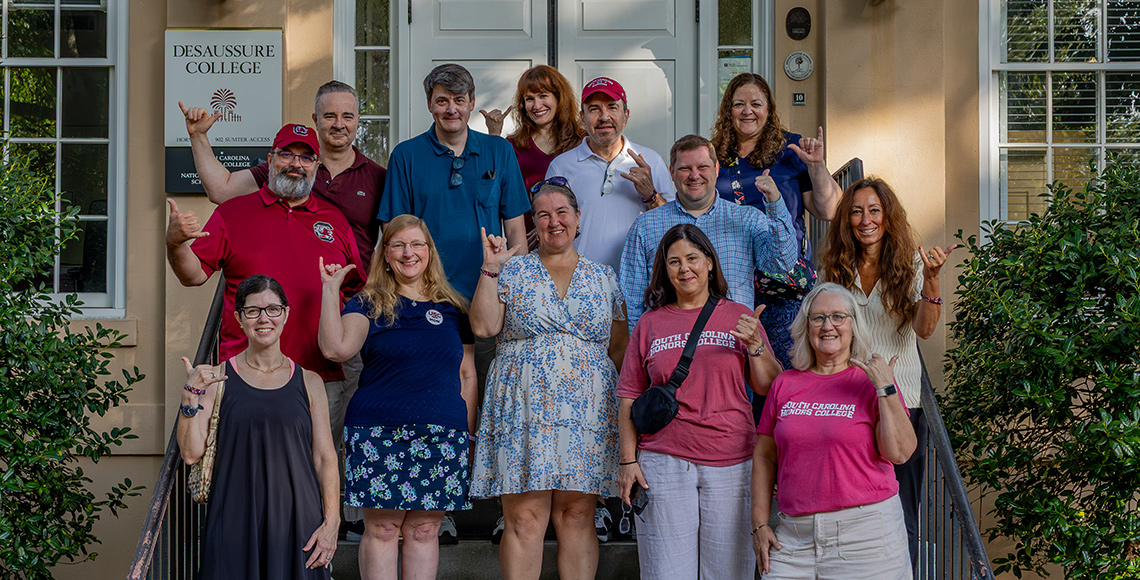
Participants in a September SOS class meeting also remarked about the value of community. Some have had many children attend college, and for others, this was their first experience with the American college system. Regardless of experience, participants agreed that the class helped them realize that they weren't alone in their questions or emotions.
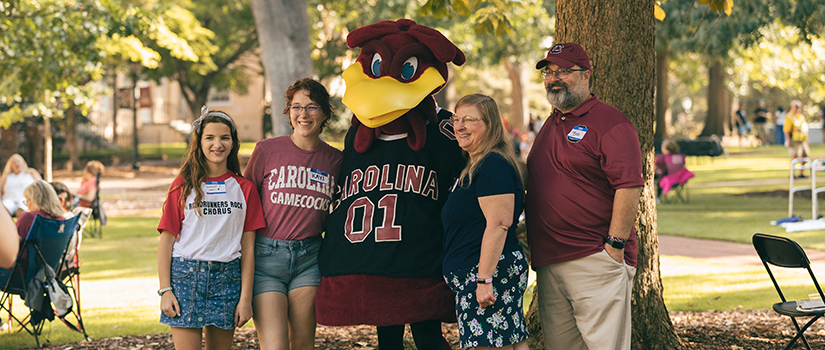
“I just like the community — meeting new people, talking to people and making connections to people from up north and from out west and here in town. Just making a connection is a big deal to me,” says Ricky Duval of Lexington, S.C.
Thirty-five years after Smoak's time in Gardner's class, USC continues to be a leader of cutting-edge first-year initiatives — and, though her role has changed, Smoak is just as passionate about parents and families now as when she was a graduate assistant.
“Honors students have needs of their own — struggles with imposter syndrome, a wide variety of disciplines that they excel in and sometimes conflicting views of expectations,” she says. “Honors students often expect more from themselves and work toward perfection, which isn’t achievable. SOS is designed with this in mind as parents and supporters discuss challenges and issues often specific to their student that other folks may not understand.”
She is also eager to share her course plan and its benefits with the broader honors community. Last May, she presented at the Honors Education at Research Universities conference at Arizona State University and has already received numerous inquiries about the course from other honors professionals.
As Supporting Our Students continues to gain momentum, Smoak stays grounded in one key piece of advice for parents: Letting go means letting students grow through their own successes and, yes, even their struggles. “When you solve your student's problems,” Smoak says to parents, “it becomes your victory, not theirs.”