August 6, 2026 | Erin Bluvas, bluvase@sc.edu
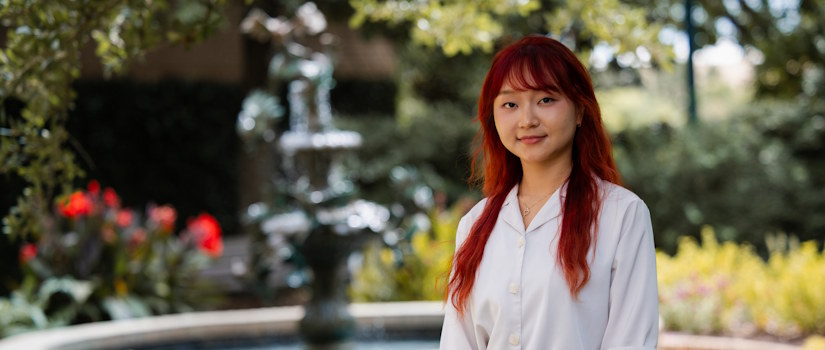
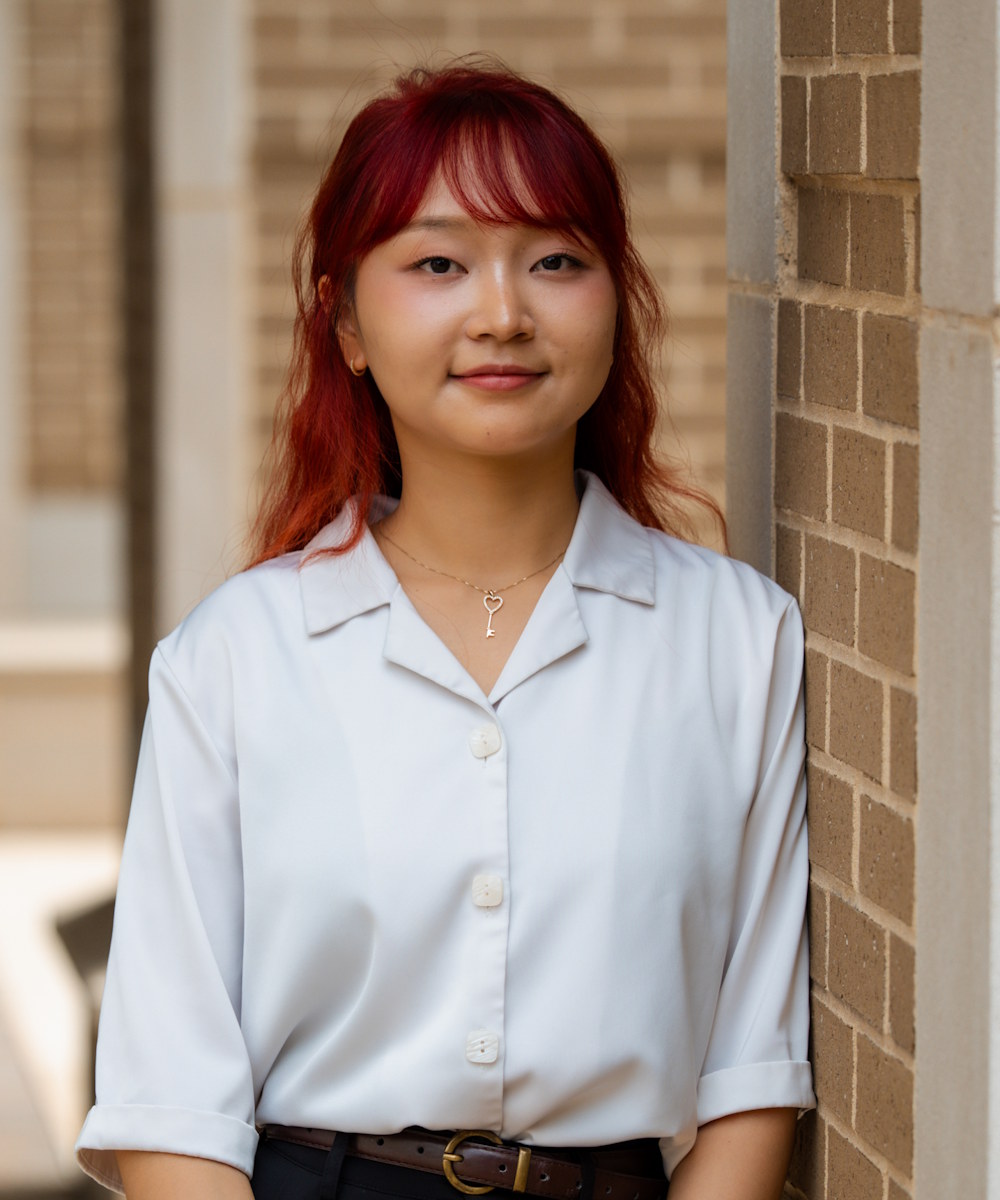
Fanghui Shi’s faculty career is just beginning, but she’s already been awarded more than $2.2 million from the National Institutes of Health. The newly minted health promotion, education, and behavior research assistant professor will use the five-year NIH Director’s New Innovator Award to identify patterns of sexually transmitted infections (STIs), which can help researchers predict who is at more risk for HIV infection and who might have difficulty managing the condition. Her team will also develop practical guidelines for healthcare providers.
"This recognition couldn’t be more well deserved," says Daniela Friedman, associate dean for research and leadership development. "Since joining the Arnold School, Fanghui has established an outstanding research program. The NIH Director's New Innovator Award is an extremely prestigious funding mechanism for early-career investigators, supporting scientists with high-risk, high-reward ideas that have the potential to transform their fields. Fanghui has distinguished herself as an innovative researcher and we’re fortunate to have her as a member of the Arnold School. I can't wait to see the impact of this important work."
Shi became interested in public health – particularly disease prevention and health promotion – when she was studying preventive medicine at Shanghai Jiao Tong University. While contributing to tobacco control and other research projects, she discovered that improving health requires addressing not only diseases but also the social and behavioral factors that shape people’s lives.
“A turning point came about when I participated in an intervention project for people living with HIV in China,” Shi says. “Although antiretroviral therapy has transformed HIV into a manageable chronic condition, I saw firsthand how many people continued to struggle with stigma, fear of disclosure and discrimination.”
She noticed that even individuals who were effectively managing the condition tended to isolate themselves from family and friends. Shi says that experience profoundly shaped her career goals by helping her realize that biomedical advances alone are not enough. Social and structural barriers must be addressed as well.
As a result, Shi enrolled in the Arnold School’s Ph.D. in HPEB program and continued working with HPEB faculty Xiaoming Li and Xueying Yang as a postdoctoral fellow with the department and the South Carolina SmartState Center for Healthcare Quality (CHQ). She calls them exceptional mentors who encouraged her to ask meaningful research questions, think creatively and pursue innovative approaches using big data and artificial intelligence to advance HIV prevention and care. Shi chose to remain at the Arnold School as a faculty member because of the people she’s worked with and learned from over the past six years.
“Their guidance has been instrumental in my development as an independent researcher,” Shi says. “They created an environment that encouraged collaboration, curiosity and innovation while always emphasizing the importance of conducting research that improves people’s lives.”
With this new project, Shi is poised to do just that.
She’ll be bringing together everything she’s learned: data-driven research methods, multilevel social, structural and clinical determinants of health outcomes, and the challenges faced by people living with HIV. By tapping into NIH’s All of Us Research Program, Shi and her team can access large-scale health data and advanced computer analysis techniques, such as machine-learning tools, to better understand how STI patterns relate to HIV risk and treatment outcomes.
“STIs are known to increase the risk of getting HIV and may also affect how well people stay engaged in HIV care,” Shi says. “However, STI data remains underutilized by healthcare systems and researchers in predicting who may be at higher risk for HIV infection or adverse HIV-related health outcomes.”
Of the 1.1 million Americans living with HIV, 13% are unaware of their status, 25% do not receive care, and 35% are not virally suppressed. The tremendous advances in HIV treatment, including reduced transmission due to careful management and prevention measures, means this does not have to be the case. Shi’s work will help clinicians identify individuals who may need additional support. Her findings will also help other scientists and healthcare providers develop more effective strategies for HIV prevention and care.
Shi hopes that her journey – from studying preventive medicine in China to leading federally funded research at USC – can encourage other early-career researchers and international scholars to pursue ambitious ideas that make a meaningful impact on public health. She’s looking forward to continuing this work and pursuing other research interests in her new faculty position.
“The Arnold School and CHQ provide a unique environment where expertise in public health, clinical research and data science come together,” Shi says. “I’m excited to continue building an independent research program that uses large-scale data and artificial intelligence to improve HIV prevention and care, while expanding my work to address other infectious diseases and health disparities. I’m also looking forward to mentoring students and collaborating with colleagues across disciplines to translate research findings into real-world impact.”