
From being a rising star at the New York City Ballet to becoming a social media influencer, dance educator and advocate, Kathryn Morgan has followed a career path that's been anything but conventional. After joining the NYCB’s legendary company as a teenager and quickly achieving the rank of soloist, a serious health condition forced her to reconsider her future in dance. What followed was an unexpected reinvention, as Morgan built an international following through her candid online discussions about ballet culture, dancer well-being, and the challenges of pursuing a professional career.
Now, having joined the faculty of USC’s Betsy Blackmon Dance Program as its Distinguished Artist-in-Residence, Morgan is sharing her experiences with our students, emphasizing not only technical excellence but also the importance of nurturing them as individuals. She's also putting her choreographic talents to work, creating the original work Portraits Unsilenced for the Betsy Blackmon Dance Company Fall Concert, November 5–6 at the Koger Center for the Arts.
We spoke with Morgan about her remarkable journey, the lessons she's learned along the way, and why mentoring the next generation of dancers has become one of the most rewarding chapters of her career.
Tell us first about Portraits Unsilenced, the work you’ve created for the Fall Concert.
It’s about the wives of Henry VIII. Obviously, there's already Six: The Musical, but even before that, I’ve wanted to do a ballet on the six wives. I'm calling it Portraits Unsilenced because it’s as if they could come off the wall and tell their stories. I have 12 ladies-in-waiting as well, so it’s a work for 18 dancers, which is a lot. I’ve thrown a lot at them but they're doing great. Each queen has her own feel. It's been fun to create on them and try to play to each dancer's strengths. It's been such a rewarding process.
If these women could speak now, what would they say? I think over the years they've become these symbols of what happened to them, rather than being appreciated as people also. The ladies-in-waiting, too, were very much part of this. The queens and what was happening in court life were their soap opera, their Netflix, at that point.
I would say the overarching theme is just appreciation for these six women, but also female empowerment.
What was your trajectory to the professional dance world?
I’ve had a very unconventional path as a dancer. Up until New York City Ballet, though, it was very traditional. I never wanted to do anything but dance. That was it. My parents tried but then I saw the NYCB for the first time when I was ten and that was it – no ifs, ands or buts. So, at 15, I was accepted into the [School of American Ballet] year-round program and moved [to New York City]. Then two years later, at 17, as a junior in high school, I joined NYCB and did my senior year of high school during my first year there, which was interesting. I had a dream career during the five or six years I was there. I was thrown major roles very, very early. Juliet at 17, Sugar Plum at 19, Aurora at 20, then promoted to soloist at around 21. Then my body started giving out.
Fast forward two years, and I was diagnosed with an autoimmune condition, which forced me to leave the company and rethink a little bit. During the many, many doctor visits and tests, I was watching YouTube videos to pass the time and got the idea to do a channel of my own. That snowballed into teaching and speaking. I became this sort of rebel in the dance world as a dancer advocate, speaking out for dancers and the toxic practices in the industry.
In 2019, I did a brief year as a soloist in Miami and then the pandemic hit. Since then, I've been freelancing and teaching and getting back into performing, actually. I wear a lot of hats. Now, it's a matter of picking what I do. I don't feel the need to join a ballet company or perform the heavy classics like Swan Lake and Sleeping Beauty anymore. It's about being able to be back on the stage and do ballets that feel good in my body – those do not. I'm constantly making lemonade from lemons. I've had to pivot so many times.
What has this opportunity meant for you to spend this year at USC as Distinguished Artist-in-Residence?
It's been great because I love working with students at this age. They're adults, but they're also still at the point where many of them want to be professionals. It's a really special time for them. In my day and age, we were all hired at 17 and that's not the case anymore – the baby ballerina is done. I look back at myself when I was starting my career and if I had had somebody that could be honest with me and guide me and be the mentor that I needed, I think I would have actually fared better. I enjoy teaching them in class but what’s much more important to me is mentoring them. Like, how are you doing as a person? Yes, I'll help you with your pirouettes, but there's so much more to it. And that, I think, has been the most rewarding thing for me.
...one of the practices of ballet that has to change is the notion that "this is how it is and you have to mold to it." For me, it's "this is what we're trying to achieve, but let's mold it for you." How does your body work? How do we work with you and what you have?
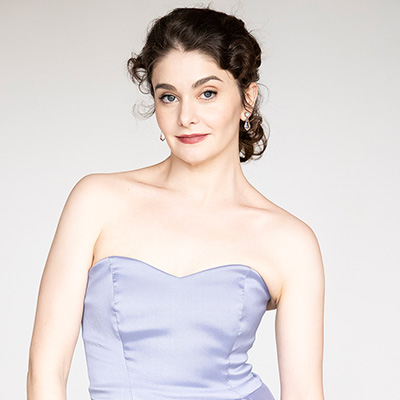
Is this your first collegiate teaching position?
Yes, it is, and it's been wonderful. The other thing that's been so incredible, and one of the reasons I took the job, was the faculty. I think it's very rare in this industry to be with colleagues in what you genuinely know is a good environment. Every single one of them has such a good head on their shoulders. Actually, one of the biggest reasons I took this job was my respect for Jen [Deckert, Director of the Betsy Blackmon Dance Program].
What’s your approach to teaching dancers at this level?
This is going to sound weird, but I don't really have a set teaching style. It's more about what works for each individual body, because I think one of the practices of ballet that has to change is the notion that “this is how it is and you have to mold to it.” For me, it's “this is what we're trying to achieve, but let's mold it for you. How does your body work? How do we work with you and what you have?”
The other thing for me is the mental component. The physical is nothing without the mental. And if they're not in a good place mentally, it doesn't matter how much they take class, it's not going to work. It’s about treating them as human beings first.
Are there things you wish you had been told in your education that you are now able to share?
Yes, and I harp on this on YouTube all the time, but you have to be a person first. When I was at NYC Ballet, I was a bunhead through and through and ballet was all I had. Then, when I got sick and had to leave the world of ballet for a little bit, I had nothing. So, it's important for me to pass on to them that, yes, what happens in the studio is important, but it's not everything. It can't fully define you. You still have to know who you are outside of dance, have other interests, and have other friends. It's really important that your life is not all dance all the time.
You sometimes learn as much in the teaching process as the students you’re instructing. What has teaching in a college environment taught you?
They educated me two weeks ago on sororities. Like, how does rush work? I don't get it but tell me [laughs]. It’s been a learning experience for me because all I knew from the time I was 17, working professionally, was class at 10 a.m., rehearse for six hours, performance… it was just all dance. To see these kids talking about their lives outside the studio – “we did this this weekend, and my sorority is doing this” – it's nice to see they already have other things. I'm learning from them because it's all foreign to me.
The whole time I've been teaching, and I started teaching at 22 or 23, has changed my own dancing. The dancing is what came easily for me. It was everything else that was difficult – the mental side, the body image side. So, I've had to learn how to explain things and break it down in different ways, which has actually helped my own technique. I've learned how to communicate better because you can't teach every person the same way. Even teaching on YouTube when there's nobody in the room, how do I verbally say something maybe three different ways so that it will click? It's made me much more articulate and learn how to communicate better.
What's impressed you most so far about being at USC?
It's such a beautiful campus. But I think, for me, this dance program is genuinely such a healthy mental and dance environment, which is so rare in this world. This is a supportive, healthy place and the dancers work so hard. It's such a rare environment in the dance world.