The Tweet that turned their case upside down
Imagine receiving a call from your college roommate, only to hear that she has stabbed
you in the back. And the skull. And — oh yeah — there’s evidence of manual strangulation.
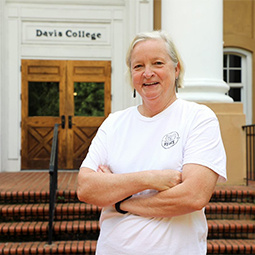
That was the reality for Stephanie Durso Mullin’s roommate, after Mullin wrote her
into her latest true crime novel as one of her serial killer’s victims.
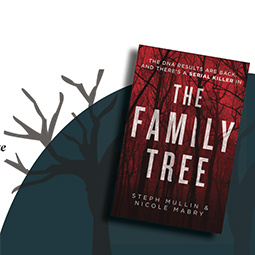
Inspired by co-author and friend Nicole Mabry’s first book, the 2012 visual communications
alumna decided to get into the action. She and Mabry co-wrote The Family Tree, a novel
loosely based on the real case of the Golden State Killer, a ‘70s era serial murderer
from California who was convicted in 2020 using DNA genealogy testing. With help from
an FBI homicide detective and a genealogist, Mullin and Mabry pieced together the
timeline for their fictional Tri-State Killer’s spree.
“We’re probably flagged by the FBI from all of our crime research,” Mullin says.
After writing and editing the novel in just three months, the duo pitched their novel,
but many publishing agents were worried true crime content would be too dark during
the pandemic.
“We felt like we were banging our heads against the wall,” Mullin says. “There were
so many roadblocks that we couldn’t control.”
Just before pausing the project, Mullin heard about Pitmad, an annual Twitter pitch
contest. Two tweets later, an editor from HarperCollinsUK in London reached out to
Mullin and Mabry. The authors debuted with an international two-book deal.
They weren’t done just yet — since Mullin and Mabry came from visual backgrounds,
they put faces to character names with an interactive case file website for their
victims, complete with pictures, descriptions, a synopsis of facts and evidence.
“What this process has shown me is that there’s always going to be rejection or doors
being slammed in your face,” Mullin says. “But knowing that all writers go through
the same thing and it’s the ones who push through and don’t give up despite how heartbreaking
it can be — that’s how you get to success at the end.”
- Parker Blackburn,