Why did you choose the University of South Carolina?
My path was not linear; it unfolded through experience. After working in Charlotte
Public Library and later at UNC Charlotte’s J. Murrey Atkins Library, I began to understand
that I did not just enjoy working with information. I wanted to shape how people connect
to it.
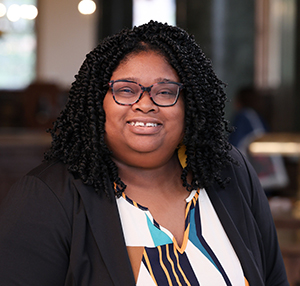
At that point, I knew I needed a graduate program that would challenge me and expand my possibilities. Several colleagues encouraged me to consider USC, telling me the program would let me “write my own ticket.” What stood out to me was not just the program’s reputation, but the sense that it would give me the tools and confidence to build a career on my own terms.
As a South Carolina native, choosing USC felt deeply personal, even as a virtual student. It allowed me to invest in my future through an institution connected to my home state. Enrolling at USC was a pivotal decision. It was the moment I stopped wondering what I might do and started intentionally preparing for the work I wanted to lead.
Why did you end up choosing the Information Science program?
I was drawn to the focus on literacy and the faculty's strength. Even as a virtual
student, I felt genuinely connected and engaged with the campus community. The program
balanced theory and practice in a way that felt meaningful, and I appreciated how
professors encouraged us to think critically about information, access and service.
What are you doing now?
I currently serve as the assistant university archivist for outreach and engagement
at the Louis Round Wilson Special Collections Library at UNC-Chapel Hill. In this
role, I lead outreach initiatives that connect archives with students, faculty, alumni
and community members.
I coordinate oral history projects, design public programs and exhibits, collaborate with campus and community partners, and work to make archival collections more inclusive, accessible, and engaging. My work sits at the intersection of history, storytelling and community engagement.
What do you like most about your job?
What I love most is working with people and their stories. I get to help students,
alumni, faculty and community members see themselves as part of history. There is
something powerful about watching someone realize that their experiences matter.
I also enjoy the creative side of my work — designing programs, developing digital projects and finding new ways to connect archives to everyday life.
Do you have any study strategies or advice that you could share with current or future
students?
Connect your coursework to real-world applications whenever possible. Internships,
student jobs and hands-on projects truly matter. Do not hesitate to ask questions
or reach out to professors and professionals. Building relationships is part of the
work.
And give yourself grace. You do not have to have your entire career mapped out. Learning how to adapt and stay curious is just as important as mastering specific skills.
What would you say to high school students or people who are just starting their college
career who might want to follow a path like yours?
Be open to change. It is okay if your path shifts along the way. Pay attention to
what excites you, even if it does not look like a traditional career at first.
Information Science is incredibly versatile. It can lead to careers in libraries, archives, technology, media, public history, and beyond. The skills you gain travel with you.
What's your favorite memory from your time at USC?
One of my favorite memories from my time at USC was volunteering with Cocky’s Reading
Express whenever the program visited counties near Charlotte, especially Lancaster
and York.
Seeing every child receive a book of their own was incredibly meaningful. And watching them treat Cocky like a rock star never got old. Those moments reminded me why literacy matters and how powerful it is to place a book directly into a child’s hands.