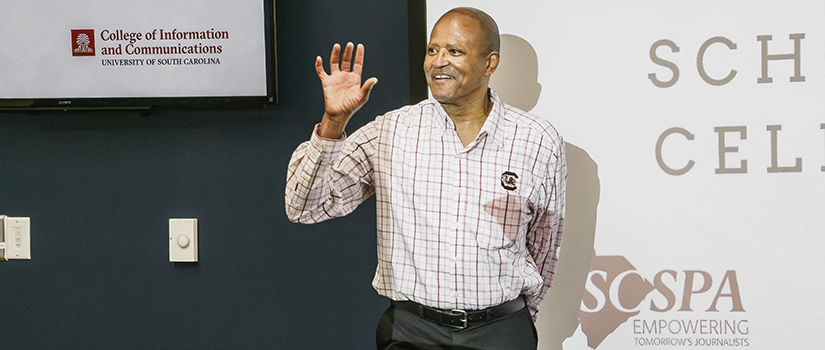
Top photo: Rantin speaks at the ceremony announcing the scholarship created in his honor. See more photos »
On a newsroom floor years ago, staff at The State newspaper walked around wearing buttons that read: “I Know Bertram.” It was a playful symbol of a journalist who seemed to know everyone and who, more importantly, made everyone feel known.
Now, that same sense of connection continues in a new way: supporting the future of South Carolina journalism.

This fall, the School of Journalism and Mass Communications launched the Bertram Rantin Scholarship, which is awarded annually to the South Carolina Scholastic Journalist of the Year, the top high school journalist in the state. The scholarship recognizes potential, supports first-year Gamecocks and honors a man whose belief in storytelling continues to shape the next generation. Contributions to the Bertram Rantin Scholarship can be made online.
“It’s humbling,” Rantin says, recalling the moment he saw his name spread across the screens at the scholarship celebration. “Nothing can prepare you for that. But thinking about the students who will come along, that’s what keeps me grounded.”
The story of the scholarship is also the story of where USC journalism is headed. In the past decade, the school has produced national award-winning student journalists and expanded opportunities in sports media, visual storytelling and digital content creation. From bustling student newsrooms to innovative capstone courses, the school is strengthening its role as a training ground for storytellers who are ready to serve their communities. The introduction of the Bertram Rantin Scholarship signals a commitment to bringing in the strongest voices even earlier, before they step onto campus.
Rantin believes journalism starts long before a professional newsroom. His own passion began in high school, when he realized that reporting gave him a chance to make a real impact.
“Journalism was, and continues to be, at the center of the knowledge source,” he says. “It’s kind of cool to be the one who gets information first and then share it with your community.”
That spark eventually led to a career where he covered history-making stories, taught young reporters by example and became the colleague everyone seemed to know.
But what makes the scholarship meaningful isn’t recognition. It’s the connection to the students who will follow in his footsteps. Rantin describes success not as a title or a plaque, but as the moment a former student messages to say that something he taught helped them land a powerful story.
The scholarship’s creation was led by scholastic media programs director Nina Brook, who has watched high school journalists grow into confident communicators through the state’s scholastic press programs. She wanted to make sure that achievement didn’t end with a trophy or certificate but opened the door to a future in journalism.
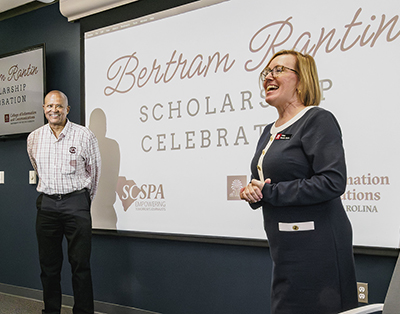
“Rantin represents strong high school journalism, strong professional journalism and strong journalism education,” Brook says. “That full package — that’s rare.”
Brook believes the school’s continued investment in students is what will elevate South Carolina journalism far beyond campus. Today, student media is covering stories on housing, education, equity and community issues shaping both the state and the profession. The hope is that supporting young reporters early will keep more of their talent here.
“We want students to know that their voices matter, and that USC is the place they can grow those voices,” she says.
The journalism industry continues to evolve and USC is constantly adapting to it, expanding multimedia storytelling, partnering with news organizations and cultivating leaders who can thrive in a changing media landscape. The scholarship isn’t just a nod to the past — it’s an investment in the reporters, digital innovators and truth-seekers who will lead the future.
Rantin’s advice for future journalists: enjoy the journey and stay grounded in what matters.
“Be more concerned about the product than propping yourself up,” he says. “And pursue work that truly makes you happy.”
As the first scholarship winners walk into the journalism school, they’ll find a community ready to push them and one that believes in their stories long before the rest of the world hears them. Their work will go on to shape conversations, inform the public and strengthen democracy at every level.
Those old buttons from The State may have been printed as a lighthearted promotion. But today, “I Know Bertram” reflects a legacy of mentorship, compassion and commitment to truth-telling. Now, the next generation of storytellers will know him too, not because they’ve met him, but because he helped them get here. The future of South Carolina journalism is in good hands.
And somewhere on a high school campus, a new student reporter is slinging on a backpack, stepping into a newsroom and discovering that same feeling Rantin had years ago: storytelling changes lives.