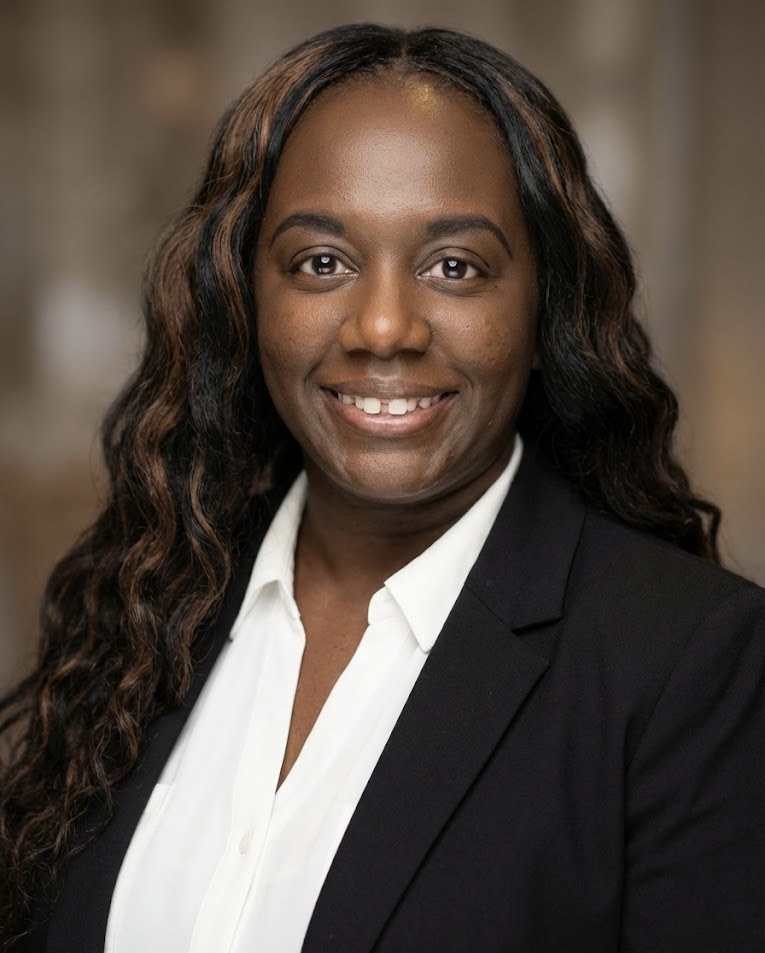
After growing up outside of Charleston, Ashanti Cromedy stayed close to the shoreline for college – studying public health at nearby Coastal
Carolina University. She accepted a care coach position with Humana in 2020 and soon
after enrolled in the Arnold School’s Master of Public Health (MPH) in Health Promotion, Education, and Behavior program.
Having a certification, knowledge or skill set in a particular area helps you stand
out in the job market. Look at positions you might be interested in early in the program
and talk to alumni or take classes that would be useful to decide if that's what you
want to do long term.
Ashanti Cromedy
“I became interested in public health from lived experience,” Cromedy says. “I grew
up in a rural community (Huger) and seeing the inequities that exist between there
and places nearby drew me to public health in creating better conditions. USC was
always a top choice because of their rankings and employment outlook after graduating.”
During her program, Cromedy continued working full time at Humana and then later as
a research coordinator for the American Diabetes Association. She still managed to
find time for her studies as well as connecting with faculty, like MPH program director
Edena Guimaraes, whom she calls an amazing mentor with a breadth of experience in the field.
Ashanti Cromedy is a 2024 graduate of the MPH in Health Promotion, Education, and
Behavior.
Networking – even simply by being a part of email listservs – was also valuable for
Cromedy. She gained grant reviewing experience with Wholespire by responding to an
opportunity shared via a listserv, which qualified her for the American Diabetes Association
position and finally the job she has now.
Just before her 2024 graduation, Cromedy accepted a position with the University of
Kentucky as a grants specialist. In this role, she creates budgets for grant proposals
submitted by public health faculty and helps them with the university approval process
as well as submission to sponsors like the American Cancer Society.
“I can directly tie budget creation to the public health planning class from my master’s
program,” says Cromedy, who recently authored an article on Navigating Uncertainty in Public Health Grants in The Colorado Public Health Association Magazine. “It's a real-world application
to consider what costs are necessary to implement the project and ensuring we do not
go over the budget.”
Her CITI certification – which Cromedy completed as part of her program’s qualitative
research class – also comes in handy. Many of the faculty she supports work with human
subjects and must therefore obtain this certification themselves. Already having the
certification made her a more competitive candidate when applying for new positions,
and she recommends the path for other students.
“Having a certification, knowledge or skill set in a particular area helps you stand
out in the job market,” Cromedy says. “Look at positions you might be interested in
early in the program and talk to alumni or take classes that would be useful to decide
if that's what you want to do long term.”