Having attended South Carolina’s flagship university as both an undergraduate and
as a graduate student, Bria Singleton says she has had the full USC experience. Though her military family lived all over
the world (New Mexico, Japan, Oklahoma, Virginia), her parents’ hometown in nearby
Sumter eventually led them to settle in Lexington when her mother wrapped up her 20
years of service with the U.S. Air Force.
I came into graduate school with the goal of optimizing my experience and not just
leaving with an additional degree but using my two years in the program to diversify
my skillset as much as possible.
Bria Singleton
Singleton’s high school years were marked by attending Gamecocks Women’s Basketball
games, building a love for the team and the program’s legacy built by Coach Dawn Staley.
Saturdays in sold-out Williams-Brice Stadium gave her the same feeling – even freshman
year when the COVID-19 pandemic meant she could only attend one game in person.
“It was still the best first-year experience in the country,” Singleton says. “My
experience at USC and in Columbia has made me a proponent for all things sandstorm,
garnet and Gamecock culture – a feeling I know resonates with many alumni, and I’ll
carry these memories fondly.”
Originally majoring in nursing so she could provide direct clinical care, Singleton
soon realized that her passion (inspired by the broad worldview she developed growing
up) was for improving population-level health. She enrolled in the Arnold School’s
B.S. in Public Health program and immediately began observing the presence of the field in every aspect
of life: preventing serious health conditions before more drastic medical intervention
was needed, keeping the public safe during the pandemic, and addressing the systemic
influences that exacerbate health disparities in communities she loved.
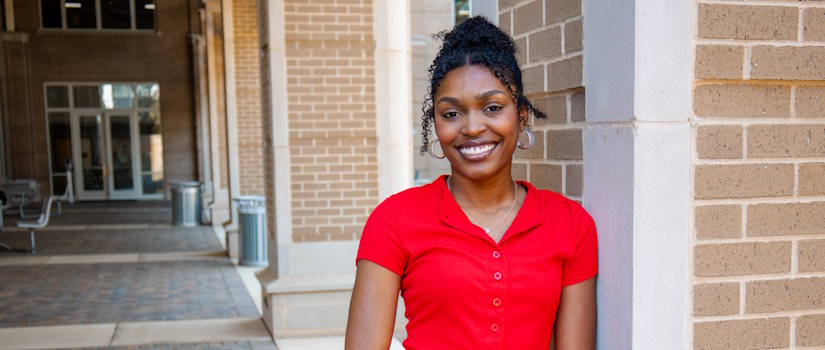
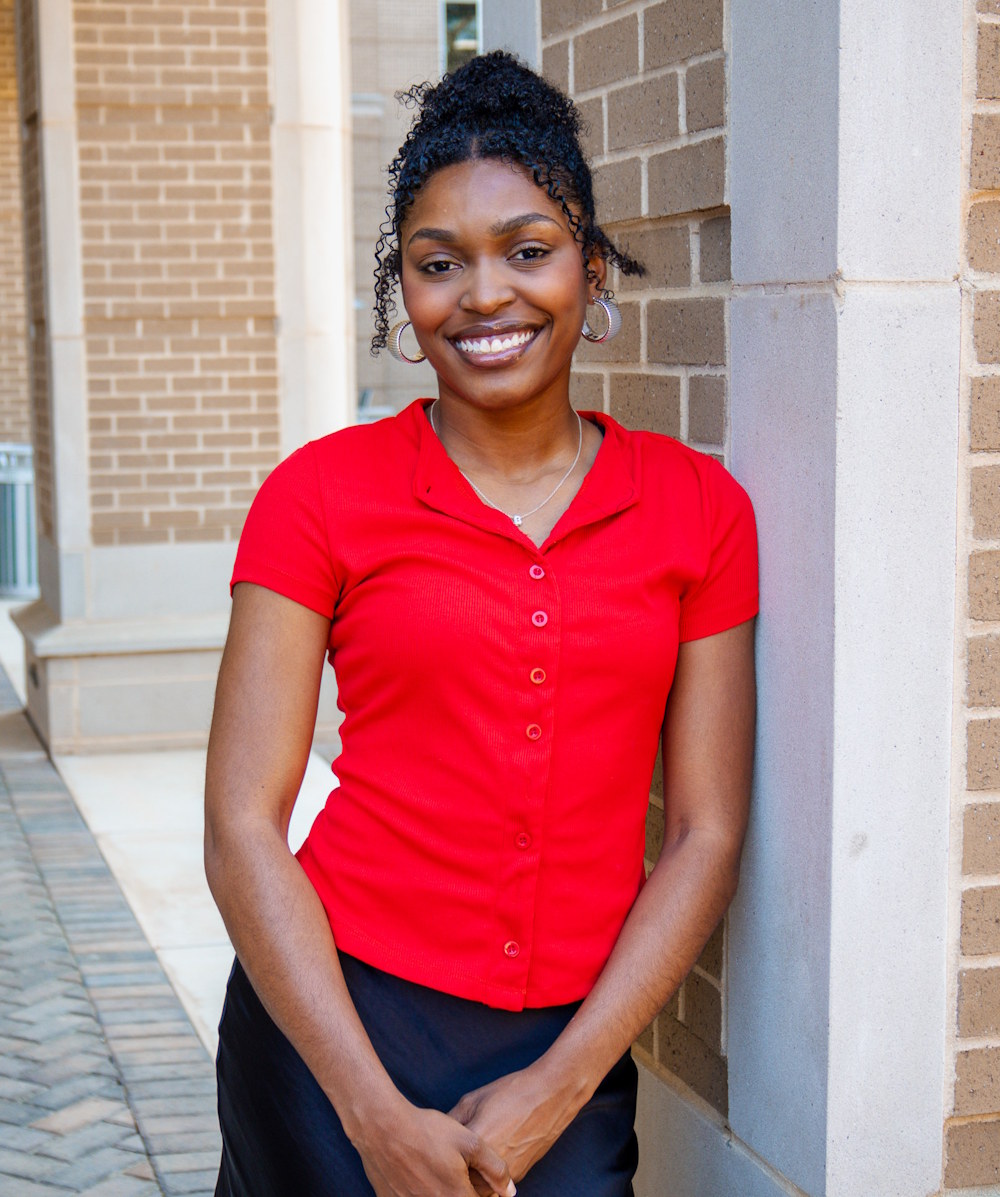
Bria Singleton graduates in May with a Master of Public Health in Health Promotion,
Education, and Behavior.
Clinical associate professor Kara Montgomery helped Sington make the transition –
introducing her to what the Arnold School could offer and helping her align her coursework
with her personal interests. “She’s truly the person who exposed me to public health,
and I’m not sure I would have ever become a public health professional without her
direction as my advisor,” Singleton says.
During her time in the Master of Public Health (MPH) in Health Promotion, Education, and Behavior (HPEB), Singleton dug deeper into the importance of creating culturally relevant
public health programs and initiatives to best meet the needs of modern populations.
Through her thesis project, she conducted research with 370 middle school students
to better understand their social, cultural, and health-related experiences. Working
with MH Boxes – first through her program’s Applied Practice Experience and now as
an invited board member – she works to promote the mental health and well-being of
Black girls through strategic storytelling.
“I’m interested in applying public health principles in practice to populations within
their communities, cultures and values, making public health both accessible and understandable,”
says Singleton, who found mentors in HPEB faculty Isabella Alonso, Daniela Friedman and Brie Turner-McGrievy.
“Bella Alonso’s thoughtful guidance never wavered, and she made academia feel accessible
and inviting,” she says. “As chairs, Drs. Friedman and Turner-McGrievy have created
and carried on a department culture that is engaging and nurturing and are both women
who strongly exemplify what it means to be a leader who values the people they interact
with – not just through words but through their actions. With expertise in studying
how to make public health more culturally relevant, Dr. Turner-McGrievy also supervised
my thesis project, and I will dearly miss our interactions.”
As she takes her next steps, Singleton is confident she has the foundation to make
an impact. She particularly values the opportunity to lead her own research project
– one that has been rigorously implemented with publishable results. For others considering
a graduate degree in the field, she recommends keeping an open mind to best explore
the array of options offered by the field – but to do so with intention.
“I came into graduate school with the goal of optimizing my experience and not just
leaving with an additional degree but using my two years in the program to diversify
my skillset as much as possible,” she says. “What you want and need won’t always present
themselves to you in a neat, bow-wrapped package, so it’s critical to adapt and find
ways to optimize opportunities that work best for you.”