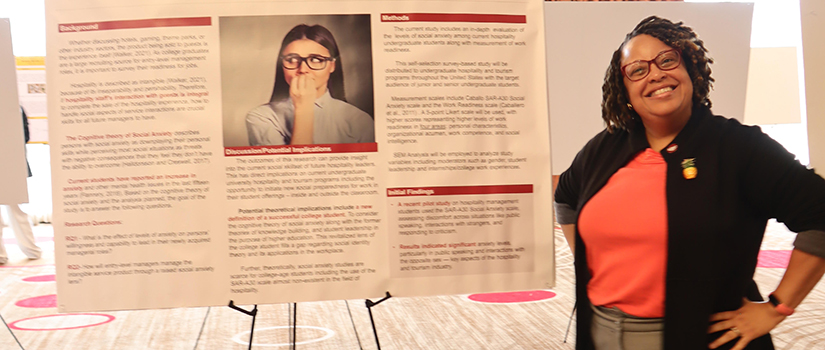
For Katheldra Alexander, pursuing a Ph.D. in hospitality management at the University of South Carolina is both a new chapter and the fulfillment of a goal she nearly left behind.
Alexander grew up in the Bahamas, where tourism is the country’s largest industry. Her career eventually brought her to the United States and Compass Group, where she built extensive experience in onsite food service. Along the way, one part of the job increasingly stood out: training people.
“I spent a lot of time training and especially when it came to new employees, that orientation, that onboarding period,” Alexander says. “And so I said, ‘I really love teaching.’”
That realization planted the idea of someday earning a doctorate and teaching full time at a university. But as Alexander’s industry career continued, the goal remained something for the future. Then COVID-19 changed her plans.
After being laid off during the pandemic, Alexander found herself considering what should come next. While organizing her desk, she came across something she had written years earlier: a plan that included earning a Ph.D.
“I said, ‘I never did this,’” Alexander recalls. She brought the idea back to her husband, who encouraged her to pursue it, with one request, that she find a program within a four-hour drive of their North Carolina home.
That search led her to the University of South Carolina College of Hospitality, Retail and Sport Management.
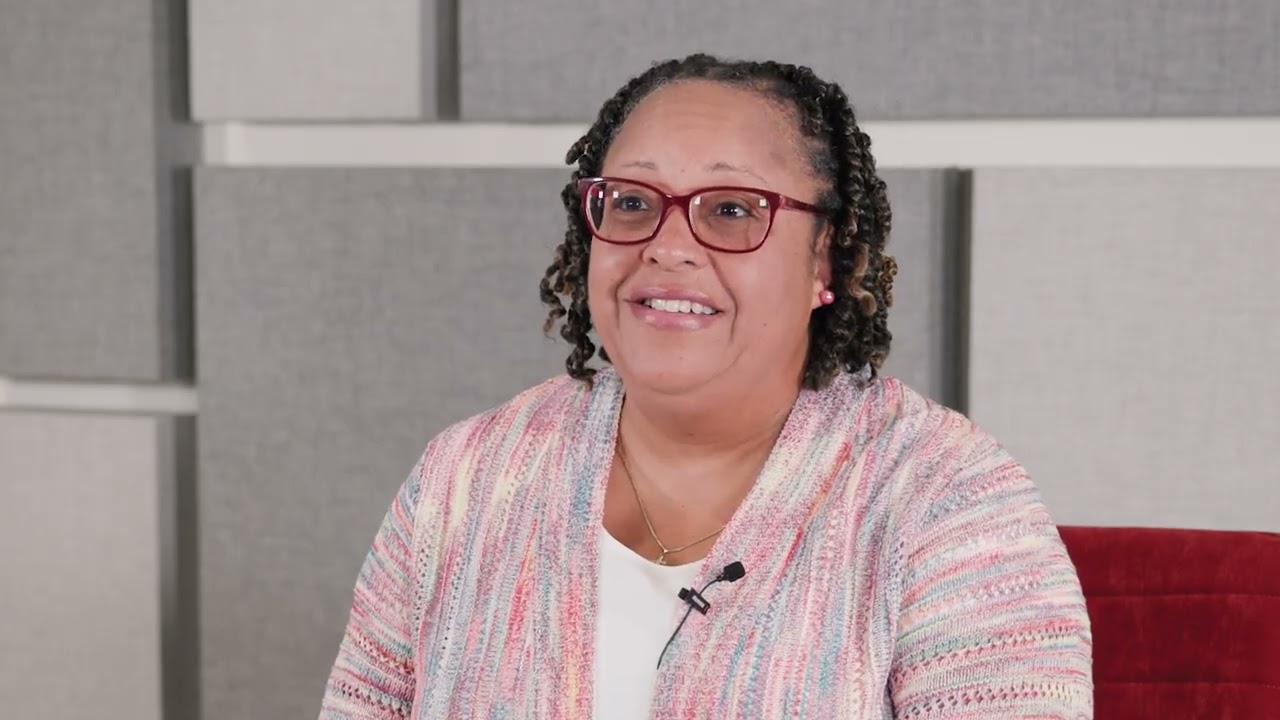
USC’s Hospitality Management Ph.D. is a four-year residential program designed to prepare students for leadership in hospitality and tourism research and education. Doctoral students have opportunities to work alongside faculty on research and industry projects while also gaining classroom teaching experience, an especially important combination for Alexander and her career goals.
The transition from industry trainer to college instructor has shown Alexander that although the two roles share some skills, they are far from identical.
“I think I had the public speaking, I had the command of a room, but the actual pedagogy, that part still had to be learned,” she says.
Her professional background is also shaping her research. Alexander’s dissertation, titled The Role of the Foodservice Manager in Training New Hires, focuses on a familiar challenge from her years in food service: what happens during the critical period when frontline employees first join an organization.
Her original research plan was broader, examining how food service managers balance operational duties with employee training as new technology is introduced. Her revised dissertation takes a more focused look at the manager’s responsibility during onboarding, particularly when much of the hands-on training is delegated to an employee’s peers.
“Now I am examining how the foodservice manager handles their responsibility of training specific to the onboarding period of new frontline employees,” Alexander says. “Much of the training is delegated to peer-to-peer models. Therefore, how does this dynamic impact the organizational socialization of the employee, and how does it affect behaviors like training transfer, job satisfaction, and retention of the new hire.”
The subject connects Alexander’s academic research directly to the work that first sparked her interest in teaching. Years spent training employees in food service now give her practical experience to bring to questions about how employees learn, adapt and become part of an organization.
Her doctoral journey has included challenges outside the classroom as well. Alexander had planned to finish the program this year, but those plans changed when her mother became ill. After Alexander completed her comprehensive exams, she and faculty adviser Scott Taylor Jr. decided to adjust the timetable.
Through it all, Alexander has come to appreciate not only USC’s hospitality program but also the breadth of opportunities available within HRSM. She says being part of a college that includes hospitality and tourism, retail, and sport and entertainment management creates connections across fields and opportunities for students to learn from one another.
That interdisciplinary environment complements a doctoral program built around research and teaching. USC’s program gives Ph.D. students opportunities to participate in funded grants and industry research projects, collaborate with faculty and research institutes, and teach while completing their degrees. Students must complete 60 credit hours as well as qualifying and comprehensive exams, a dissertation study and a final oral defense.
For those considering following a similar path, Alexander recommends gaining industry experience before moving into doctoral study. She also encourages students at every level to explore everything the university has to offer.
“There’s so much here that people should definitely embrace when they come on campus,” she says.
For Alexander, the next step brings her back to the goal that sent her searching for a Ph.D. program in the first place: teaching, now coupled with a newfound zeal for research.
“I would love an assistant professor role where I’m able to do research and teaching,” she says.
It is a career that would bring together the different pieces of Alexander’s journey: her years in food service, her passion for training, her growing expertise as a researcher and the love of teaching that started it all.