Health promotion, education, and behavior (HPEB) doctoral students Edith Utaka and Hao Zhang and postdoctoral research fellow Rui Luo (HPEB and South Carolina SmartState Center for Healthcare Quality (CHQ)) have been selected to join the Social Determinants of Health (SDOH) Advanced
Research Training (ART) Fellowship Program. Funded by the National Institute of Nursing
Research and based at Emory University, this year-long program trains nurse scientists
and researchers in related fields to address SDOH and improve health outcomes for
individuals, communities, and societies. As part of the program, Utaka, Zhang and
Luo will participate in a five-day training in Atlanta, receive ongoing mentorship
from experienced scientists, and contribute to community-engaged SDOH research using
quantitative and qualitative methods.
“I encouraged these individuals to apply to the SDOH ART Fellowship Program due to
the relevance of this training program to their research projects, which could also
strengthen their skills, networks, and competitiveness for future funding and academic
careers,” says Xueying Yang, an assistant professor in the HPEB department and a core faculty member with CHQ.
“This program is important nationwide because it aligns well with the priorities of
the National Institutes of Health and also offers strong mentorship and access to
leading experts, giving trainees exposure to interdisciplinary perspectives and rigorous
methodological approaches.”
My research explores the role of SDOH in the prevention and transmission of infectious
diseases, as well as their treatment outcomes, especially among underserved populations.
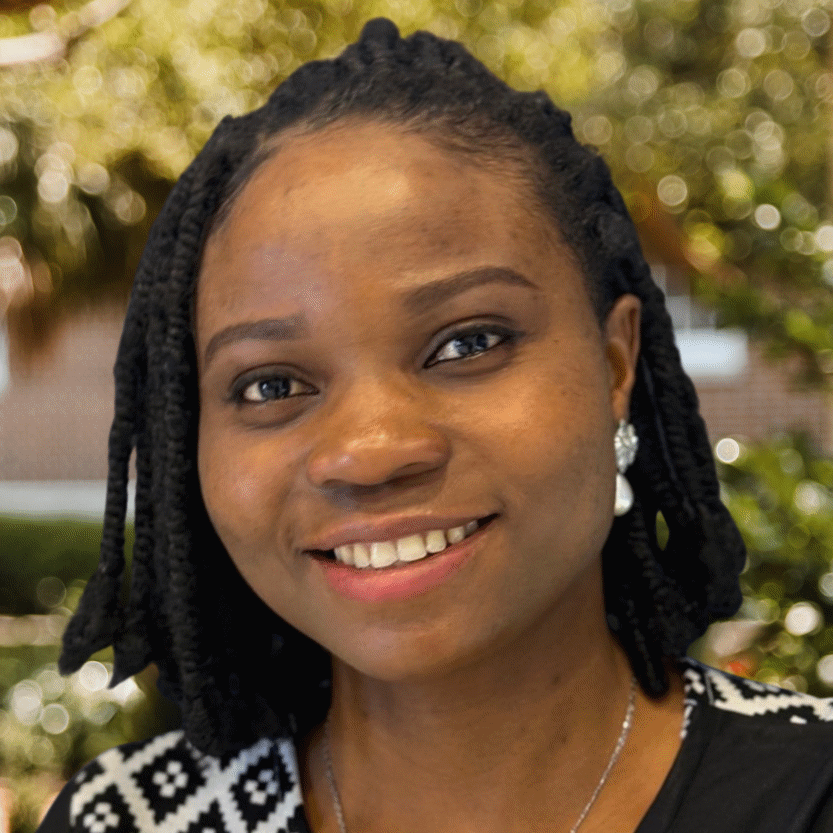
Edith Utaka
Utaka, a second-year Ph.D. student mentored by Yang, has a master’s degree in public
health from the University of Lagos in Nigeria. Her research focuses on HIV/AIDS and
HPV infection prevention and treatment, cervical cancer screening and HPV vaccination.
She has a wide range of professional experience in community-based program design
and implementation, gained through the numerous public health programs she led in
Nigeria before joining USC.
“My areas of interest are infectious diseases, particularly HIV/AIDS and HPV infections,
HPV vaccination, and cervical cancer screening,” Utaka says. “Using both quantitative
and qualitative methods, my research explores the role of SDOH in the prevention and
transmission of infectious diseases, as well as their treatment outcomes, especially
among underserved populations. I am also interested in implementation science research,
exploring better ways to translate scientific research findings into practice."
My current research examines the relationship between SDOH and cognitive impairment
among people living with HIV using data from the All of Us Research Program and machine
learning approaches.
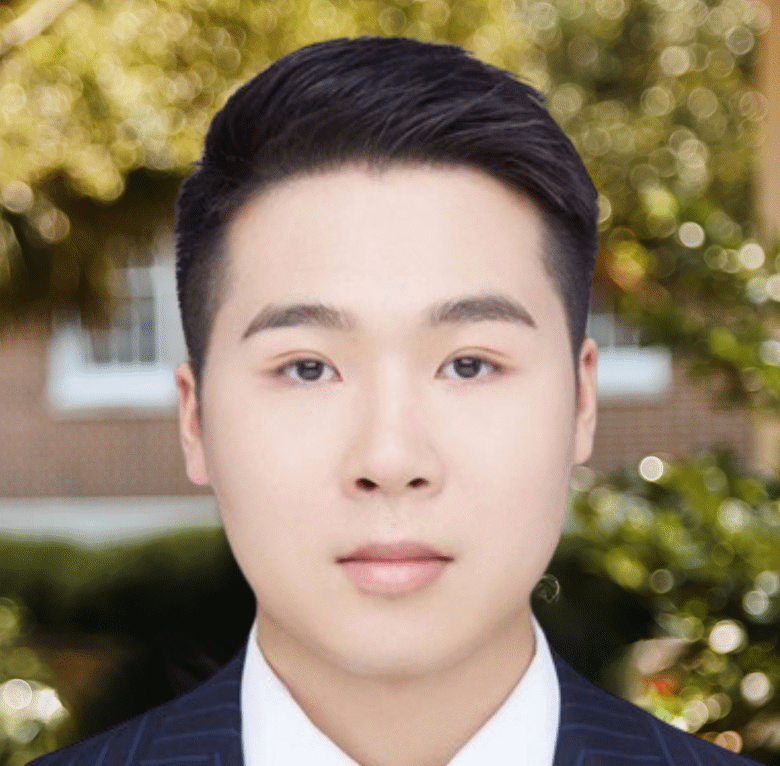
Hao Zhang
Zhang is also an advisee of Yang and a second-year Ph.D. student. He has a Master
of Public Health from Peking University and focuses on psychosocial well-being and
caregiving in under-resourced settings, HIV-associated comorbidities such as cardiovascular
disease and cognitive impairment, and health outcomes among youth living with HIV.
“I am interested in integrated care models, mental health challenges, and health care
transition among disadvantaged groups, and I apply advanced epidemiological approaches
and mixed-methods research to better understand the structural and psychosocial determinants
of health disparities,” Zhang says. “My current research examines the relationship
between SDOH and cognitive impairment among people living with HIV using data from
the All of Us Research Program and machine learning approaches. This work has strengthened
my commitment to data-driven research on health disparities and motivated me to pursue
the fellowship.”
Through this program, I aim to leverage national-level datasets to examine how social
determinants of health influence STI risk among high-risk populations such as MSM
and youth.
Rui Luo
Luo joined the Arnold School last summer after completing a Ph.D. in epidemiology
and biostatistics from the School of Public Health at Sun Yat-sen University. His
work examines mental and behavioral health among vulnerable populations (e.g., people
living with HIV, men who have sex with men, adolescents). Luo conducts cohort studies
using survey data and applies advanced analytic approaches such as social network
analysis, Bayesian network analysis, machine learning, and longitudinal data modeling.
He has also led a randomized controlled trial evaluating the effectiveness of a self-guided
mindfulness intervention to improve health care providers’ mental health during the
COVID-19 pandemic as well as a network dynamic–based intervention designed to promote
physical activity among adolescents.
“Through this program, I aim to leverage national-level datasets to examine how SDOH
influence STI risk among high-risk populations such as MSM and youth,” Luo says. “I
also hope to explore how these SDOH shape the effectiveness and implementation of
doxycycline and other STI prevention and treatment strategies.”