
Skip to Content

Arnold School of Public Health

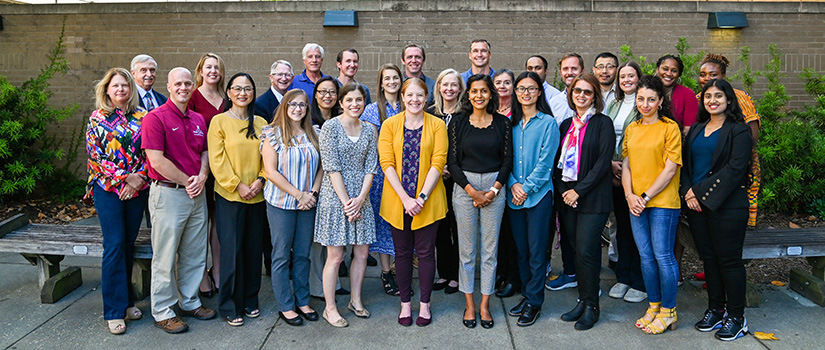
  • Epidemiology and Biostatistics faculty members posing

Epidemiology and Biostatistics

Public Health was defined by C-E.A. Winslow as the science and the art of preventing disease, prolonging life, and promoting physical health and efficiency through organized community efforts with the goal of enabling every citizen to realize his/her birthright of health and longevity. 

The disciplines of epidemiology and biostatistics are essential to achieving the goals of public health, and combining these two disciplines in a single department creates synergies for both training and research. Epidemiologists study the distribution and determinants of health and disease in populations.  Biostatisticians develop and apply statistical theory, methods and techniques to public health research data and the planning, implementation and evaluation of public health programs. Given the strong overlap, epidemiologists and biostatisticians often collaborate to work toward the shared goal of generating and analyzing data to advance the public’s health.

Within the department, the degree programs are administered under two separate streams, the Division of Epidemiology and Division of Biostatistics.

Find out more about the department and what we offer in our welcome from the Chair.

Degrees Offered

We offer eight advanced degrees in epidemiology and biostatistics. Each graduate degree has specific application deadlines and requirements.

Directors:

  • Dr. LInda Hazlett, MCH Certificate Program Director

Epidemiology and Biostatistics News

Leila Meng

I Am Public Health: Zichun "Liela" Meng

Behind many of the most impactful medical advances are mathematical savants – behind-the-scenes superheroes who are working with vast stores of data to improve public health. Ph.D. in Biostatistics candidate Zichun "Liela" Meng has been developing her skills in this area for nearly a decade.

mosquito test tube

West Nile virus more than ten times higher in South Carolina compared to national average

With little historical data on the prevalence of West Nile virus in the state of South Carolina, members of the Delores Marie Thomas Research Lab have assessed its presence in the Palmetto State.

Melissa Nolan

Lingering under the radar

Melissa Nolan, associate professor of epidemiology and director of USC’s Institute for Infectious Disease Translational Research, and Arnold School alumnus Matthew Haldeman have found a rare intestinal parasite that could affect 1 in 20 South Carolinians. 

Angela Liese

Coping with chronic disease when food is scarce takes its toll on mental health, researchers find

Twenty-five years into her CDC and NIH-funded diabetes and youth research, epidemiology professor Angela Liese and her team continue to increase our understanding of this uniquely vulnerable population.

MCH Catalyst

Maternal and Child Health Catalyst program launches two new development opportunities

With renewed support from the Health Resources and Services Administration and matching funds from the Dean's Office, the Arnold School's Maternal and Child Health (MCH) Catalyst program is expanding its capacity-building opportunities even further.

Ben Bailey

I Am Public Health: Ben Bailey

As Bailey begins his final semester of the online MPH in Epidemiology program, he sees the experience as incredibly rewarding and extremely challenging and looks forward to teaching his students about a variety of public health topics.

More Arnold School News


Challenge the conventional. Create the exceptional. No Limits.

©