Skip to Content

Arnold School of Public Health

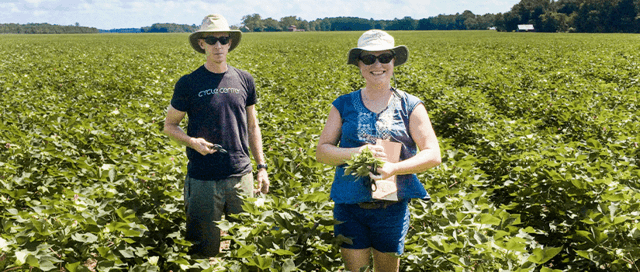
  • Students harvesting crops in a field

Environmental Health Sciences

Environmental Health Sciences (ENHS) is primarily concerned with the interactions of humans with the environment. Our field focuses on the adverse effects of environmental conditions or contamination on human health and the impacts of human activities on the environment. 

Career opportunities for ENHS exist in federal, state and local environmental regulatory agencies, national research laboratories, industries, environmental consulting companies and universities. Jobs in the field include research scientist, industrial hygienist, water quality specialist, health and safety officer, ecotoxicologist, molecular toxicologist, environmental microbiologist, community engagement and environmental justice scientist, nanomaterial scientist, air pollutions scientist, health physicist and professor.

ENHS examines the causes and effects of interactions between humans and their environment. Our goal is to understand and minimize impacts on human health and the environment. To explore these complex interactions, numerous elements of pure and applied sciences, including biology, chemistry, geography, physics, engineering, public health and medicine, are required. Two broad areas of emphasis are available to students entering the department’s graduate programs: environmental health and human health.

ENHS holds at least 20 nationally competitive grants from a variety of our field's esteemed professional organizations. Our graduate students receive financial support from these grants via Graduate Research Assistantships. In addition, ENHS graduate students are routinely recipients of nationally competitive research fellowships. 


Degrees Offered

We offer four advanced degrees in environmental health sciences. Find the degree option that works best for you then explore the application deadlines and requirements for each degree.


Environmental Health Sciences News

hand sunscreen

Sunscreen produces persistent free radicals when exposed to light, a recent study finds

New research from the Department of Environmental Health Sciences explores how common sunscreen ingredients behave under light exposure. Led by associate professor Eric Vejerano, the team tested seven commercially available sunscreens.

toddler with measles

Measles outbreak surveillance confirms utility of wastewater-based epidemiology for monitoring infectious disease surges

New research led by environmental health sciences assistant professor Laura Langan has provided further support for the effectiveness of wastewater-based epidemiology.

Myra Reece

50 Careers for 50 Years: Myra Reece

Myra Reece says that she uses her graduate degree every day – applying course concepts and critical thinking to solve the every day challenges faced by communities in South Carolina.

Flooded Farmland

USC researchers offer insights on how the intersection of modern diets, climate, and food systems is increasing inflammation

USC researchers recently reviewed the existing literature on diet-induced inflammation, climate change, and food systems - finding numerous scientific papers focusing on each of these areas but very few that looked at their overlap.

Myra Reece

SC Department of Environmental Services Director Myra Reece shares how her Arnold School degree prepared her for leading statewide efforts to improve public health

The Department of Environmental Health Sciences had only been offering their Master of Public Health degree with an emphasis on hazardous materials for a couple years when Reece applied.

Khushboo

Doctoral student recognized with USC's International Student Excellence Scholarship

Khushboo's work examining the formation of environmentally persistent free radicals was recently recognized with an International Student Excellence Scholarship from USC's Office of International Student and Scholar Support.


More Arnold School News


Challenge the conventional. Create the exceptional. No Limits.

©